
Why solar and EV charging fit together
Solar panels generate most during the middle of the day. Staff and visitor cars are usually parked during the middle of the day. That overlap is the reason solar and workplace charging work well together: electricity that might otherwise be exported for a few pence can go into vehicles instead, replacing grid electricity or fuel.
EV charging can also change the solar case itself. A site that looked marginal because it exported too much at midday may look very different once a row of chargepoints is drawing power during working hours. That is why it is worth planning both at once, even if the chargepoints come later. Our page on energy data analysis explains how added demand affects sizing.
Fleet, staff and visitor charging
Who is charging, and when, shapes the design.
| Type of charging | Typical pattern | Fit with solar | Points to consider |
|---|---|---|---|
| Staff cars | Parked through the working day | Good on weekdays, especially in summer | Fair access, payment or tariff policy, number of bays |
| Pool or fleet cars | Mix of daytime and overnight | Variable | Booking, priority for vehicles needed next |
| Vans and depot fleets | Often away by day, charging overnight | Weaker without storage | Overnight demand, supply capacity, battery storage |
| Visitors and customers | Short stays at varied times | Moderate | Charger speed, public access, payment |
Depot fleets that leave in the morning and return in the evening are a weaker natural fit, because their charging falls after the panels have stopped generating. Battery storage can help store midday surplus for evening charging, and some fleets can shift part of their charging to the middle of the day.
Supply capacity: the first question
Before choosing chargers, find out how much spare capacity your electricity supply has. Each chargepoint is a significant load. A 7 kW charger draws roughly as much as two or three kettles running continuously, and a bank of them can add up quickly. Ten 7 kW chargers running at full power together would draw around 70 kW.
The survey checks your agreed supply capacity, your actual peak demand from half-hourly data, the main switchboard and the space for new circuits. If there is not enough headroom, the options are a supply upgrade from the DNO, load management, a battery, or a combination. A supply upgrade can be slow and costly, so it is worth testing the alternatives first. The G99 and DNO applications page explains how the DNO process works.
Load management
Load management lets you install more chargepoints than your supply could run at full power at once. A controller measures the site's total demand and shares the available capacity between the vehicles that are plugged in, slowing charging when demand is high and speeding it up when there is headroom.
There are two main approaches:
- Static load management sets a fixed limit for the chargers as a group.
- Dynamic load management measures the whole site's demand, and sometimes the solar output, in real time and adjusts charging continuously.
Dynamic systems can also be set to favour solar: charging faster when the panels are producing a surplus and slowing down when they are not. For most workplaces, cars parked for eight hours do not need full power for the whole time, so load management rarely leaves drivers short.
Charger types
| Charger | Typical power | Supply | Typical use |
|---|---|---|---|
| AC, single phase | Up to about 7 kW | Single phase | Staff parking, long stays |
| AC, three phase | Up to about 22 kW (vehicle dependent) | Three phase | Pool cars, shorter stays, some vans |
| DC rapid | Typically 50 kW and above | Three phase, often needs a larger supply | Fleets needing quick turnaround, customer sites |
Many cars can only accept a limited rate on AC charging, so a 22 kW charger will not always deliver 22 kW. For most workplaces, 7 kW chargers with load management are the practical choice. Rapid chargers have a much larger effect on supply capacity and are worth modelling carefully.
Matching solar generation to charging
To get the most from solar, the aim is to line up charging with generation as closely as practical:
- Size the solar with the charging in mind. Include expected charging demand in the half-hourly model, not just today's consumption.
- Use smart charging. Chargers that can respond to solar output, a schedule or a site limit capture more of the surplus.
- Set sensible defaults. For staff cars, charging through the middle of the day rather than at full speed on arrival spreads demand across the solar peak.
- Plan for winter. UK solar output is much lower in winter, so charging will draw more from the grid then. The model should show this rather than assume summer output all year.
- Consider storage for evening or depot charging. A battery can shift midday surplus to when vehicles return.
Grants and support
The Office for Zero Emission Vehicles (OZEV) runs the Workplace Charging Scheme, which offers a contribution towards the cost of buying and installing chargepoints for eligible businesses, charities and public sector organisations. Applications are made through an authorised installer, and the scheme has conditions on eligibility, the number of sockets and the type of chargepoint.
TODO for the site owner: Confirm the current status of the OZEV Workplace Charging Scheme on GOV.UK before publishing: whether it is open, the grant amount per socket, the maximum number of sockets, eligible applicant types and the closing date (secondary sources in late 2026 report an extension to 31 March 2027 and a higher per socket amount from April 2026, but these must be checked against GOV.UK).
Scotland, Wales and Northern Ireland may have additional support. See our grants pages, and always check the current position on GOV.UK or the relevant devolved government site.
Tax treatment of chargepoints and of charging provided to employees has its own rules. Confirm the position for your business with your accountant. Our capital allowances page covers how solar is treated.
Siting and installation
The survey looks at where chargepoints could go and how cables would reach them. Long cable runs, trenching across car parks and reinstating surfaces can be a large part of the cost. Points to plan for include bay layout and accessibility, protection from vehicle impact, lighting, signage and future expansion. Installing extra ducting while the ground is open is usually far cheaper than coming back later. If you are considering a solar carport, chargers can be built into the canopy structure.
Planning rules for chargepoints in off-street parking can allow installation under permitted development in England, with conditions. Listed buildings, conservation areas and sites in Scotland, Wales and Northern Ireland need checking separately.
How the free survey covers EV charging
We arrange a free survey with one MCS certified installer matched to the site, in person or virtually. Tell us at the start if you are planning chargepoints, so the installer can include your expected charging demand in the solar model, check supply capacity and switchboard space, and advise on load management and siting. Your details go to that one installer only, and there is no obligation to proceed. Some solar installers also install chargepoints; others will tell you what an EV specialist needs to know. See how a survey works or request a free survey.
Frequently asked questions
Can solar panels power our workplace EV chargers directly?
Solar feeds your building's electrical system, and the chargers draw from that system, so on sunny days much of the charging can be met by solar. When charging demand exceeds solar output, the rest comes from the grid automatically. Smart chargers can be set to favour solar surplus. In winter, output is much lower, so more charging will come from the grid.
How many EV chargers can our electricity supply support?
It depends on your agreed supply capacity, your existing peak demand and how the chargers are managed. Without load management, each 7 kW charger needs its full share of capacity. With load management, the available capacity is shared, so more chargers can be installed. The survey checks your supply and half-hourly data to work out the realistic headroom.
Is there a grant for workplace EV charging?
The OZEV Workplace Charging Scheme has offered a contribution per socket for eligible businesses, charities and public sector organisations, applied for through an authorised installer. Grant amounts, limits and closing dates change, so check the current position on GOV.UK before planning around it. Devolved governments may offer other support. Our grants pages cover what is available in each nation.
What is load management for EV charging?
Load management controls how much power the chargers draw so the site stays within its supply capacity. Static systems apply a fixed limit to the group of chargers. Dynamic systems measure the whole site's demand, and sometimes solar output, in real time and adjust charging rates continuously. It often avoids or delays a costly supply upgrade.
Does EV charging make a solar installation pay back faster?
It can, if the charging happens while the panels are generating. Adding daytime demand raises the share of solar used on site, which is worth much more than exporting it. Staff cars parked during the working day are a good match; fleets that charge overnight are not, unless a battery is added. Modelling expected charging alongside existing demand shows the effect on payback.
Related pages
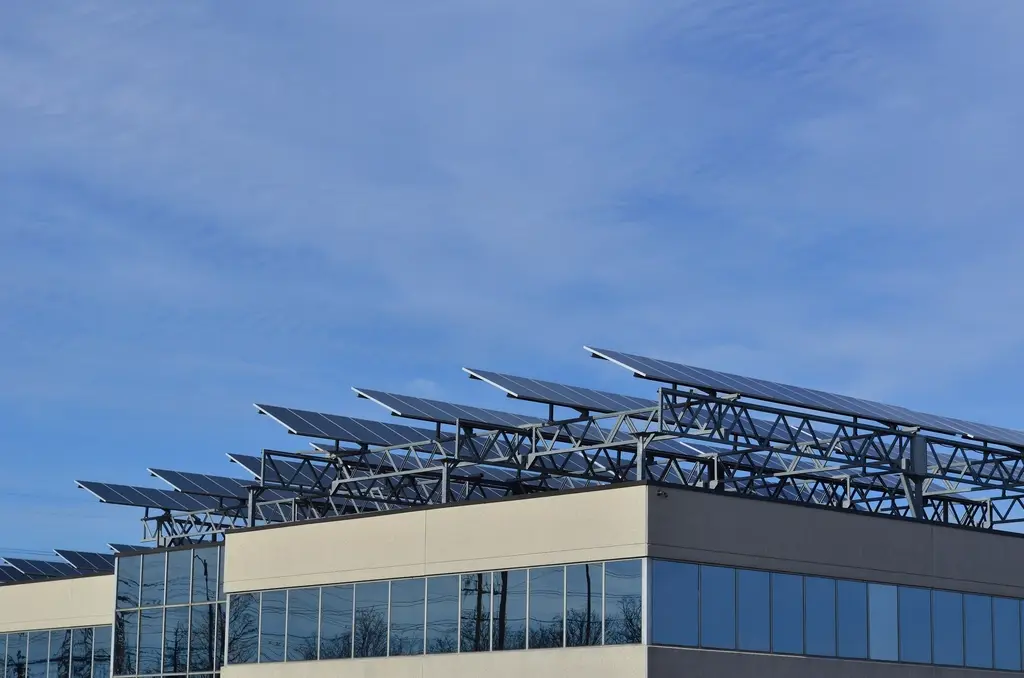 Battery storageWhen a commercial battery pays: storing surplus solar, time of use tariffs, peak shaving, sizing from half-hourly data, illustrative costs, safety and siting.
- Energy data analysisHow half-hourly consumption data shapes solar sizing and payback: getting the data, profile classes, baseload, weekend and seasonal use, self-consumption and batteries.
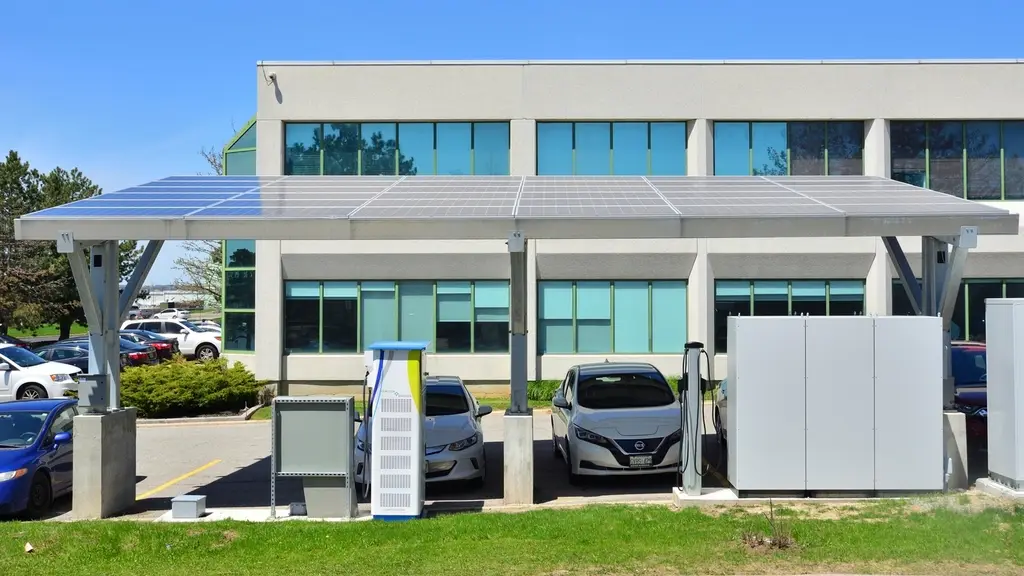 Solar carportsSolar car park canopies: permitted development in England, foundations and drainage, structural design, EV charging and how costs compare with rooftop solar.
- G99 and DNO applicationsG98 versus G99, what goes into a DNO application, connection offers, export limitation under G100, reinforcement costs and how the survey checks your supply.
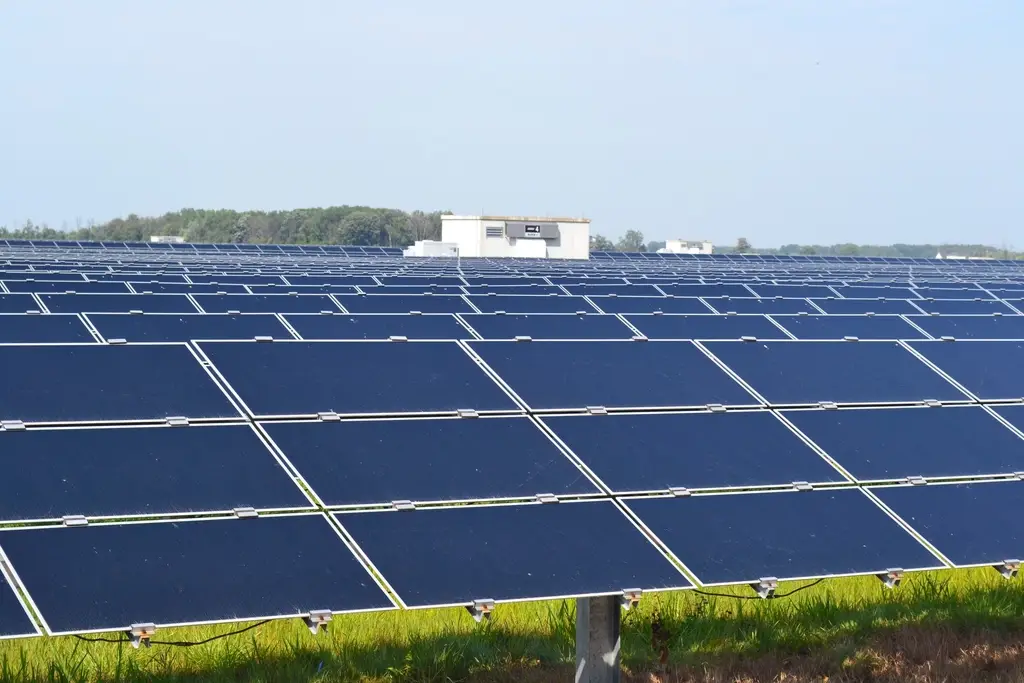 GrantsAn honest overview of funding for commercial solar across the UK: tax reliefs, rates exemptions, VAT, export payments, loans and the schemes run in each nation.
- OfficesWeekday daytime demand suits solar, but office roofs are small and busy. The survey looks at roof plant, carports, multi-tenant supplies and landlord consent.