
Why warehouse roofs suit solar, and when they do not
Distribution sheds, cross-dock facilities and storage buildings tend to have large, uninterrupted roofs with no neighbouring buildings tall enough to cast shade. A single-storey portal frame building of a few thousand square metres can physically hold an array far bigger than most offices or shops could ever fit.
The question a survey really answers is how much of that roof is worth covering. A warehouse's electricity demand varies enormously with what happens inside it:
| Type of operation | Typical daytime demand | What it means for solar |
|---|---|---|
| Ambient storage, single day shift | Low: LED lighting, a small office, dock doors | Roof capacity can far exceed use; a smaller array or export limitation is often sensible |
| Busy distribution, two or three shifts | Moderate to high: forklift charging, conveyors, sortation, lighting through the night | Daytime generation is mostly used on site, so savings per kWh are higher |
| Chilled or frozen storage | High and continuous: refrigeration plant runs day and night | Very good match, with summer cooling demand peaking when generation does |
| Automated or high-bay fulfilment | High: robotics, shuttles, sortation, IT | Strong match, often with room for battery storage to cover evening peaks |
Sizing an array to the building rather than to the demand is a common mistake. Electricity you use on site displaces your own unit rate, while exported electricity earns only an export tariff, which is usually far lower. The survey uses your half-hourly data to find the size where self-consumption stays high. That trade-off between array size and self-consumption is the main thing the survey's savings model tests.
Many logistics operators are also electrifying. Electric forklifts and reach trucks already draw a lot of power, and electric vans and HGVs add more. If the fleet is going electric over the next few years, it can make sense to size the array for the demand you will have rather than the demand you have today, and to look at EV charging for business at the same time.
The building issues a warehouse survey checks
Roof sheets and rooflights
Most modern sheds are clad in profiled steel or composite insulated panels, which suit rail-mounted or clamp-mounted systems well. Our page on metal roofs covers fixing methods in more detail. Older sheds, particularly those built before 2000, may have fibre cement sheets that contain asbestos, and these need a different approach covered on the asbestos roofs page.
Rooflights are a particular feature of warehouses. Translucent sheets bring daylight into the racking aisles, but panels cannot go over them without losing that light, and they are fragile, so they are a fall hazard during installation. The surveyor maps them, because they often break the roof into strips and reduce the usable area more than people expect.
The surveyor also looks at sheet condition: cut edge corrosion along the eaves, failed fixings, coating breakdown and any history of leaks. Putting a 25 year asset on a roof with ten years of life left rarely makes financial sense.
Frame capacity
Portal frame warehouses are usually designed efficiently, with limited spare capacity beyond the snow and wind loads the building was designed for. Framed panels on rails typically add around 10 to 15 kg per square metre, which many sheds can take, but purlin size, spacing and condition all matter. A structural survey confirms the real figure before a design is finalised.
Fire strategy and insurance
Warehouses hold a lot of stock under one roof, so insurers take a close interest. The RC62 recommendations published by RISCAuthority and the Fire Protection Association are widely referenced. Typical points include keeping panels clear of compartment walls, avoiding routing DC cables through high-risk areas, and making sure the fire service can isolate the system. If the building has combustible-cored insulated panels, the insurer may have specific conditions. Our fire safety and insurance guide explains what to ask.
Grid connection and cable runs
Big sheds often have the main LV switchboard at one end and the best roof area at the other, so cable routes can be long. Larger arrays need G99 approval from the DNO, and in areas with constrained networks an export limitation scheme under G100 can let a bigger array connect where full export would not be allowed.
Working around operations
Yard traffic, HGV movements and loading bays all affect how the installer gets materials and access equipment onto the roof. The survey notes where cranes or mobile elevating work platforms can safely stand and which areas need to stay clear.
Finance and ownership questions for warehouses
Many logistics buildings are leased rather than owned, often on full repairing and insuring leases. That changes who can install, who benefits and how long the arrangement needs to last.
- Owner-occupiers can usually buy the system outright. In our illustrative 100 kWp example (£900 per kWp, 80% used on site at 24p per kWh), simple payback is roughly 5 years before tax relief. Solar panels are special rate expenditure for capital allowances, so check the treatment with your accountant.
- Tenants need landlord consent, and the remaining lease term matters. If the lease ends before the system has paid back, the tenant may be funding an asset the landlord keeps.
- Third-party logistics operators often run a site under a customer contract shorter than the panel life. A power purchase agreement, where a funder owns the system and sells you the electricity, can avoid tying up capital against a contract that might not be renewed.
- Landlords can install and sell power to the occupier, or lease the roof to a third party. Our commercial landlords page covers those models.
What to have ready for a warehouse survey
- At least 12 months of half-hourly consumption data, or your supplier's details so it can be requested
- Shift patterns, including weekends and peak trading periods
- Site plan and roof drawings, if you have them, plus any structural information from when the building was built
- Your asbestos register or management survey, for older buildings
- Lease, or at least the remaining term and the landlord's contact details
- Insurer contact and any conditions already on the policy
- Plans for fleet electrification, more automation or extra cold storage
With that information the survey can model a realistic array and payback for your building. When you are ready, request a free survey.
Frequently asked questions
Can solar panels go over the rooflights in our warehouse?
Usually not. Covering translucent rooflights blocks the daylight they were installed to provide, which can increase lighting use and affect working conditions in the aisles. Rooflights are also fragile and need protection during installation. The surveyor maps them and designs the array around them, which is why the usable roof area is often smaller than the total footprint of the building.
Our warehouse is mostly empty storage. Is solar still worth it?
It can be, but the array should be sized to what you use rather than to the roof. A lightly used ambient store might suit a modest array covering lighting and office loads, with any surplus exported. An export limitation scheme or a later expansion can follow if demand grows. The survey compares several sizes using your half-hourly data so you can see where the payback is best.
Will installing solar disrupt yard operations and deliveries?
There is some disruption while materials are lifted and access equipment is in place, but it can be planned. The survey records where cranes or platforms can stand and which loading bays must stay open, so the installer can phase the work. Most of the installation happens on the roof, with electrical tie-in usually scheduled for a quiet period agreed with you.
Do electric forklifts make solar more worthwhile?
They can. Forklift and reach truck charging is often a significant part of a warehouse's demand. If charging happens during the day, solar can supply it directly. If it happens overnight, battery storage may help shift daytime generation into the evening, though it adds cost. Your consumption data shows when charging actually happens, which is the starting point for that decision.
We lease our warehouse. Can we still get a survey?
Yes. A survey is a useful first step because it shows what the roof could hold and what it might save, which gives you something concrete to discuss with your landlord. You will need landlord consent before any installation, and the remaining lease term affects whether buying the system, a power purchase agreement or a landlord-led scheme is the best fit.
Related pages
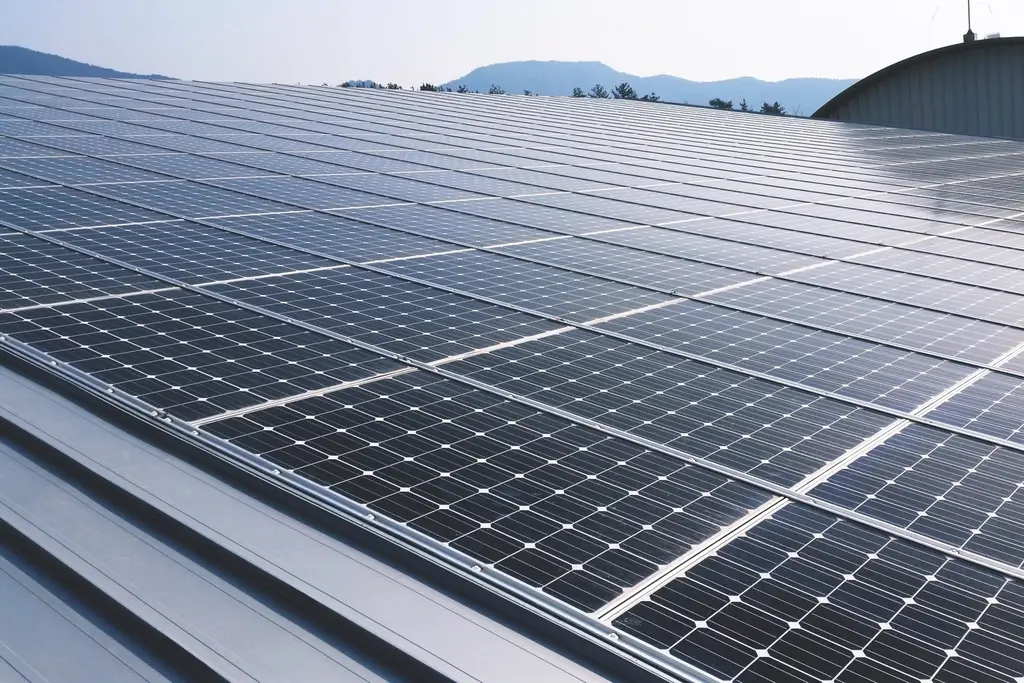 Metal roofsTrapezoidal, standing seam and composite panel roofs: how mounting, rooflights, fixings and sheet age affect a solar installation.
- Structural surveyWhat a structural assessment for rooftop solar checks: dead loads, wind uplift and snow, purlins and rafters, ballast, and when an engineer's report is needed.
- PPA vs CapExA side by side comparison of outright purchase, rooftop PPAs and lease or asset finance, including how lease length and site tenure change the answer.
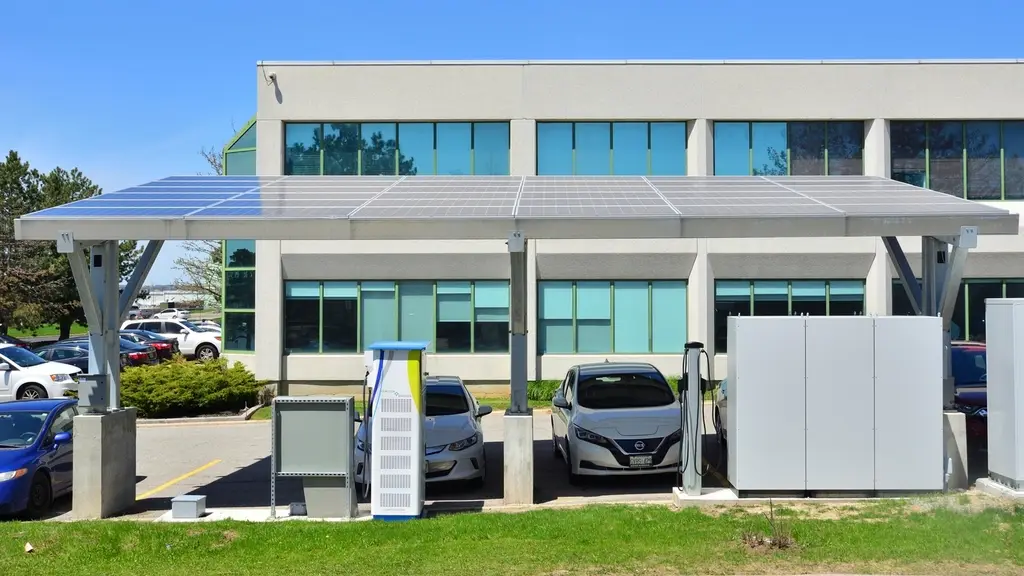 EV chargingHow to plan workplace and fleet EV charging with solar: supply capacity, load management, charger types, matching generation to charging and grant support.
- Commercial landlordsSolar on let property means settling who pays, who benefits and who owns the system. This page covers the main ownership models, lease length, metering and MEES.
- Fire safety and insuranceRC62 in plain terms, insurer questions, DC isolation, cable routing, separation from rooflights and fire breaks, and inspection regimes for commercial rooftop solar.