
Why retail energy use suits solar
Retail is one of the few sectors where weekends are as busy as weekdays. Stores open early, close late and trade on Saturdays and Sundays, so daytime demand continues through the whole week. That matters for solar, because generation on a sunny Sunday is used rather than exported.
The loads differ by format:
| Format | Main loads | Fit with solar |
|---|---|---|
| Supermarkets and convenience stores | Chilled and frozen display cases, cold rooms, bakery ovens, lighting, HVAC | Strong. Refrigeration runs day and night and works harder in warm weather |
| Retail warehouses and DIY stores | High-bay lighting, heating and cooling of large sales floors, tills and IT | Good. Large roofs and long trading hours |
| Fashion, homeware and general retail | Lighting, HVAC, display screens | Moderate. Demand follows opening hours, with little overnight load |
| Garden centres | Glasshouse ventilation and heating, cafés, lighting, water pumps | Good in spring and summer when trade and generation both peak |
| High street shops | Lighting, heating and small power | Modest. Roofs are small and often shared with upper floors |
Refrigeration deserves special mention. It is a continuous baseload that a rooftop array can supply directly whenever it is generating, and refrigeration plant generally works harder on hot days, which is when panels produce most. Food retailers often see high self-consumption as a result.
Retail sites also tend to be heavy users of EV charging, either for customers or for home delivery vans. If charging is planned, consider it alongside solar; our EV charging for business page covers the options.
The site and building issues a retail survey checks
The roof
Out-of-town stores and retail park units are usually large steel-framed buildings with profiled metal roofs, which generally suit solar. Older units may have fibre cement roofing that needs an asbestos survey first. Supermarket roofs often carry refrigeration condensers, gas cooler units and air handling plant, which take space and need safe maintenance access. The surveyor also checks rooflights over the sales floor, roof sheet condition, the structure's capacity and any roofing warranty.
High street shops present different challenges: small roofs, chimneys and party walls, upper floors let as offices or flats, and often a conservation area. In those cases the survey may find that solar is not practical, and it will say so.
The car park
For many retailers the car park offers more usable area than the roof. A solar carport can shade customer parking, carry EV chargers and generate significant output. The survey considers:
- Clearance for delivery vehicles, click and collect bays and height-restricted areas
- Foundations and underground services, including drainage and any fuel or gas lines
- Trolley shelters, lighting columns and signage that would need moving
- Planning: in England, canopies in non-domestic car parks can fall under permitted development with conditions, and the rules differ in Scotland, Wales and Northern Ireland
Customer safety during installation
Unlike a warehouse or factory, a store is open to the public. Installation has to be planned so that cranes, scaffolding and access equipment are kept away from customers, often with work in the car park phased bay by bay or carried out before opening. Fire strategy also matters: the system needs clear isolation points for the fire service, and RC62 recommendations are commonly referenced by insurers.
The electrical connection
Retail parks often have one main intake per unit, with the landlord holding a separate supply for car park lighting and common areas. Larger arrays need DNO approval under G99, and the survey checks how much export the local network can accept.
Finance and ownership questions for retailers
Tenant or landlord
Most retail park units and many supermarkets are leased. The roof, structure and car park normally belong to the landlord, so a tenant needs consent and the parties need to agree who pays, who benefits and what happens at lease end. Typical routes are:
- The tenant installs with a licence for alterations and keeps the savings
- The landlord installs and sells the electricity to the tenant under a supply agreement
- A third party leases the roof or car park and sells power to the tenant under a power purchase agreement
Our commercial landlords page explains each model.
Multi-site retailers
Chains with many stores often prefer a standard approach across the estate, with a common specification and commercial terms. A survey of a representative sample of stores can show which formats and locations give the best returns and where lease terms make installation realistic.
Paying for it
Owner-occupiers can buy outright and claim capital allowances; solar is special rate expenditure, so check the treatment with your accountant. In England, eligible on-site renewable generation plant is exempt from business rates until 31 March 2035, so adding solar should not increase the store's rateable value there. Scotland, Wales and Northern Ireland run their own rating systems.
TODO for the site owner: Confirm the current business rates treatment of on-site solar in Scotland, Wales and Northern Ireland before adding detail for retailers in those nations.
What to have ready for a retail survey
- 12 months of half-hourly data for the store supply, and for any landlord supply serving the car park
- Opening hours, including seasonal extended trading
- Details of refrigeration and HVAC plant, ideally from your maintenance contractor
- Roof and car park plans, with delivery routes and height restrictions marked
- The lease, or landlord contact details and the relevant clauses on alterations and the car park
- EV charging plans for customers, staff or delivery vehicles
- Asbestos information for older units
A survey gives both tenant and landlord a clear, independent basis for the conversation. Request a free survey for one store or a group of sites.
Frequently asked questions
Why are supermarkets such a good fit for solar?
Refrigeration runs day and night and works harder in warm weather, while stores trade seven days a week. That means almost all daytime generation is used on site, including at weekends and through the summer. Large roofs and car parks also give space for a sizeable array. The main constraints are usually roof plant, lease terms and the local grid connection.
Can we put solar canopies over our customer car park?
Often, yes. Carports need suitable foundations, enough clearance for vehicles and a route back to the electrical intake, and they must work around delivery routes, trolley bays and lighting. In England, canopies in non-domestic car parks can fall under permitted development, with conditions. The survey checks the layout, underground services and planning position for your site.
We are a tenant on a retail park. Who would own the panels?
That depends on the arrangement agreed with the landlord. You might install and own the system under a licence for alterations, the landlord might install it and sell you the electricity, or a third party might fund it and sell power to you. Each option deals differently with lease end, roof repairs and insurance, so it needs agreeing before installation.
Will installation disrupt trading?
It needs planning but should not close the store. Roof work happens above the sales floor, and lifting is usually done outside opening hours or in a fenced area of the car park. Carport installations are often phased so only a section of parking is closed at a time. The electrical connection may need a short, planned shutdown outside trading hours.
Does solar make sense for a small high street shop?
Sometimes, but the case is weaker than for larger stores. Roofs are small, often shared with upper floors, and may be in a conservation area, while demand usually ends when the shop closes. If the roof is suitable and you control it, a small system can still offset daytime use. The survey will tell you honestly if it is not worthwhile.
Related pages
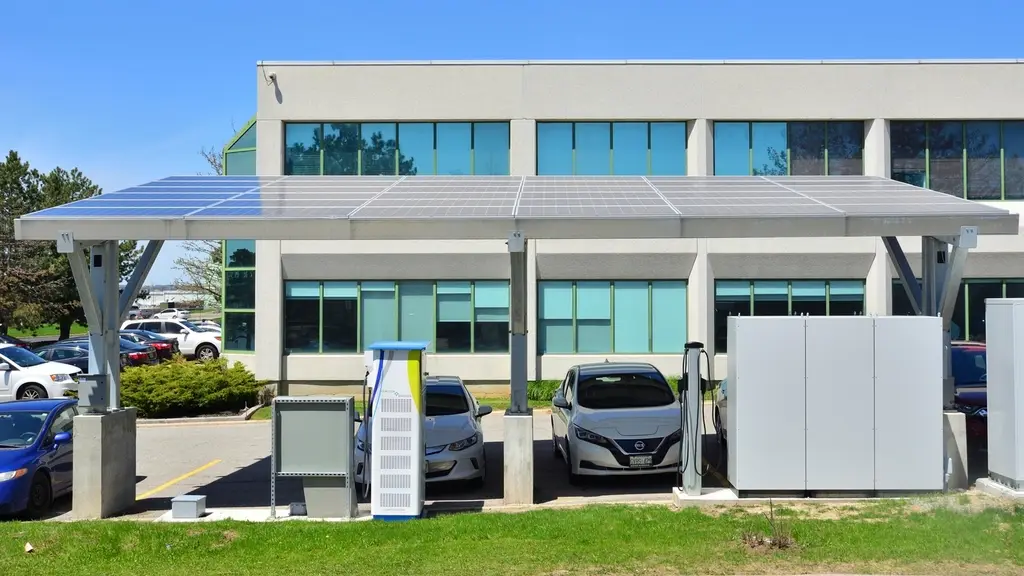 Solar carportsSolar car park canopies: permitted development in England, foundations and drainage, structural design, EV charging and how costs compare with rooftop solar.
- EV chargingHow to plan workplace and fleet EV charging with solar: supply capacity, load management, charger types, matching generation to charging and grant support.
- Commercial landlordsSolar on let property means settling who pays, who benefits and who owns the system. This page covers the main ownership models, lease length, metering and MEES.
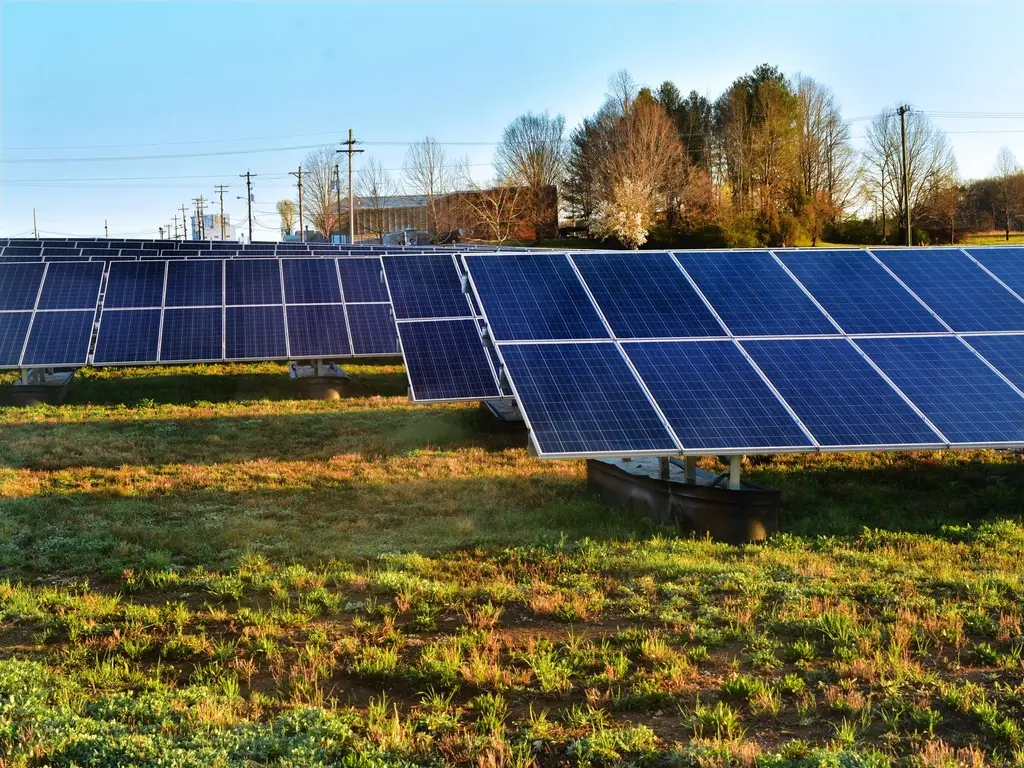 Power purchase agreementsHow on-site solar PPAs work, typical contract lengths, how prices rise over time, what happens if you sell or move, and the clauses to check before signing.
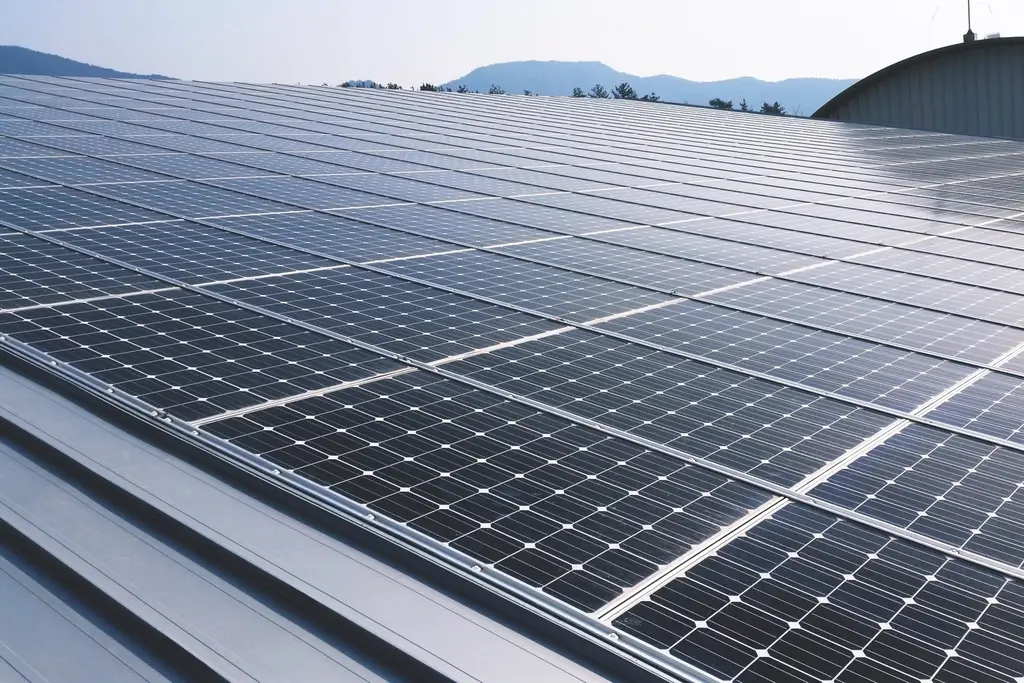 Metal roofsTrapezoidal, standing seam and composite panel roofs: how mounting, rooflights, fixings and sheet age affect a solar installation.
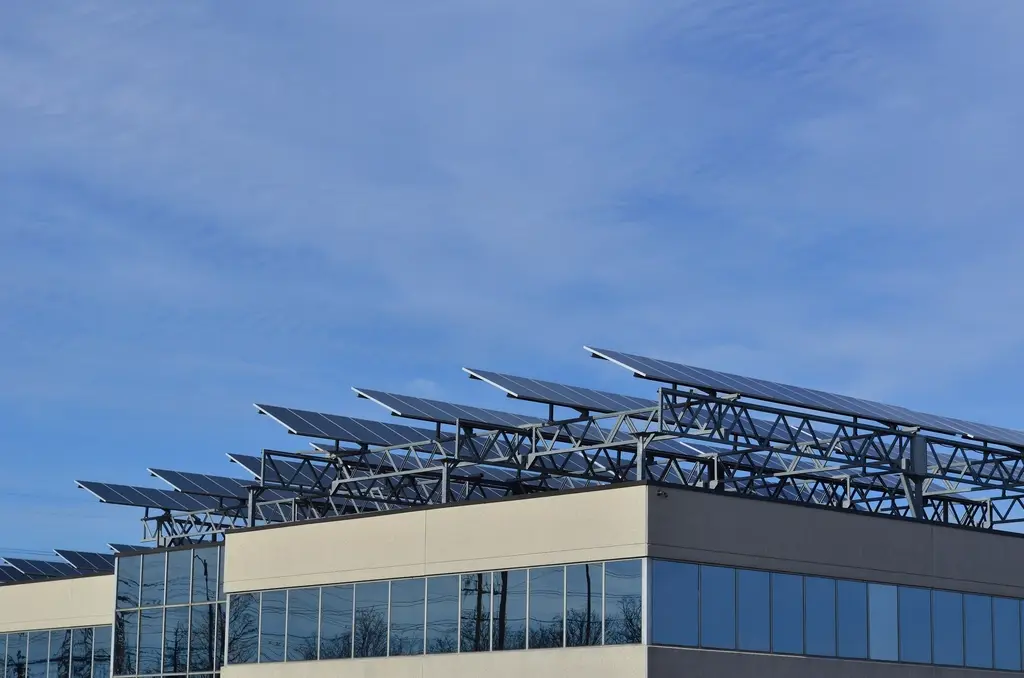 Battery storageWhen a commercial battery pays: storing surplus solar, time of use tariffs, peak shaving, sizing from half-hourly data, illustrative costs, safety and siting.