
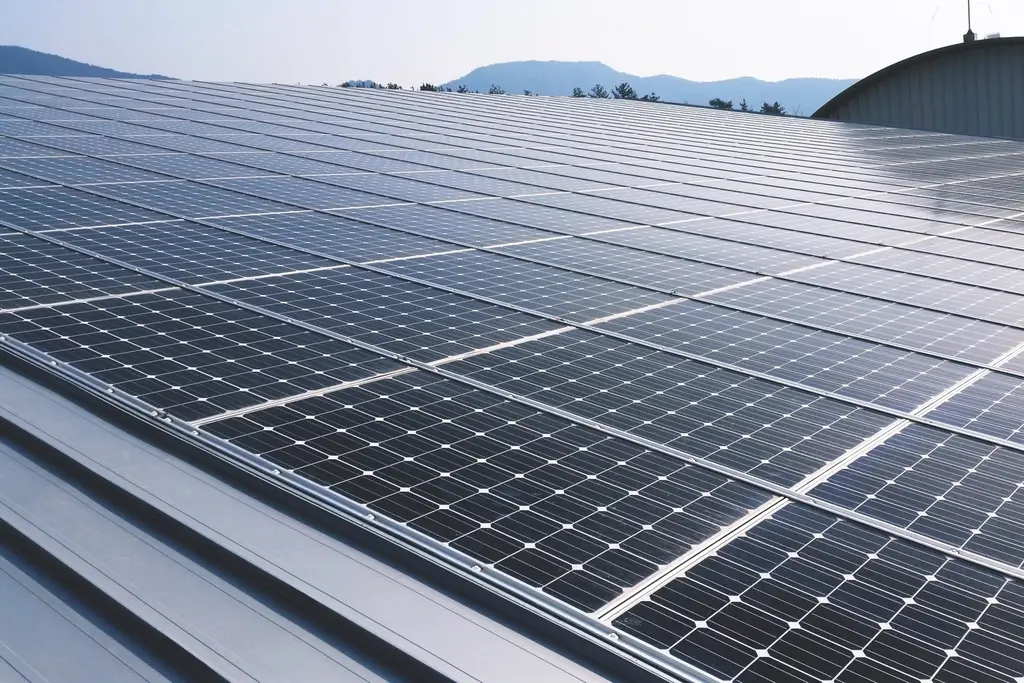
How the money flows: purchase vs PPA
The short answer
If your organisation has the cash or borrowing capacity, expects to occupy the site for ten years or more and pays corporation tax, buying the system outright (capital expenditure, or CapEx) usually gives the largest saving over the life of the panels. If you want no upfront cost and are happy to share the savings, a power purchase agreement (PPA) can work, provided the site is large enough and your tenure is long enough. Asset finance sits in between: you spread the cost, keep most of the savings and, depending on the agreement, may still claim tax relief.
None of these is always best. The decision turns on your electricity demand, your tax position, your lease and your appetite for risk.
The three main routes
Outright purchase (CapEx)
You pay the installer, you own the system from day one and every unit it generates is yours. Using the illustrative figures from our solar payback guide, a 100 kWp system at £90,000 saving about £18,180 a year pays back in roughly 5 years before tax relief. After that, the savings fall straight to the bottom line for the remaining life of the panels. You also carry the risks: if the system underperforms or the inverter fails out of warranty, the cost is yours.
Power purchase agreement (PPA)
A funder designs, pays for, installs, owns and maintains the system on your roof. You buy the electricity it generates at an agreed price per kWh, normally set below what you pay your supplier. Your saving is the gap between the two prices on every unit used on site. There is no capital outlay, but you sign a long contract and the funder keeps most of the long term value. Our guide to power purchase agreements covers terms, indexation and red flags in detail.
Lease or asset finance
A lender or lessor funds the system and you repay through fixed instalments. With hire purchase you normally own the system at the end; with a lease you may not. The aim is usually for the monthly saving to exceed the monthly payment, so the project is cash flow positive from the start. See asset finance and leasing for how each structure works.
Side by side comparison
| Outright purchase | Rooftop PPA | Lease or asset finance | |
|---|---|---|---|
| Who owns the system | You | The PPA provider | The lender or lessor during the term; often you at the end of hire purchase |
| Upfront cost | Full installed cost | Usually none | Usually a deposit or none |
| Savings | All of the saving on every unit used, plus any export income | The gap between the PPA rate and your grid rate; export income usually goes to the provider | All of the saving, less the finance payments |
| Performance risk | Yours | Mostly the provider's, as you only pay for units generated | Yours, in most agreements |
| Maintenance and insurance | Your responsibility | Usually the provider's | Usually yours; check the agreement |
| Contract length | None beyond warranties | Typically 15 to 25 years | Typically 3 to 10 years |
| Tax relief | You may claim capital allowances | You cannot claim allowances on the kit; PPA payments are an operating cost | Depends on the structure: hire purchase usually lets you claim; a lease often does not |
| Balance sheet | An asset on your balance sheet | Depends on the contract and your accounting framework | A liability, and often an asset, under current accounting rules |
| Selling or moving | The system goes with the building and adds to its value | The contract must be transferred or bought out | The finance must be settled or transferred |
The tax column is a general description only. How relief works for your organisation depends on your structure and profits, so read our capital allowances guide and check the position with your accountant. From 1 January 2026, many UK companies reporting under FRS 102 also bring most leases onto the balance sheet, which can change how a lease or some PPAs look in your accounts.
An illustrative comparison of savings
Take the same 100 kWp roof. Under outright purchase, with 80% of the output used on site at an illustrative 24p per kWh, the saving is about £17,280 a year plus about £900 of export income.
Under a PPA, suppose the provider charges an illustrative 14p per kWh for the 72,000 kWh you use on site. You save 10p on each unit, or about £7,200 a year, with nothing paid upfront. The provider keeps the export income and recovers its investment from your payments. Over 20 years the gap between the two options is large, but so is the difference in cash required on day one. These figures are illustrative only; PPA prices depend on site size, credit strength, contract length and indexation.
How lease length and site tenure affect the choice
Tenure is often the deciding factor, and it is easy to overlook.
- Owner occupiers have the most freedom. Buying outright or using hire purchase usually makes sense if the roof has a long remaining life.
- Tenants with long leases can buy or finance a system, but need landlord consent for the works and should check how the lease treats alterations, fixtures and reinstatement at the end of the term. Panels fixed to the roof can become part of the building in law.
- Tenants with short leases or break clauses often struggle with a PPA, because providers want the contract to run for longer than the remaining lease. A shorter finance term matched to the lease, or an arrangement with the landlord, may fit better.
- Landlords can install solar themselves and supply tenants, or allow a PPA provider to do so. Our page for commercial landlords covers how that can work.
- If you plan to sell, an owned system can add value to the building. A PPA has to be accepted by the buyer or bought out, which can complicate the sale.
Questions to ask before choosing
- How many years are left on your lease or ownership plan, and is there a break clause?
- Does your organisation pay corporation tax, and has it already used its Annual Investment Allowance this year?
- How much of the generation will you use on site during working hours?
- Does the roof need repair or replacement within the next 25 years?
- Would you rather keep the full saving or avoid all performance and maintenance risk?
Where the survey fits
Every option depends on the same data: what the roof can hold, what it will generate and how much of that you will use. The free survey produces a system design, a generation estimate and a self-consumption figure you can use to compare quotes, PPA offers and finance terms side by side. You can check typical installed prices on our commercial solar cost guide, then request a free survey when you are ready to see the numbers for your own site.
CapEx vs loan vs lease vs PPA at a glance
| Feature | Keeps all savingsOutright purchase (CapEx) | Loan or hire purchase | Lease | Power purchase agreement (PPA) |
|---|---|---|---|---|
| Upfront cost | Full installed cost | Little or none (a deposit may apply) | Usually none | None |
| Who owns the system | You | You (at the end of the term with hire purchase) | The funder | The PPA provider |
| What you pay | Nothing further except running costs | Fixed repayments over the term | Fixed rentals over the term | An agreed rate for each kWh the system produces |
| Who keeps the savings | You keep all of them | You, less the repayments | You, less the rentals | The difference between the PPA rate and your grid rate |
| Capital allowances | You can usually claim | You can usually claim | Usually the funder claims | The provider claims |
| Maintenance | Your responsibility | Your responsibility | Depends on the agreement | Usually the provider's |
| Typical term | Not applicable | Typically several years | Typically several years | Typically 15 to 25 years |
| Often suits | Strong cash position, taxable profits, long tenure | Ownership benefits without the upfront outlay | Fixed costs with the asset off your hands | Larger sites wanting savings with no capital spend |
General comparison only. Terms, tax treatment and accounting vary by provider and by business: check the detail with your accountant and any finance provider. We do not provide finance. See PPA vs CapEx for the full comparison.
Frequently asked questions
Is a PPA really free solar?
There is no upfront cost, but it is not free. You pay for every unit the system generates at the agreed PPA rate, usually for 15 to 25 years, and the provider keeps the export income and the long term value of the asset. It can still be a good deal if the PPA rate is comfortably below your grid price and the contract terms are fair, but compare it with the saving from owning the system.
Which option gives the biggest saving over 25 years?
Outright purchase usually does, because you keep the full saving on every unit and any export income once the system has paid for itself. Asset finance comes close if the finance cost is modest. A PPA normally gives the smallest lifetime saving in exchange for no capital outlay and less risk. The gap narrows if you cannot use tax relief or would have to borrow at a high rate.
Can a tenant install solar on a leased building?
Often yes, with the landlord's written consent. Check the lease for alteration, fixtures and reinstatement clauses, and match any finance or PPA term to the time you have left in the building. Some landlords prefer to own the system and sell the power to tenants. A survey can give both parties the same design and generation figures to discuss.
Can I switch from a PPA to owning the system later?
Many PPAs include a buyout option, either at set points during the term or at the end, priced from a schedule in the contract. Ask for that schedule before you sign, and check whether the price is fixed or depends on a valuation at the time. A clear buyout route gives you a way out if you sell the site or want to keep the full saving.
Does the choice affect whether I can claim capital allowances?
Yes. If you buy the system, you may be able to claim capital allowances on it. Under hire purchase you are usually treated as the owner for allowances. Under most leases and PPAs, the funder owns the kit and claims any allowances, and your payments are treated as running costs instead. Confirm the treatment for your agreement with your accountant before you sign.
Related pages
 Power purchase agreementsHow on-site solar PPAs work, typical contract lengths, how prices rise over time, what happens if you sell or move, and the clauses to check before signing.
 Asset finance and leasingHow hire purchase, finance leases and operating leases work for solar, who claims capital allowances under each, and how to aim for a cash flow positive project.
 Capital allowancesHow solar panels are treated for capital allowances: the special rate pool, the Annual Investment Allowance, the 50% first year allowance for companies, and illustrative examples.
 Solar paybackA worked payback example for a 100 kWp system, the factors that move the result most, the effect of tax relief, and a calculator to try your own figures.
- Commercial landlordsSolar on let property means settling who pays, who benefits and who owns the system. This page covers the main ownership models, lease length, metering and MEES.