
Why manufacturing loads suit solar
The value of solar depends heavily on self-consumption: the share of generation you use yourself rather than export. Manufacturers are usually in a strong position because their demand is large, three-phase and concentrated in working hours. Typical loads include:
- Motors driving pumps, fans, conveyors and mixers
- Compressed air, which is often one of the largest single electrical loads in a factory
- Machining centres, presses, injection moulding and extrusion lines
- Electric ovens, kilns, curing and drying processes
- Welding, plating and other process equipment
- Space heating, cooling and lighting across large production halls
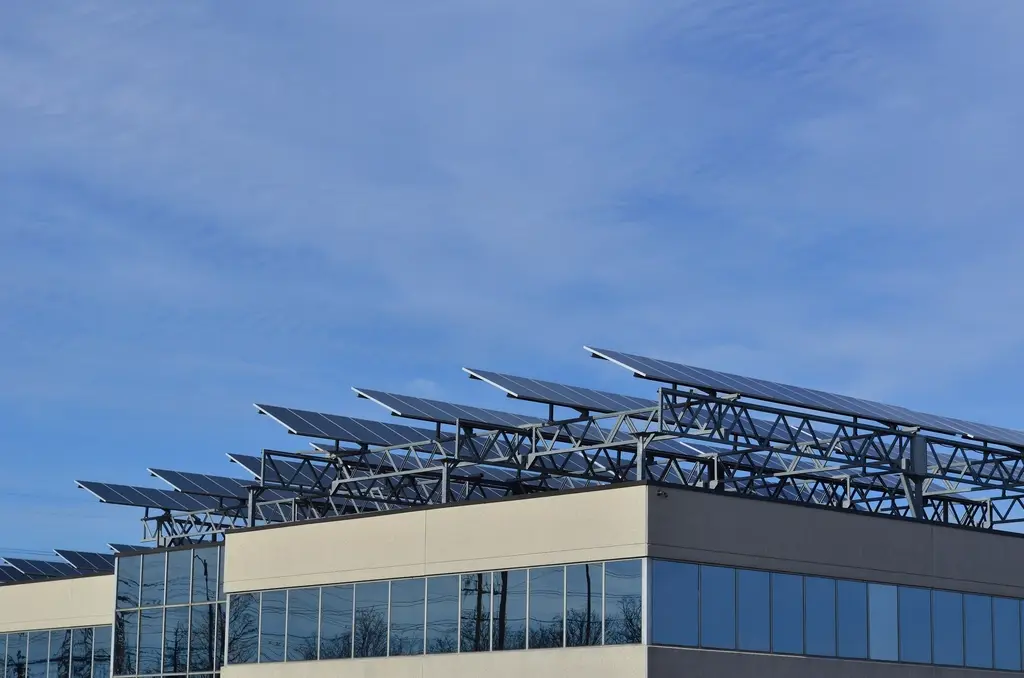
On a site running one or two shifts, Monday to Friday, a rooftop array will often cover only a portion of daytime demand, so very little is exported. That is the opposite problem to a lightly used shed, and it usually means the roof, not the demand, sets the limit on array size.
Weekends and shutdowns are where the picture changes. If the plant stops on Saturday and Sunday, or closes for two weeks in August, generation in those periods will largely be exported unless there is a baseload such as refrigeration, compressors left running or extraction. The survey looks at your half-hourly data to see what the site actually draws when production is off, because that figure has a real effect on the payback.
Peak demand and capacity charges
Solar reduces the units you buy. It does not reliably reduce your peak demand or your agreed supply capacity, because your highest demand may fall on a dull winter morning when the panels produce little. If capacity charges or maximum demand penalties are a significant part of your bill, battery storage is the tool that addresses them, and a survey can model solar and storage together.
The site and building issues a factory survey checks
Roofs of different ages
Factories are often a patchwork: an original building with later extensions, each with a different roof. You might find a north-light sawtooth roof on the oldest section, fibre cement sheets on a 1970s extension and a modern composite panel roof on the newest bay. Each needs its own assessment for condition, remaining life, fixings and load capacity. Older fibre cement roofs may contain asbestos, which has to be identified before anyone works on them; the asbestos roofs page explains the options.
Roof-mounted plant and process emissions
Extraction fans, ducting, flues, air handling units and dust collectors are common on factory roofs. They take up space and cast shade, and they need maintenance access kept clear. Process emissions can also matter: oil mist, dust or other deposits settling on panels reduce output and may mean more frequent cleaning. If any area of the site is classified for flammable atmospheres, electrical equipment must be kept out of those zones or specified accordingly.
The electrical system
Manufacturing sites usually have a three-phase supply and many have a high voltage connection with their own transformer. The survey looks at:
| Item | Why it matters |
|---|---|
| Single line diagram and main switchboard | Shows where the inverters can connect and whether there is spare capacity |
| Transformer rating, for HV-connected sites | Determines how much generation can connect on the LV side |
| Protection settings and existing generation | Any CHP or standby generator must be coordinated with the solar inverters |
| Power quality | Large variable speed drives and welding equipment can create harmonics that affect inverter behaviour |
| DNO network capacity | Arrays above the G98 threshold need G99 approval; see G99 and DNO applications |
Installing without stopping production
Most of the installation happens on the roof and can run alongside normal work. The final electrical connection usually needs a short shutdown of the relevant board, which is best planned into an existing maintenance window. Telling the surveyor about planned shutdowns early saves months of waiting later.
Finance and ownership questions for manufacturers
Because self-consumption is usually high, factories tend to see savings close to their own unit rate on most of what they generate. Our commercial solar cost guide gives illustrative installed prices per kWp, which fall as systems get larger.
- Buying outright: a manufacturer that is profitable can often claim significant tax relief in the first year. Solar panels are special rate assets; the Annual Investment Allowance can give 100% relief up to its limit, and companies may also claim the 50% first-year allowance. See capital allowances and check the treatment with your accountant.
- Power purchase agreement: suits sites that want to keep capital for production equipment. The funder owns the system and you pay for the electricity at an agreed rate, usually over a long term.
- Asset finance or leasing: spreads the cost over a fixed term while the business keeps the savings, which suits manufacturers that prefer predictable monthly payments.
Two further questions are specific to manufacturing. First, how settled is the site? A business planning to relocate or significantly change its process in the next few years should weigh that against a long payback horizon. Second, are your customers asking about emissions? Many manufacturers now report energy and emissions data to larger customers, and on-site generation can form part of that. Our solar and carbon reporting guide explains how it is usually treated.
What to have ready for a factory survey
- 12 months or more of half-hourly data for every supply on site
- Shift patterns, typical weekend loads and dates of annual shutdowns
- Single line diagram, switchboard schedules and transformer details if you have an HV supply
- Details of any CHP, standby generation or existing solar
- Roof drawings for each building and any history of repairs or leaks
- Asbestos register for older buildings
- Any hazardous area classification drawings
- Plans for new production lines, electrification of gas processes or expansion
The more of this the surveyor has before the visit, the more precise the design and savings model will be. Request a free survey to get started.
Frequently asked questions
Can a factory roof hold solar panels as well as all our roof plant?
Often yes, but roof plant reduces the usable area and casts shade, and its maintenance access has to be kept clear. The surveyor maps fans, ducts, flues and air handling units, then designs the array around them. Where roof space is very limited, a ground-mounted array on spare land or a solar carport over staff parking can add capacity.
Will solar panels interfere with our production machinery?
Properly designed and connected solar should not affect normal operation. The survey checks the electrical system, including protection settings, existing generation and power quality from variable speed drives or welding equipment, so the inverters are specified and connected correctly. Where harmonics or other issues already exist on the site network, the design takes them into account.
We run 24 hours a day. Is that better or worse for solar?
Generally better. A continuous operation uses electricity whenever the panels generate, including at weekends and during the summer months when output is highest, so very little is exported. The roof size usually becomes the limiting factor. Battery storage may still be worth modelling if peak demand or capacity charges are a significant part of your bill.
How long would we need to shut down for the solar connection?
The roof installation normally runs alongside production. The electrical tie-in usually needs the relevant switchboard isolated for a short period, which is best timed with a planned maintenance shutdown. The exact time depends on the connection point and how the site is wired, and the installer agrees it with you in advance so production planning can allow for it.
Does solar reduce our maximum demand charges?
Not reliably. Your highest demand can occur when the panels produce little, such as a winter morning, so solar on its own may not lower the peak your supplier or network operator charges for. Battery storage can be controlled to reduce peaks, and the survey can model the two together using your half-hourly data to see whether that combination pays back.
Related pages
- Energy data analysisHow half-hourly consumption data shapes solar sizing and payback: getting the data, profile classes, baseload, weekend and seasonal use, self-consumption and batteries.
 Battery storageWhen a commercial battery pays: storing surplus solar, time of use tariffs, peak shaving, sizing from half-hourly data, illustrative costs, safety and siting.
- G99 and DNO applicationsG98 versus G99, what goes into a DNO application, connection offers, export limitation under G100, reinforcement costs and how the survey checks your supply.
 Capital allowancesHow solar panels are treated for capital allowances: the special rate pool, the Annual Investment Allowance, the 50% first year allowance for companies, and illustrative examples.
- Asbestos roofsAsbestos cement roof sheets: the legal duties, survey types, fragility, and the overcladding or replacement routes to a safe solar installation.
- Solar and carbon reportingHow on-site solar affects Scope 2 emissions, location-based and market-based reporting, SECR, carbon reduction plans, supplier questionnaires and REGOs, in plain terms.