
Key facts for commercial solar in the South West
| Network operators | National Grid Electricity Distribution (most of the region); SSEN (large parts of Wiltshire and Dorset) |
| Indicative yield | About 900 to 1,050 kWh per kWp per year for a typical rooftop array |
| Planning regime | England: national permitted development rules |
| Vehicle charging zones | Bristol Clean Air Zone (Class D); Bath Clean Air Zone (Class C) |
| Nation support page | England (national schemes, see below) |
| City pages | Bristol |
Network operators and connection capacity
National Grid Electricity Distribution (NGED, formerly Western Power Distribution) runs the network across Cornwall, Devon, Somerset, Bristol and Gloucestershire. Scottish and Southern Electricity Networks serves large parts of Wiltshire and Dorset through its Southern Electric licence area. The boundary does not follow county lines, so confirm your operator with the Energy Networks Association postcode tool.
The South West was one of the first parts of Britain where the network struggled to accept new generation, after a wave of solar farms in the 2010s. Some areas still have limited capacity for export, and a G99 application can come back with a restricted export figure or a reinforcement cost. That does not stop commercial rooftop solar, which is mostly used on site, but it changes the design:
- size the array to your daytime demand so little needs exporting;
- use an export limitation scheme under G100 to connect a larger array with capped export;
- add a battery to store midday surplus for later use.
Read our G99 and DNO applications guide before committing to a design that relies on export income.
Yield: the strongest in mainland Britain
In our PVGIS model (version 5.2, SARAH2 data, 14% system losses), a south-facing 1 kWp array at the optimum tilt near Truro in Cornwall gives about 1,060 kWh a year, and an east-west layout at 10 degrees about 890 kWh. Bristol gives about 1,020 kWh for the south-facing case. Coastal and western sites generally do best. As elsewhere, real roofs come in lower than the optimum, but South West sites tend to sit at the top of the national range.
Planning and clean air zones
Planning follows the national rules for England, including the December 2023 widening of permitted development for non-domestic rooftop solar. The region has a large share of protected land, including Dartmoor and Exmoor National Parks, National Landscapes such as the Cotswolds, the Mendip Hills, the Cornwall National Landscape and Dorset, and the City of Bath World Heritage Site. Ground-mounted arrays and carports in these areas need more care. See our planning permission guide.
Two charging clean air zones apply:
- Bristol is a Class D zone, so it charges non-compliant buses, coaches, taxis, HGVs, vans, minibuses and private cars.
- Bath is a Class C zone, charging non-compliant buses, coaches, taxis, HGVs, vans and minibuses, but not private cars.
Businesses running vans into either city have a direct reason to electrify, and daytime depot charging can absorb solar output that the local network might not accept as export. See EV charging for business.
The South West's commercial buildings
- Dairy and livestock farming. Somerset, Devon and Cornwall are dairy heartlands. Milking parlours, milk cooling and water heating create a twice-daily demand, and large agricultural sheds provide roof space. See our farms page.
- Food and drink. Cheese making, cider production and meat and dairy processing are spread across the region, often in rural units with refrigeration loads.
- Aerospace and engineering. The Filton area north of Bristol has a long aerospace history, and engineering firms are spread along the M5 and M4.
- Distribution. Avonmouth and Severnside, near the M4 and M5 junction, hold some of the largest warehouses in the region. Swindon, on the M4, is another logistics centre.
- Tourism and hospitality. Hotels, holiday parks and attractions in Cornwall and Devon have summer peaks that match solar generation well. See our hospitality page.
Support and finance
South West businesses use the national schemes for England: capital allowances, the business rates exemption for eligible onsite generation and storage plant to 31 March 2035, and the Smart Export Guarantee for exported power. See grants and support in England and confirm tax treatment with your accountant.
Cities with their own page
- Bristol: the Clean Air Zone, Avonmouth and the city's commercial estate.
How the free survey works in the South West
Send the short form and we will call to understand your site and demand. If it looks suitable, we arrange a free survey, in person or virtual, with one MCS certified installer matched to the site. In the South West the installer should check published network capacity and, where export looks limited, design around self-consumption, export limitation or storage from the start. Your details go to that installer only, with no obligation to proceed.
Cities in South West
Frequently asked questions
Is the South West grid too full for commercial solar?
Not usually for rooftop systems sized to your own use. The constraints mostly affect how much power you can export, not whether you can generate. An installer can design around a low export limit using G100 export limitation, a battery, or an array sized to daytime demand. The G99 application will confirm what the operator can offer for your site.
Does the Bristol Clean Air Zone charge vans?
Yes. Bristol's zone is Class D, which charges non-compliant buses, coaches, taxis, HGVs, vans, minibuses and private cars. If your business runs older diesel vans into the zone, switching to electric removes that charge, and charging at a depot with solar can use generation that might otherwise have to be exported at a low rate or curtailed.
Which operator handles my connection in Wiltshire or Dorset?
It depends on the exact location. Large parts of Wiltshire and Dorset are served by SSEN, while other parts fall under National Grid Electricity Distribution. The boundary does not follow county lines, so the reliable check is the Energy Networks Association postcode tool or the operator shown on your supply paperwork.
Is a dairy farm a good fit for solar in Devon or Somerset?
Often. Milk cooling, vacuum pumps and water heating run every day of the year, and the summer peak in generation lines up with higher cooling loads. The survey checks the condition of shed roofs, the farm's supply capacity, and whether a battery would help shift midday generation to the evening milking.
Related pages
- BristolNGED South West grid approvals, planning across Bristol, South Gloucestershire and North Somerset, the Class D Clean Air Zone and Avonmouth's large logistics roofs.
- G99 and DNO applicationsG98 versus G99, what goes into a DNO application, connection offers, export limitation under G100, reinforcement costs and how the survey checks your supply.
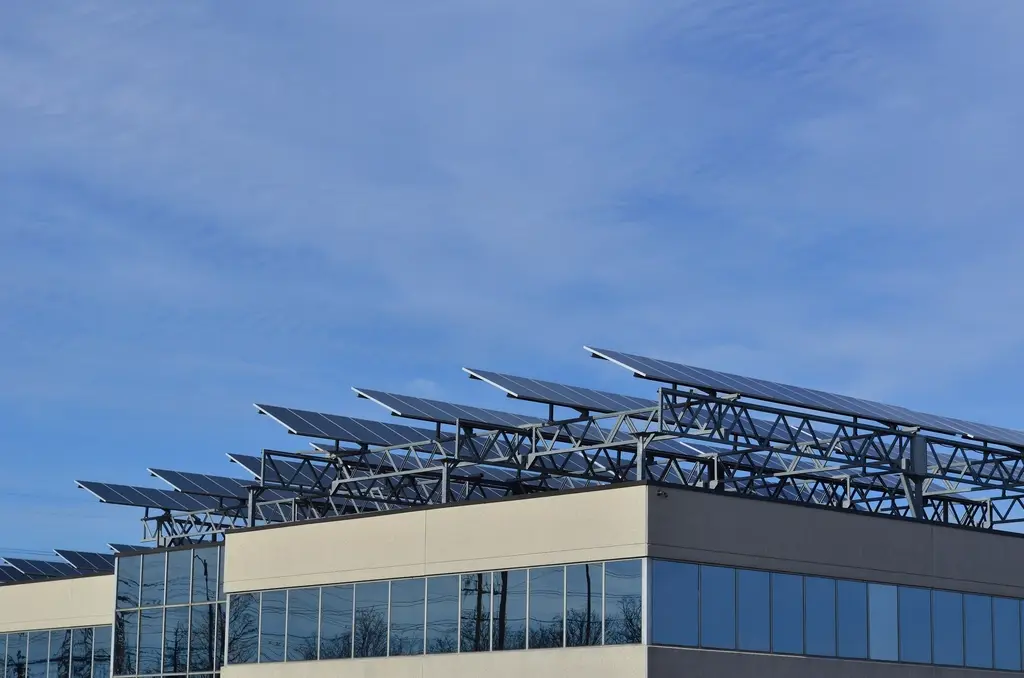 Battery storageWhen a commercial battery pays: storing surplus solar, time of use tariffs, peak shaving, sizing from half-hourly data, illustrative costs, safety and siting.
- FarmsDairy, poultry and grain enterprises can make good use of solar on sheds or land. A farm survey looks closely at seasonal demand, building condition and rural grid capacity.
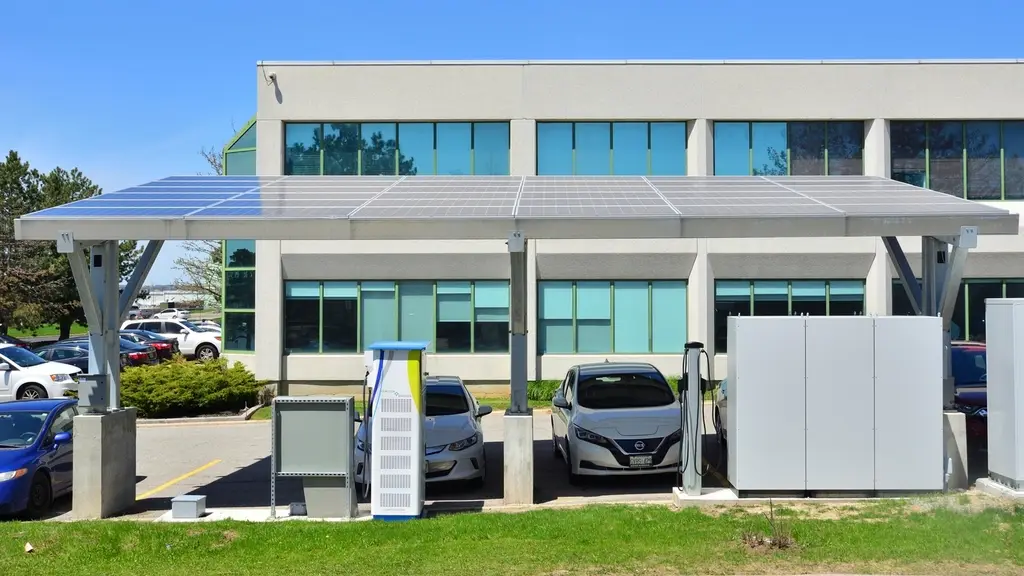 EV chargingHow to plan workplace and fleet EV charging with solar: supply capacity, load management, charger types, matching generation to charging and grant support.
- EnglandCurrent solar support in England for businesses, schools, public bodies, community groups and farms, plus rates, planning and who to contact.