
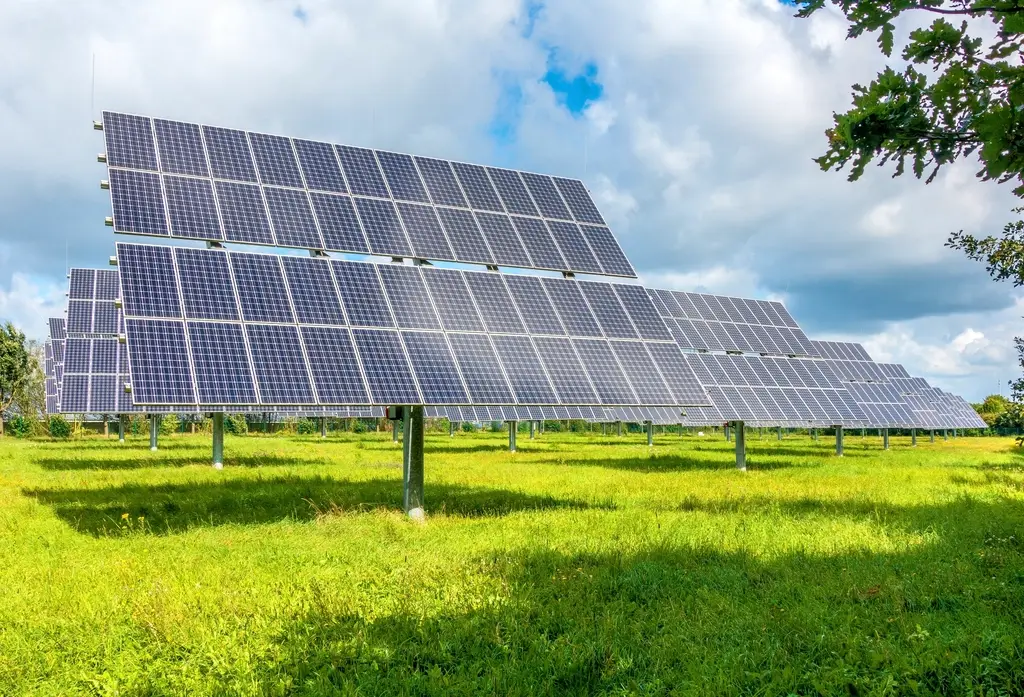
When ground-mounted solar makes sense
Ground-mounted solar suits sites with land to spare close to where electricity is used: farms with a field corner near the dairy or grain store, food and drink producers with land beside a processing building, or business parks with unused plots. It avoids roof structure and asbestos issues and lets the designer choose the best orientation and tilt. In exchange, it needs land, foundations, fencing, longer cable runs and, in most cases, planning permission.
Planning permission
In England, rooftop solar on non-domestic buildings often falls under permitted development, but ground-mounted commercial arrays generally do not. There is a narrow permitted development right for a single small stand-alone array within the curtilage of a non-domestic building, with tight limits on panel area, height and distance from the boundary. Anything larger normally needs a full planning application.
A typical application for a business or farm-scale array covers:
- site location and layout plans, and elevations of the panel rows,
- landscape and visual impact, including screening,
- glint and glare where there are roads, railways, airfields or homes nearby,
- ecology, flood risk, heritage and archaeology where relevant,
- construction traffic and access,
- the agricultural land quality, because planning policy generally steers development towards lower grade land,
- decommissioning and restoration of the land at the end of the scheme's life.
Larger schemes may also need screening for environmental impact assessment. Scotland, Wales and Northern Ireland run separate planning systems. Our planning permission guide explains the differences and how to talk to the local planning authority before applying.
Choosing the land
The survey looks for land that is:
- unshaded, especially to the south, with no tall hedges, trees or buildings in the way,
- reasonably level or gently south-sloping, to keep mounting simple,
- well drained and not in a high flood risk area,
- close to the point of use, to keep cable runs and losses down,
- free of buried services, drains or archaeology that could complicate foundations,
- not needed for future buildings, yards or access.
Mounting frames are usually fixed with driven or screw piles, which avoids concrete and makes later removal easier. Ground conditions affect which foundation works, so the installer may recommend pull-out tests before final design.
Layout, orientation and row spacing
Without a roof to follow, the designer can set the panels at an angle and direction that suits the site. In the UK, south-facing rows at a moderate tilt usually give the most generation per panel, and a well sited ground-mounted array can produce more per kWp than a typical rooftop array, which in the UK produces roughly 800 to 1,050 kWh per kWp per year. Rows have to be spaced so that one does not shade the next in winter, when the sun is low, which means a ground-mounted array needs noticeably more land than the panel area alone.
Other layout choices include:
- panel height above the ground, which affects grass management, grazing and access for cleaning,
- east-west rows, which use land more intensively and spread generation across the day, at some cost per panel,
- bifacial panels, which collect some reflected light from the rear side, with a benefit that depends on the ground surface,
- access tracks for construction and maintenance vehicles, which take up space and may need a hard surface.
The feasibility study tests these options against your demand and the land available.
Cable runs and the grid point
A ground-mounted array has to connect back to the building's electrical supply, or to a separate connection point. That often means trenching across yards, tracks or fields.
- Long DC or AC cable runs need larger cables to limit voltage drop, which adds cost.
- Routes must avoid other buried services and be recorded for future works.
- The connection point needs capacity. Most business-scale arrays need G99 approval from the distribution network operator before connection, and export may be limited where the local network is constrained.
If the land is a long way from the main supply, the array might connect to a separate building or a new supply. Your half-hourly data, reviewed in an energy data analysis, shows how much generation you can use on site and how much would be exported.
Fencing and security
Ground-mounted arrays are more exposed than rooftop ones. Insurers and lenders often expect:
- secure perimeter fencing, with gaps or mammal gates where ecology requires them,
- CCTV, intruder detection or both, depending on location,
- lockable gates and controlled access for maintenance,
- anti-theft fixings on panels and cabling.
Fencing and security add to the cost compared with a rooftop array of the same size, and the installer will include them in the quotation.
Livestock, grass and biodiversity
The land under and between panel rows can still have a use. Some farms graze sheep beneath arrays designed with suitable heights and cable protection. Others manage the grassland for wildflowers and pollinators.
In England, most developments that need planning permission must now deliver biodiversity net gain, with some exemptions. A solar scheme on arable land can often achieve a gain through grassland, hedgerow and margin planting, but the requirement adds survey and management commitments.
TODO for the site owner: Confirm the current biodiversity net gain thresholds and exemptions in England, and any equivalent requirements in Scotland, Wales and Northern Ireland, before adding specific detail.
Costs and value
Ground-mounted arrays carry extra costs for foundations, fencing, trenching and planning, so they are not directly comparable with the rooftop ranges on our cost page. They can still be good value where they produce more per kWp thanks to ideal orientation, or where the alternative roof would need expensive repair first.
If you have land that might work, request a free survey. We discuss the site with you and, if it looks suitable, arrange a survey with one MCS certified installer matched to ground-mounted projects.
Frequently asked questions
Does ground-mounted solar need planning permission?
Almost always, for business or farm-scale arrays. In England there is a narrow permitted development right for one small stand-alone array within the curtilage of a non-domestic building, with tight limits on area, height and distance from the boundary. Anything larger normally needs a full planning application. Scotland, Wales and Northern Ireland have their own rules, so check with your local planning authority.
Can I still graze sheep under solar panels?
Often, yes, if the array is designed for it. Panels need to sit high enough, cabling must be protected, and fencing and gates must suit livestock movement. Sheep are the usual choice because they are less likely than cattle or horses to damage frames. Discuss grazing at the design stage so the installer and your insurer can plan for it.
How far can a ground-mounted array be from my buildings?
There is no fixed limit, but distance costs money. Longer cable runs need larger cables to keep losses down, plus trenching and reinstatement. If the land is a long way from the main supply, a separate connection point may be needed. The installer weighs the extra cabling cost against the benefits of a better site when designing the layout.
Is ground-mounted solar more expensive than rooftop?
Usually per kWp, because it needs foundations, fencing, security, trenching and a planning application. It can still be good value, because ideal orientation and tilt can increase generation, and there is no roof to repair or strengthen. Compare the full cost of each option for your site rather than headline rates, and ask the installer to itemise the extras.
Related pages
- FarmsDairy, poultry and grain enterprises can make good use of solar on sheds or land. A farm survey looks closely at seasonal demand, building condition and rural grid capacity.
- Food and drinkRefrigeration and process cooling give food and drink sites a strong match with solar. The survey pays close attention to hygiene zones, insulated panel roofs and fire risk.
- Planning permissionPermitted development for commercial rooftop solar and car park canopies in England, prior approval, heritage limits, ground-mounted schemes and the other UK nations.
- G99 and DNO applicationsG98 versus G99, what goes into a DNO application, connection offers, export limitation under G100, reinforcement costs and how the survey checks your supply.
- Feasibility studyWhat a solar feasibility study covers, desktop versus on-site assessment, and the outputs a decision maker needs: size, yield, savings, payback, grid and risks.
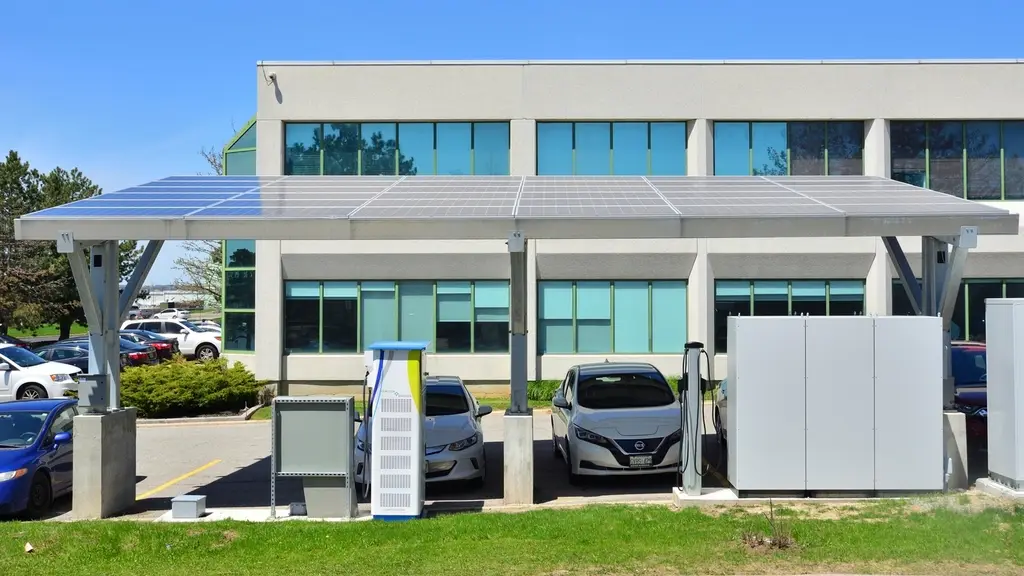 Solar carportsSolar car park canopies: permitted development in England, foundations and drainage, structural design, EV charging and how costs compare with rooftop solar.