
How farm energy use lines up with solar
Farm electricity demand depends almost entirely on the enterprise. Some match solar generation closely; others peak at the wrong time of day or year.
| Enterprise | Main electrical loads | How well they match solar |
|---|---|---|
| Dairy | Milk cooling, vacuum pumps, water heating for washing, lighting, slurry pumps | Good. Milk cooling runs through the day and robotic milking spreads demand across the day and night |
| Poultry | Ventilation fans, lighting, feed and water systems, sometimes heating | Good. Sheds run continuously, and ventilation demand rises in warm weather |
| Grain and arable | Grain drying fans and heaters, conveyors, grain store ventilation | Mixed. Drying loads are very heavy but concentrated in late summer and autumn |
| Cold and controlled atmosphere stores | Refrigeration for potatoes, fruit and vegetables | Good, especially where stores are cooled through the summer |
| Pigs | Ventilation, heating for young stock, feed systems | Fair to good, depending on how heating is supplied |
| Irrigation | Borehole and lift pumps | Good in dry summers, but highly variable from year to year |
A dairy unit or a poultry site with a steady daytime load can use a large share of what a rooftop array produces. A predominantly arable farm may use electricity heavily for a few weeks of drying, then very little for the rest of the year, so a bigger share of generation would be exported. The survey uses your meter data to show which pattern you have, and to model whether battery storage would help move daytime generation into early morning milking or evening loads.
Farms often have several supplies: the farmhouse, the dairy, a workshop and outlying buildings, each on its own meter. Solar can normally serve only the supply it is connected to, so the survey identifies which meter carries the load that best matches generation.
The site and building issues a farm survey checks
Agricultural roofs
Steel portal frame sheds with profiled sheet roofs are common on farms and often suit solar. Older buildings may be clad in fibre cement sheets, many of which contain asbestos; the asbestos roofs page explains how that is handled. Some farm buildings were built to a lighter specification than commercial sheds, so purlin sizes and spacing need checking before load is added.
Livestock buildings have their own considerations. Ammonia from housed animals is corrosive, so panels, fixings and cabling need to be suitable for that environment. Dust from feed and bedding settles on panels, and roof ventilation ridges and outlets have to stay clear.
Ground-mounted arrays on land
Where the buildings are unsuitable or too small, a ground-mounted array on a field close to the farmyard can be an option. The surveyor considers:
- Distance from the array to the point of connection, since trenching and cable costs rise with length
- Ground conditions, drainage, access and any flood risk
- Agricultural land quality and whether livestock such as sheep could continue to graze around the panels
- Planning: larger ground-mounted arrays usually need planning permission, and landscape or heritage designations can affect what is acceptable; see our planning permission guide
Rural grid capacity
This is often the deciding factor. Many farms are fed by overhead lines and some still have a single-phase supply, which limits how much generation can connect. Arrays above the G98 threshold need G99 approval from the DNO, and in rural areas the DNO may require network reinforcement, which can be expensive, or may offer a reduced export capacity. An export limitation scheme under G100 can sometimes let a larger array connect if most of the generation is used on the farm. The G99 and DNO applications page explains the process.
Finance and ownership questions for farms
Who owns the buildings and land
Many farmers are tenants under an agricultural tenancy or a farm business tenancy. Fixing solar to a landlord's building or putting an array on rented land normally needs the landlord's consent, and the tenancy may say what happens to improvements at the end of the term. Discuss it early; our commercial landlords page covers the wider questions.
Tax and grants
Farming businesses can usually claim capital allowances on solar, which is special rate expenditure. The Annual Investment Allowance is available to sole traders and partnerships as well as companies, while the 50% first-year allowance is for companies. Check the treatment with your accountant.
Defra farming grants have included solar PV and related equipment in some past rounds in England, but the schemes open and close and their eligible items change. Scotland, Wales and Northern Ireland run separate support. See grants for an overview.
TODO for the site owner: Verify which current Defra (England) farming grant schemes, if any, include solar PV, batteries or related equipment, and their eligibility and deadlines. Also check current agricultural support in Scotland, Wales and Northern Ireland before publishing any detail.
Diversification
Some farms see solar as part of wider diversification, alongside farm shops, holiday lets or workshops let to other businesses. On-site generation that supplies those enterprises can improve the overall case. Leasing land to a developer for a large solar farm is a different arrangement with long-term implications for the holding, and is outside the scope of a site survey for your own use.
What to have ready for a farm survey
- Electricity bills and, where available, half-hourly or monthly data for each meter
- A sketch or map showing each building, meter position and the main supply
- Which enterprises run where, and when the heavy loads occur (milking times, drying season, store cooling)
- Whether your supply is single or three phase, and whether it comes in on overhead lines
- Tenancy agreement, or landlord contact details if you rent the land or buildings
- Asbestos information for older sheds
- Any fields you would consider for a ground-mounted array
With that information the survey can compare roof and ground options against your real loads. Request a free survey when you are ready.
Frequently asked questions
Is a dairy farm a good fit for solar?
Often it is. Milk cooling, vacuum pumps and water heating create steady demand through the day, especially with robotic milking. The main limits tend to be roof condition, the capacity of the local network and whether the dairy has its own supply separate from the farmhouse. The survey uses your meter data to estimate how much generation the dairy would use directly.
Can we put solar on a livestock building?
Usually, but the design has to allow for the conditions. Ammonia from housed livestock is corrosive, so panels, rails, fixings and cables need to be suitable for that environment. Dust and ventilation outlets also need consideration. The surveyor checks the roof structure and sheet condition, since some older livestock buildings were built lightly and may need strengthening or reroofing first.
Our farm only has a single-phase supply. Does that rule solar out?
Not entirely, but it limits the size of array that can connect without changes. A small system may connect within the single-phase limits, while a larger one may need a three-phase upgrade or DNO reinforcement, which can be costly in rural areas. The survey estimates what can connect as things stand and whether an export limitation scheme could help.
Should we choose a roof or a ground-mounted array?
It depends on the condition and orientation of your buildings, the land available and the distance to the connection point. Roofs avoid using land and usually need less groundwork. Ground-mounted arrays can be orientated ideally and are easier to maintain, but they bring trenching costs and usually need planning permission. The survey compares both where both are realistic.
Are there grants for solar on farms?
Defra farming grants in England have included solar in some past rounds, and the devolved nations run their own schemes, but what is available changes frequently. Check the current schemes before committing, because some require you to apply and receive approval before ordering equipment. Our grants page gives an overview of the main sources of support.
Related pages
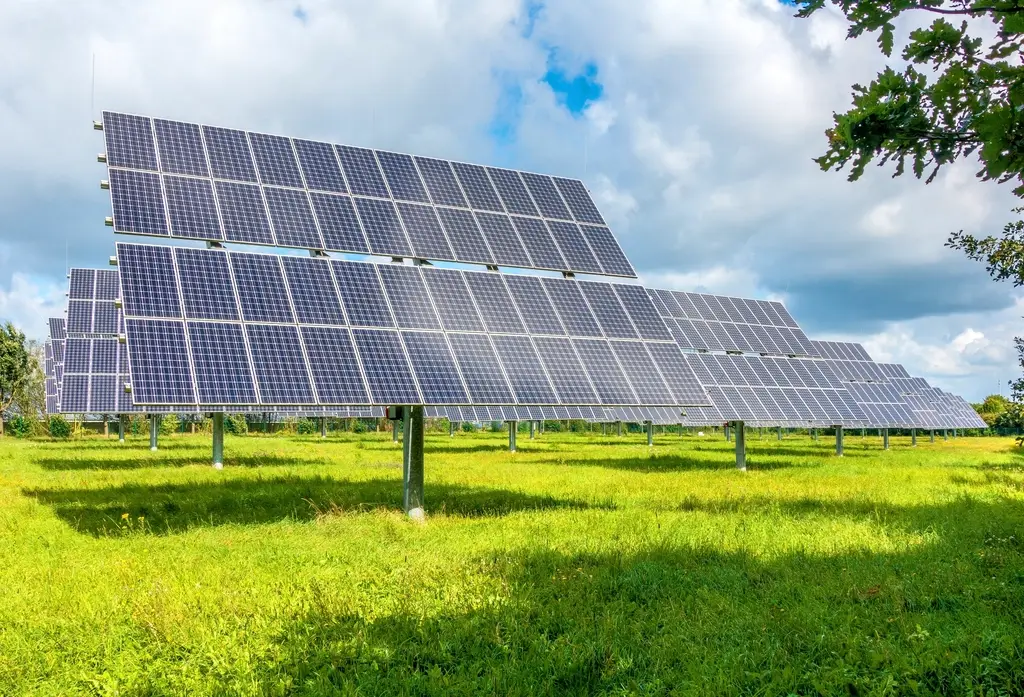 Ground-mounted solarGround-mounted solar on business or farm land: planning, land choice, cable runs, grid connection, security and biodiversity.
- Asbestos roofsAsbestos cement roof sheets: the legal duties, survey types, fragility, and the overcladding or replacement routes to a safe solar installation.
- G99 and DNO applicationsG98 versus G99, what goes into a DNO application, connection offers, export limitation under G100, reinforcement costs and how the survey checks your supply.
 Battery storageWhen a commercial battery pays: storing surplus solar, time of use tariffs, peak shaving, sizing from half-hourly data, illustrative costs, safety and siting.
 GrantsAn honest overview of funding for commercial solar across the UK: tax reliefs, rates exemptions, VAT, export payments, loans and the schemes run in each nation.
 Capital allowancesHow solar panels are treated for capital allowances: the special rate pool, the Annual Investment Allowance, the 50% first year allowance for companies, and illustrative examples.