
Why the roof comes first
The roof is the foundation of a rooftop solar project, in both senses. If it is in poor condition, leaks after installation, or has to be replaced a few years in, the cost of lifting and refitting the array can wipe out years of savings. If it cannot be accessed safely, installation and maintenance get more expensive. A roof survey for solar finds these issues while they are still cheap to deal with.
The roof survey is separate from, but closely linked to, the structural survey. The roof survey looks at the covering and its fixings, the condition and the practicalities of working up there. The structural survey asks whether the frame underneath can carry the extra load.
Roof covering type
Different coverings need different mounting systems, and each has its own weak points. The survey identifies the covering and what that means for the design.
| Covering | Common on | What the survey checks |
|---|---|---|
| Profiled metal (trapezoidal) sheet | Warehouses, factories, retail sheds | Sheet gauge and profile, fixing condition, cut-edge corrosion, rooflight positions |
| Standing seam metal | Newer industrial and commercial buildings | Seam type and clamp compatibility, manufacturer guidance |
| Built-up felt or asphalt | Older flat roofs, offices, schools | Age, blistering, ponding, whether it can take ballast or penetrations |
| Single ply membrane (PVC, TPO, EPDM) | Modern flat roofs | Membrane type, insulation beneath, warranty terms, compatible fixings |
| Fibre cement sheet | Agricultural and older industrial buildings | Likely asbestos content, fragility, fixing condition |
| Slate or tile | Pitched roofs on older commercial and public buildings | Batten condition, broken units, suitable roof hooks |
There is more detail on our pages for metal roofs, flat roofs and pitched roofs.
Age and remaining life
The key question is simple: will this covering last as long as the panels? Panel performance warranties are commonly 25 to 30 years. If the roof has ten years left, the array will have to come off and go back on part way through its life, which means scaffolding, labour and lost generation.
The survey looks for signs of ageing such as corroded fixings, cut-edge corrosion on coated steel sheets, cracked or brittle rooflights, worn membranes, split laps and previous patch repairs. Where the roof is borderline, the options are usually:
- Refurbish or over-clad the roof before installation, often the best value if the work is due anyway.
- Carry out targeted repairs and accept a shorter life before the array has to be lifted.
- Use a smaller array on the better sections of roof.
- Look at a different location, such as a carport or ground-mounted array.
Combining a roof refurbishment with a solar installation can share scaffolding and access costs. A good surveyor will tell you if that is the sensible route.
Fragility, access and edge protection
Falls through fragile roofs and rooflights are a serious and well known hazard in roof work. The Work at Height Regulations 2005 apply, and the HSE's guidance HSG33 on health and safety in roof work sets out what good practice looks like. The survey records:
- Fragile materials. Rooflights, older fibre cement sheets and corroded metal sheets can all be fragile. The Advisory Committee for Roofsafety test (ACR[M]001) is commonly used to classify non-fragility, but anything of unknown status is treated as fragile.
- Access routes. Where scaffolding, a tower or a mobile elevating work platform can go, and whether there is a permanent access point such as a roof hatch or fixed ladder.
- Edge protection. Whether parapets are high enough, or whether temporary edge protection or a permanent guardrail or safety line system is needed.
- Maintenance access. Panels need occasional inspection and cleaning, so walkways and safe routes matter long after installation.
Access often accounts for a significant share of the cost on commercial roofs, which is one reason prices per kWp vary. Our commercial solar cost page covers this.
Shading and obstructions
Shading from parapets, plant rooms, air handling units, flues, neighbouring buildings and trees reduces output, sometimes more than people expect. The survey maps obstructions, measures their height and notes rooftop equipment that needs clearance for maintenance. It also notes smoke vents and other fire safety features that must stay clear.
Orientation and pitch
South-facing pitched roofs give the highest yield per panel. East and west facing roofs produce less at midday but more in the morning and evening, which can match some demand profiles well. On flat roofs, low-pitch east-west layouts produce less per kWp than south-facing tilted rows, but fit far more panels and have lower wind loading. The survey records the actual orientation and pitch of each roof plane so the yield model is accurate.
Drainage
Panels and mounting systems must not block water from leaving the roof. The survey checks gutters, valley gutters and outlets, looks for signs of ponding on flat roofs and notes where ballast or rails would cross drainage paths. Valley gutters on large industrial roofs are a common source of leaks, so their condition is worth knowing before anything is added.
Warranties, landlords and insurers
Fixing through a roof covering, or adding ballast to a membrane, can affect the roof manufacturer's or contractor's warranty. The survey should note any existing guarantee so the installer can check compatibility with the roof manufacturer before design. If you lease the building, the landlord's consent is usually needed, and they may want to see the survey. Insurers increasingly ask how the installation addresses RC62, the fire safety recommendations for rooftop PV on commercial buildings, so the survey should record roof construction and any combustible insulation. Our guide to solar fire safety and insurance has more.
Asbestos
Many buildings constructed before 2000 have fibre cement roofs that may contain asbestos. The Control of Asbestos Regulations 2012 apply, and the duty to manage asbestos in non-domestic premises means a suitable asbestos survey is usually needed before work. The solar surveyor will not sample materials, but will flag a suspected asbestos roof so it can be assessed properly. See solar on asbestos roofs.
How the free survey covers the roof
We arrange a free survey with one MCS certified installer matched to your site, in person or virtually. The installer's surveyor assesses the covering, condition, access, shading, orientation and drainage, and tells you plainly if the roof needs work first. Your details go to that one installer only, and there is no obligation to proceed. See what the survey includes for the full scope.
Frequently asked questions
Can solar panels go on an old roof?
Sometimes, but only if the covering is expected to outlast the panels or you accept that the array may need lifting later. Panels are commonly warranted for 25 to 30 years. If the survey finds a roof with limited life left, refurbishing or over-cladding before installation often works out cheaper overall, especially as the scaffolding and access can be shared between the two jobs.
Will fixing panels to my roof void the roof warranty?
It can if the fixings or ballast are not approved by the roof manufacturer or the contractor who gave the guarantee. The survey should record any existing warranty so the installer can check compatible mounting systems before design. For single ply membranes and some metal roofs, manufacturers publish approved fixing methods. Get confirmation in writing before work starts.
Do I need to be on site for a roof survey?
Someone needs to provide access to the roof and the electrical intake for an in-person survey, and to share drawings or past repair records if you have them. A virtual survey can work for some sites, using a video walkround, photos and aerial imagery, with a site visit later if needed. The installer will tell you which approach suits your building.
Are rooflights a problem for solar panels?
Rooflights are usually treated as fragile, so panels are kept clear of them and work near them needs protection. They also limit the usable area on many industrial roofs. Some owners choose to replace ageing rooflights at the same time as installing solar. The survey records their positions and condition so the layout and safe working method can be planned.
Does a roof survey check whether the structure is strong enough?
Not on its own. The roof survey looks at the covering, condition and access, and the surveyor will note obvious structural concerns. Whether the frame can carry the extra load is a separate structural assessment, which may need calculations by a structural engineer depending on the building and the mounting system. See our structural survey page for when that is needed.
Related pages
- Structural surveyWhat a structural assessment for rooftop solar checks: dead loads, wind uplift and snow, purlins and rafters, ballast, and when an engineer's report is needed.
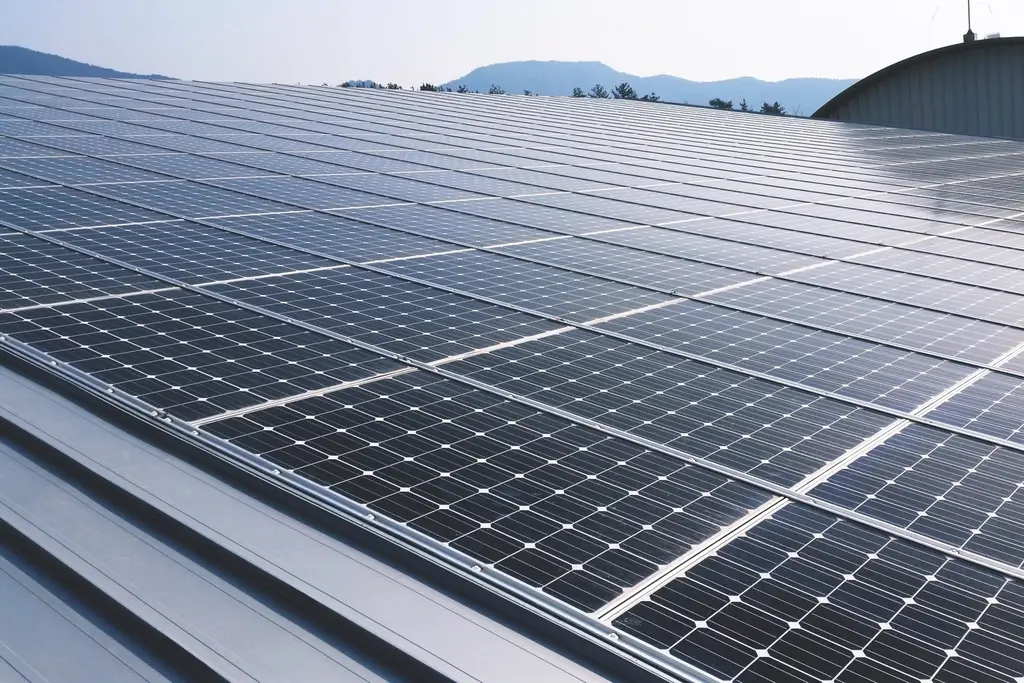 Metal roofsTrapezoidal, standing seam and composite panel roofs: how mounting, rooflights, fixings and sheet age affect a solar installation.
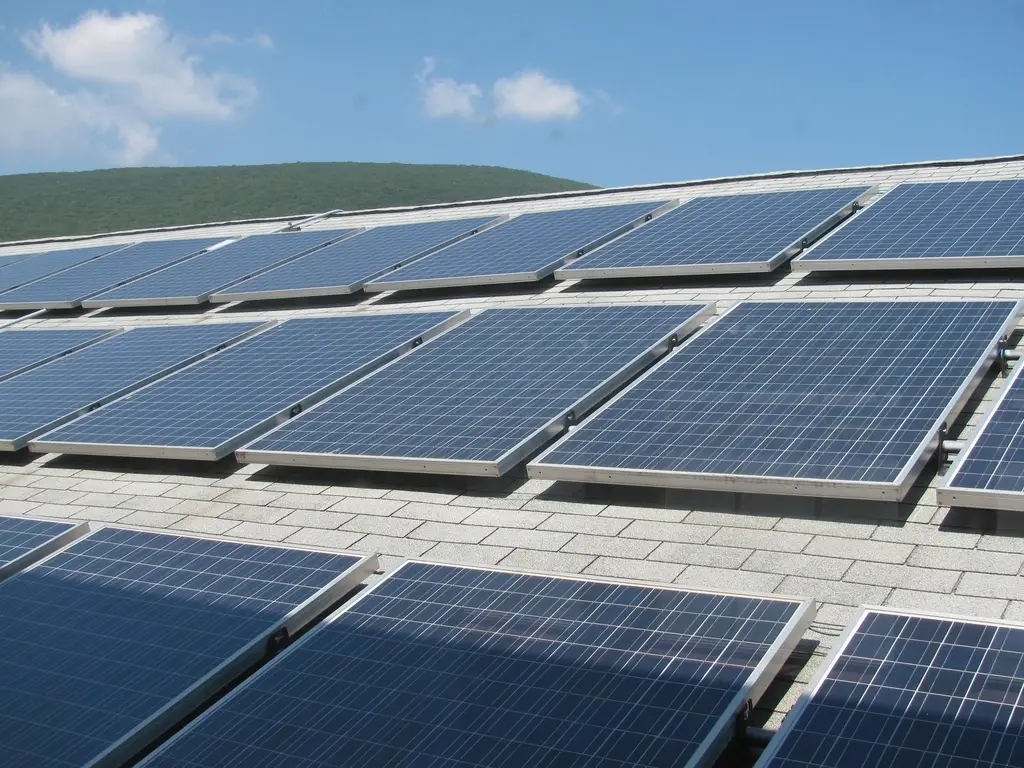 Flat roofsHow membrane type, ballasted or fixed mounting, east-west layouts, parapets, drainage and roof loading decide whether a flat roof suits solar.
- Asbestos roofsAsbestos cement roof sheets: the legal duties, survey types, fragility, and the overcladding or replacement routes to a safe solar installation.
- Fire safety and insuranceRC62 in plain terms, insurer questions, DC isolation, cable routing, separation from rooflights and fire breaks, and inspection regimes for commercial rooftop solar.
- What the survey includesThe full list of what is checked: energy use, roof, structure, grid, costs and finance.