

When a battery pays for itself
A battery earns money by moving electricity from a time when it is cheap or surplus to a time when it is expensive or needed. It does not create energy, and it loses some on every cycle. So the business case depends entirely on how big the gap is between the value of the electricity going in and the value of the electricity coming out, and how often the battery can use that gap.
In practice, a commercial battery tends to pay best when several of these apply:
- Your solar array regularly produces more than the site uses, typically at midday, weekends or in summer.
- Your site has significant demand in the early morning or evening, after solar output falls away.
- Your tariff has a meaningfully cheaper overnight or off-peak rate.
- Your DNO has limited your export, so surplus solar would otherwise be curtailed.
- Your demand has sharp peaks that push against your agreed supply capacity.
- You are planning new load, such as EV charging, that would otherwise need a supply upgrade.
If none of those apply, a battery is unlikely to be the best use of capital. That is a perfectly normal survey outcome.
Ways a battery earns its keep
| Use | How it works | What it depends on |
|---|---|---|
| Storing surplus solar | Charges from solar that would be exported, discharges later on site | The gap between your unit rate and your export rate; how often there is surplus |
| Time of use arbitrage | Charges at a cheaper rate, discharges at an expensive one | Your tariff structure and the price difference |
| Peak shaving | Discharges during demand peaks to keep demand below a threshold | How your supply capacity and network charges are set |
| Avoiding curtailment | Absorbs solar output above an export limit | Whether your connection offer caps export |
| Resilience | Keeps selected circuits running during a power cut | A system specifically designed for backup, which most are not by default |
Storing surplus solar
This is the most common reason businesses look at a battery. Using the illustrative figures shared across this site, a unit of solar used on site is worth about 24p, while the same unit exported earns about 5p. A battery that stores surplus and releases it later captures most of that difference, less the energy lost in the cycle.
The value depends on how many days a year you actually have surplus. A site with high, steady daytime demand may rarely have any, so a battery would sit idle for much of the year. Your half-hourly data answers this question directly.
Time of use tariffs
Some business tariffs charge different rates at different times of day. Where the gap between the cheapest and most expensive periods is large, a battery can charge in the cheap period and discharge in the expensive one. This can keep the battery working in winter, when there is little surplus solar to store. Tariff structures change, so the model should use your current contract and be tested against a less favourable one.
Peak shaving and capacity charges
Larger sites on half-hourly contracts typically pay a capacity charge based on their agreed supply capacity in kVA, and may face excess capacity charges if they go over it. Network charges can also vary by time band. A battery that discharges during demand peaks can help a site stay within its capacity, which may avoid excess charges or a costly supply upgrade.
In recent years, reforms to network charging moved a large part of those costs into fixed charges based on a site's charging band, which reduced the value of peak shaving for some businesses. Check how your own bill is structured, or ask your supplier, before counting on savings from peak reduction.
Sizing a battery from half-hourly data
Battery sizing is a balance. Too small and it fills up by mid-morning on sunny days. Too large and much of the capacity is never used, which wastes capital. A sound sizing process looks like this:
- Model solar generation for each half hour of a typical year, using the proposed array.
- Overlay your half-hourly demand to find the surplus in each period and the demand after sunset.
- Test several battery sizes against that profile and count how much energy each one actually shifts over the year.
- Apply your tariff, including any time of use rates and capacity charges, to value the energy shifted.
- Allow for losses and degradation, since some energy is lost each cycle and usable capacity falls over time.
- Compare the payback of each size, and of solar alone, so you can see what the battery adds.
The size that shifts the most energy is rarely the one with the best return. The aim is the point where an extra kWh of capacity stops paying for itself.
Illustrative costs and a worked example
As an illustrative range, commercial battery storage costs about £400 to £900 per kWh of usable capacity installed, depending on size, chemistry and the work needed to install it. Larger systems usually sit towards the lower end per kWh.
Example: an illustrative 100 kWh usable battery at £400 to £900 per kWh costs about £40,000 to £90,000. Suppose it stores about 17,800 kWh of surplus solar a year that would have been exported at 5p, and after an assumed 10% loss delivers about 16,000 kWh to the site at 24p. The saving is about £3,840, less about £890 of export income given up, so roughly £2,950 a year. On solar shifting alone that is a simple payback of roughly 14 years at the lower cost, and much longer at the higher cost.
That example is deliberately cautious. The case improves if the battery can also earn from time of use arbitrage in winter, avoid curtailment under an export limit, or defer a supply upgrade. It worsens if surplus solar is rare. The point is that a battery needs to be tested against your site, not assumed. See our commercial solar cost and solar payback pages for how this fits into the wider budget.
Safety and siting
Commercial batteries store a lot of energy in a small space, so siting and fire safety need care. Points the survey and design should cover include:
- Location. Indoors in a dedicated room, or outdoors in a weatherproof enclosure or container. Outdoor siting keeps the battery away from occupied areas but needs a secure, level base.
- Separation and escape routes. Batteries should not compromise fire escape routes or be placed where a fire could spread readily into the building.
- Ventilation and temperature. Battery performance and life depend on staying within the manufacturer's temperature range.
- Fire risk assessment and insurer. Update the site's fire risk assessment and tell your insurer before installation. Some insurers have specific requirements for battery storage.
- Standards and guidance. The IET Code of Practice for Electrical Energy Storage Systems and the manufacturer's installation instructions are key references. Our guide on solar fire safety and insurance covers the wider picture.
- Access. The fire service and maintenance staff need safe access and clear isolation points.
Grid connection for batteries
For connection purposes a battery counts as generation, so it is included in the G99 application along with the solar array. The DNO will want to know its capacity, the inverter details and whether it can export to the grid. A battery can sometimes help a connection application by allowing a larger solar array behind an export limit.
Can you have a battery without solar?
Yes. A standalone battery can still earn from time of use tariffs and peak shaving, and some businesses use one to support EV charging without upgrading the supply. Without solar, though, it loses its most common source of value, so the tariff gap needs to be wide enough to cover losses and the capital cost.
How the free survey looks at storage
We arrange a free survey with one MCS certified installer matched to the site, in person or virtually. If you are interested in a battery, the installer can model solar with and without storage using your half-hourly data, check where a battery could be sited safely and include it in the grid application. Your details go to that one installer only, and there is no obligation to proceed. See what the survey includes or request a free survey.
Frequently asked questions
Is battery storage worth it for a business with solar?
It depends on how much surplus solar you have and when you use power. If your site exports a lot at midday or weekends and has high evening or early morning demand, a battery can capture value that would otherwise be exported cheaply. If you use nearly all your solar output already, a battery may take a long time to pay back. Half-hourly analysis shows which applies.
How much does commercial battery storage cost?
As an illustrative range, about £400 to £900 per kWh of usable capacity installed, depending on system size, chemistry, location and installation work. So an illustrative 100 kWh battery might cost around £40,000 to £90,000. Larger systems tend to cost less per kWh. Get a site specific quote, as enclosures, cabling, groundwork and fire protection can change the price.
Will a battery keep my business running in a power cut?
Not automatically. Most grid-connected batteries shut down during a power cut for safety, like solar inverters. Backup needs a system designed to disconnect from the grid and supply selected circuits on its own, with suitable switchgear and protection. This adds cost and is usually limited to essential loads. Tell the installer at the start if resilience matters to you.
Can a battery help if the DNO limits my export?
Yes, this is one of the clearer cases for storage. If your connection offer caps export, solar output above the cap is curtailed and lost. A battery can absorb that surplus and release it to the site later, so a larger array becomes worthwhile. The value depends on how often you would hit the export limit, which half-hourly modelling can estimate.
Where should a commercial battery be installed?
Often outdoors in a weatherproof enclosure or container on a level, secure base, or indoors in a dedicated room with suitable ventilation and fire separation. It should not obstruct escape routes and needs clear access for maintenance and the fire service. Update your fire risk assessment, tell your insurer, and follow the manufacturer's instructions and relevant codes of practice.
Related pages
- Energy data analysisHow half-hourly consumption data shapes solar sizing and payback: getting the data, profile classes, baseload, weekend and seasonal use, self-consumption and batteries.
- G99 and DNO applicationsG98 versus G99, what goes into a DNO application, connection offers, export limitation under G100, reinforcement costs and how the survey checks your supply.
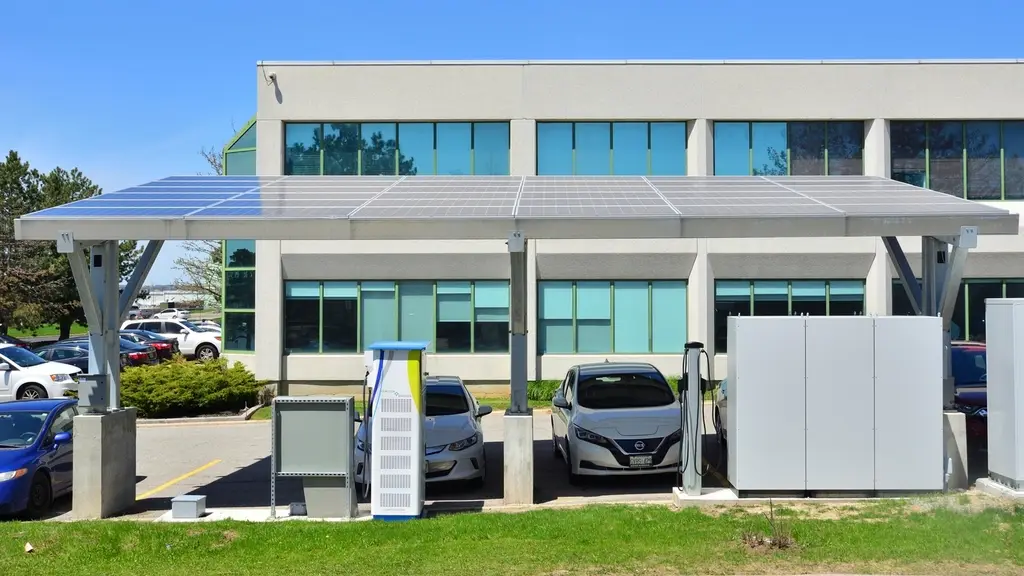 EV chargingHow to plan workplace and fleet EV charging with solar: supply capacity, load management, charger types, matching generation to charging and grant support.
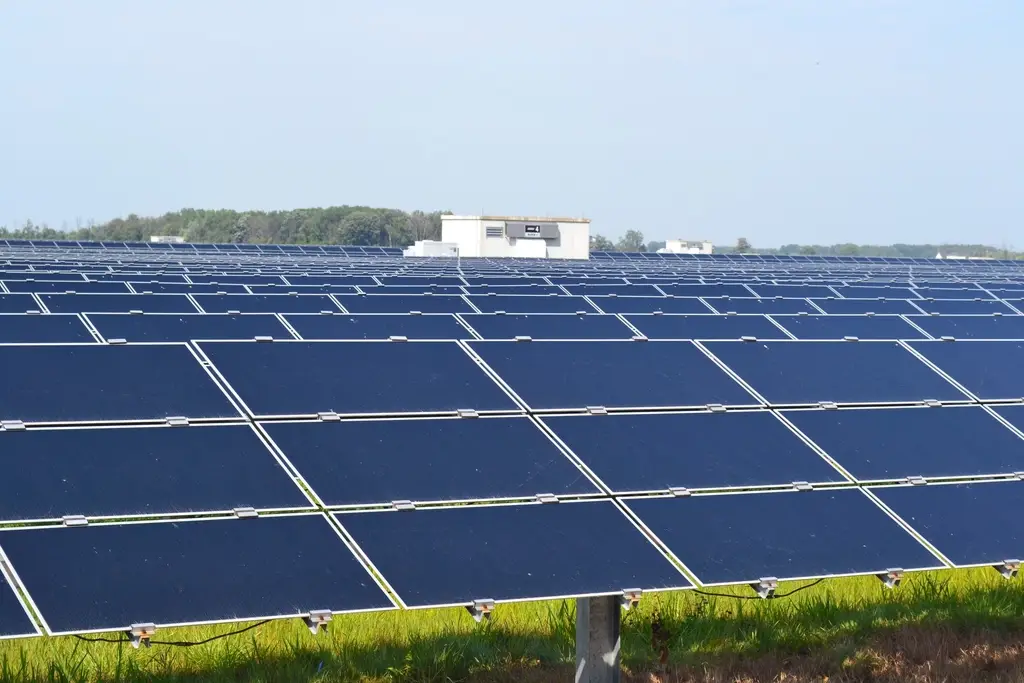 Solar paybackA worked payback example for a 100 kWp system, the factors that move the result most, the effect of tax relief, and a calculator to try your own figures.
- Fire safety and insuranceRC62 in plain terms, insurer questions, DC isolation, cable routing, separation from rooflights and fire breaks, and inspection regimes for commercial rooftop solar.
- FactoriesFactories with heavy daytime process loads can use nearly all the solar they generate. The survey focuses on the electrical system, roof condition and how to install without stopping production.