
Why asbestos roofs need special care
Asbestos cement sheets were widely used on agricultural and industrial buildings for decades. In good condition and left undisturbed, they are generally considered lower risk than some other asbestos materials. The risk rises when sheets are broken, drilled, cut, abraded or cleaned aggressively, because that can release fibres.
Important: Never drill into, cut, clean or walk on a roof you suspect contains asbestos. Do not let anyone fix brackets, rails or panels directly through asbestos cement sheets. Arrange an asbestos survey first.
This is why a solar project on an asbestos roof starts with the asbestos, not the panels.
The legal framework
The Control of Asbestos Regulations 2012 apply to work with asbestos in Great Britain. For non-domestic premises, they include a duty to manage asbestos. In general terms, the person or organisation responsible for maintaining the building must:
- take reasonable steps to find out whether asbestos is present, where it is and what condition it is in,
- presume materials contain asbestos unless there is strong evidence otherwise,
- keep an up to date record (an asbestos register) and a plan to manage the risk,
- share that information with anyone who may disturb the materials, including roofers and solar installers.
If you lease the building, the lease usually decides who holds this duty, and it can be shared. Our page for commercial landlords covers how responsibilities between landlord and tenant affect solar projects more broadly.
TODO for the site owner: Confirm the position for Northern Ireland, which has its own Control of Asbestos Regulations (Northern Ireland) 2012, before publishing any NI specific wording.
Asbestos surveys in general terms
The HSE's guidance describes two main types of asbestos survey:
- Management survey: the standard survey to locate, as far as reasonably practicable, asbestos that could be damaged or disturbed during normal occupation and routine maintenance.
- Refurbishment and demolition survey: needed before any refurbishment or demolition work. It is more intrusive and aims to find all asbestos in the area where work will take place.
Replacing or overcladding a roof for solar normally falls into the second category for the roof area affected. A qualified asbestos surveyor decides the right scope. Your existing register may help, but it may not be detailed enough for roof work.
Fragility and working at height
Asbestos cement sheets are fragile. They can break under a person's weight without warning, and they become more brittle with age and weathering. Falls through fragile roofs are a serious and recurring cause of death and injury in UK agriculture and industry.
Any survey of an asbestos roof should be done from safe positions: from below, from mobile elevating work platforms, from drones, or from properly designed crawling boards and edge protection where access is unavoidable. Our roof survey page explains what installers record and how they record it without putting anyone at risk.
Overcladding or replacement
Because panels should not be fixed directly through asbestos cement, there are two realistic routes to solar.
| Overcladding | Full replacement | |
|---|---|---|
| What happens | A new metal roof is installed over the existing sheets on a support system | Asbestos sheets are removed and disposed of, then a new roof is fitted |
| Asbestos left in place | Yes, encapsulated beneath the new roof | No, removed from the building |
| Disturbance | Less, but fixings through to the structure still need planning under asbestos controls | More, with removal, waste handling and licensed disposal |
| Building in use | Often easier to keep operating | May need sections cleared during removal |
| Future liability | Asbestos stays on the register and must be managed | Removed from the roof for good |
Whichever route you take, the new roof then becomes a modern metal roof suitable for solar mounting. The cost of the roofing work is significant and sits outside the typical per kWp ranges on our cost page, which already note that asbestos work increases project costs.
Licensed and non-licensed work
Work with asbestos cement is often classed as non-licensed work, but that does not mean anyone can do it. It still requires trained, competent contractors, risk assessments, controls and proper waste disposal, and some tasks are notifiable to the enforcing authority. Other asbestos materials in the same building, such as insulating board around eaves, rooflights or soffits, may require a licensed contractor. The asbestos survey and a competent contractor determine which category applies to each task.
Questions to ask contractors
When you gather quotes for the roofing and asbestos work, ask each contractor:
- which survey findings their method is based on, and whether they need further sampling,
- whether each task is licensed, notifiable non-licensed or non-licensed work, and why,
- how they will prevent falls through fragile sheets during the work,
- how waste will be packaged, transported and disposed of, and what paperwork you will receive,
- whether the new roof system is designed to take solar mounting, and what load allowance it includes,
- how the building can keep operating while the work is carried out.
The answers help you compare quotes on more than price and give the solar installer the information they need to design the array.
A sensible order of work
- Check your asbestos register and arrange a refurbishment and demolition survey of the roof area.
- Get a structural assessment of the frame and purlins, since the new roof and panels will load them.
- Obtain quotes for overcladding and for replacement from competent roofing and asbestos contractors.
- Design the solar array for the new roof, and confirm planning and grid capacity through G99 where needed.
- Programme the work so roofing and solar installation follow each other with one set of access equipment where possible.
Many farm and warehouse owners find that combining an overdue roof replacement with solar makes both projects easier to justify. The free survey we arrange can help you see the whole picture before committing.
Frequently asked questions
Can solar panels be fixed directly to an asbestos cement roof?
This should not happen. Fixing brackets through asbestos cement sheets means drilling, which can release fibres, and the sheets are fragile and age poorly. The usual routes are to overclad the existing roof with a new metal roof, or remove the asbestos and fit a new roof, then mount the panels on that. A competent asbestos contractor and installer plan this together.
Do I need an asbestos survey before a solar survey?
You need asbestos information before anyone works on the roof, and ideally before a solar installer does more than look from safe positions. If you already have an asbestos register, share it. For roof replacement or overcladding, a refurbishment and demolition survey of the affected area is normally required. A qualified asbestos surveyor confirms the right type and scope.
Is overcladding cheaper than removing the asbestos?
Often, but not always, and the comparison is not only about price. Overcladding usually involves less disturbance and can keep the building running, but the asbestos stays in place and remains on your register to manage. Removal costs more upfront and may disrupt operations, but it removes the material from the roof. Get quotes for both and weigh long term liability too.
Does asbestos removal need a licensed contractor?
Work with asbestos cement is often non-licensed, but it still needs trained, competent contractors, risk assessments and correct waste handling, and some tasks must be notified. Other asbestos materials in the same building, such as insulating board, may require a licensed contractor. The asbestos survey identifies the materials, and the contractor confirms which category applies to each part of the job.
Who is responsible for asbestos in a leased building?
Under the duty to manage, responsibility usually sits with whoever has the repairing obligation for the building, which the lease decides. In multi-let buildings it is often the landlord for common parts and shared between landlord and tenant elsewhere. Check your lease and agree who will commission the surveys and roof works before planning a solar installation.
Related pages
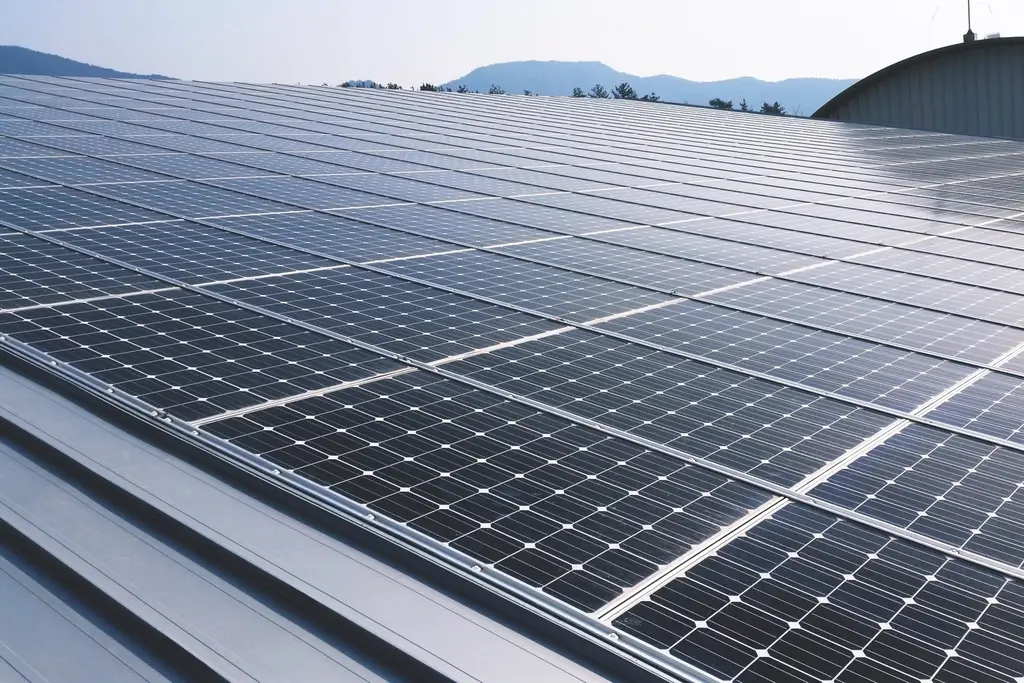 Metal roofsTrapezoidal, standing seam and composite panel roofs: how mounting, rooflights, fixings and sheet age affect a solar installation.
- FarmsDairy, poultry and grain enterprises can make good use of solar on sheds or land. A farm survey looks closely at seasonal demand, building condition and rural grid capacity.
- WarehousesLarge unshaded roofs and daytime shift work make many warehouses a strong fit for rooftop solar, provided the roof structure, rooflights and lease terms stack up.
- Roof surveyHow a solar roof survey assesses covering type, condition and remaining life, fragility and safe access, shading, orientation, drainage and existing warranties.
- Structural surveyWhat a structural assessment for rooftop solar checks: dead loads, wind uplift and snow, purlins and rafters, ballast, and when an engineer's report is needed.
- Commercial landlordsSolar on let property means settling who pays, who benefits and who owns the system. This page covers the main ownership models, lease length, metering and MEES.