
How office demand fits solar generation
A typical office uses electricity for lighting, IT, lifts, small power, ventilation and, increasingly, heating and cooling through heat pumps or air conditioning. Most of that happens between early morning and early evening on weekdays, which overlaps well with when panels generate.
Three features of office demand shape how much benefit you get:
- Cooling in summer. Air conditioning load tends to rise on sunny days, exactly when panels produce the most. Buildings with significant cooling can use summer generation well.
- Weekends and holidays. Unless the building has a data room, security systems or tenants working weekends, demand drops sharply on Saturdays and Sundays, and generation on those days is largely exported.
- Hybrid working. Many offices now see busier midweek days and quieter Mondays and Fridays. Your half-hourly data shows the real pattern, which may differ from what the occupancy plan suggests.
The bigger constraint is usually the ratio of roof to floor area. A single-storey business park office may cover a good share of its demand from the roof. A five-storey building has the same roof serving five floors of demand, so even a fully covered roof may supply only a small fraction of annual use. That is not a reason to rule solar out, because every kWh generated is likely to be used on site, but it does mean savings will be modest relative to the total bill. It helps to set expectations early with whoever signs off the budget.
Other loads worth mentioning
Some offices have loads that change the picture. A comms room or small data suite runs around the clock and lifts the weekend baseload. Electric heating or heat pumps add demand in winter, when generation is low, so they help less than cooling does. Staff EV charging during the working day can absorb midday generation very effectively. If you are planning to replace gas boilers with heat pumps or add charging points, tell the surveyor, because the future demand profile may justify a different array size from the one today's bills suggest.
The site and building issues an office survey checks
Flat roofs and roof plant
Most offices built in the last few decades have flat roofs with a membrane, asphalt or felt finish. The survey looks at:
- Plant and services: condenser units, air handling plant, lift motor rooms, extract fans and antennas, all of which take space, cast shade and need maintenance access
- Membrane age and warranty: fixing through a membrane can affect a roofing warranty, and if the membrane is near the end of its life it is usually better to replace it first
- Ballasted or fixed systems: ballasted frames avoid penetrations but add weight, so a structural survey is important
- Wind uplift and edge zones: taller buildings experience higher wind loads, particularly near roof edges and corners, which reduces the area that can be used
- Parapets and safe access: whether there is a compliant roof hatch or stair, guardrails or a fall arrest system, and how materials will be lifted, which in a town centre may need a crane and a road closure
Heritage and planning
Older offices in town centres may be listed or in a conservation area. Permitted development rights for non-domestic rooftop solar in England were widened in December 2023, but conditions still apply to listed buildings, conservation areas and panels on roofs facing a highway in some locations. Our planning permission guide sets out the main points.
Carports over staff parking
Where the roof is too small, a solar carport over the car park can add significant capacity. Carports suit business park offices with surface parking. The survey checks foundations, underground services, clearance heights for vehicles, and the route back to the building's electrical intake. A carport also gives a natural place for EV charging, which many office occupiers are adding for staff and visitors.
Finance and ownership questions for offices
Single occupier, owned building
The simplest case. The occupier buys the system or uses a funding arrangement, and every kWh saved comes off its own bill. The worked example on our payback page shows how the numbers usually build up. Office arrays are often smaller than industrial ones, so the illustrative cost per kWp is usually higher.
Leased offices
Tenants usually need landlord consent for anything fixed to the roof, and many office leases reserve the roof to the landlord altogether. Consent is normally documented in a licence for alterations, and it will usually deal with reinstatement at lease end, insurance and access for roof maintenance.
Multi-tenant buildings
In a multi-let office, the landlord typically has a supply for the common parts (reception, lifts, corridor lighting, central heating and cooling plant), while each tenant may have its own metered supply. Solar can normally connect to only one supply. Connecting it to the landlord's supply means the benefit reduces common parts costs, which tenants may see through the service charge. Supplying tenants directly is more complicated and needs legal and metering advice. Our commercial landlords page covers these arrangements in more detail.
Power purchase agreements
Some funders have minimum system sizes for PPAs, so smaller office arrays are more often bought outright or financed. Larger offices and business parks may be large enough to attract a PPA offer.
What to have ready for an office survey
- 12 months of half-hourly data for each supply, including the landlord's common parts supply if multi-let
- Building management system data on heating and cooling, if available
- Roof plans showing plant, hatches and any fall protection
- Details of the roof membrane, its age and any warranty
- The lease, or the landlord's contact details and the relevant consent clauses
- Car park layout and any EV charging plans
- Listed building or conservation area status, if known
If you are a tenant, sharing the survey results with your landlord is often the quickest way to start a consent conversation. Request a free survey to begin.
Frequently asked questions
Our office has a small roof. Is solar worth it?
It can still be worthwhile because nearly all of the generation is likely to be used on site during working hours, saving close to your own unit rate. The saving will be a smaller share of the total bill in a multi-storey building. The survey shows what the roof can hold and how much it would save, and whether a carport could add useful capacity.
Do we need landlord consent to install solar on our office?
In most leased offices, yes. Leases commonly reserve the roof and structure to the landlord and prohibit alterations without consent. Consent is usually recorded in a licence for alterations, covering insurance, roof access, maintenance and what happens at the end of the lease. A survey report gives your landlord a clear picture of what is proposed, which can make that conversation easier.
Can solar on a multi-let office benefit all the tenants?
It can, indirectly. Most multi-let buildings connect solar to the landlord's common parts supply, which serves shared lighting, lifts and central plant. The saving reduces those costs, which may then flow through the service charge. Supplying each tenant directly is possible in some buildings, but it involves metering changes and legal arrangements that need specialist advice.
Will roof plant stop us fitting panels?
Plant reduces the usable area but rarely rules solar out entirely. Condenser units, air handling equipment and lift rooms need clear maintenance access, and taller items cast shade. The surveyor maps all of it and designs around it. On very crowded roofs, raised frames over plant or a carport in the car park are sometimes considered as alternatives.
Related pages
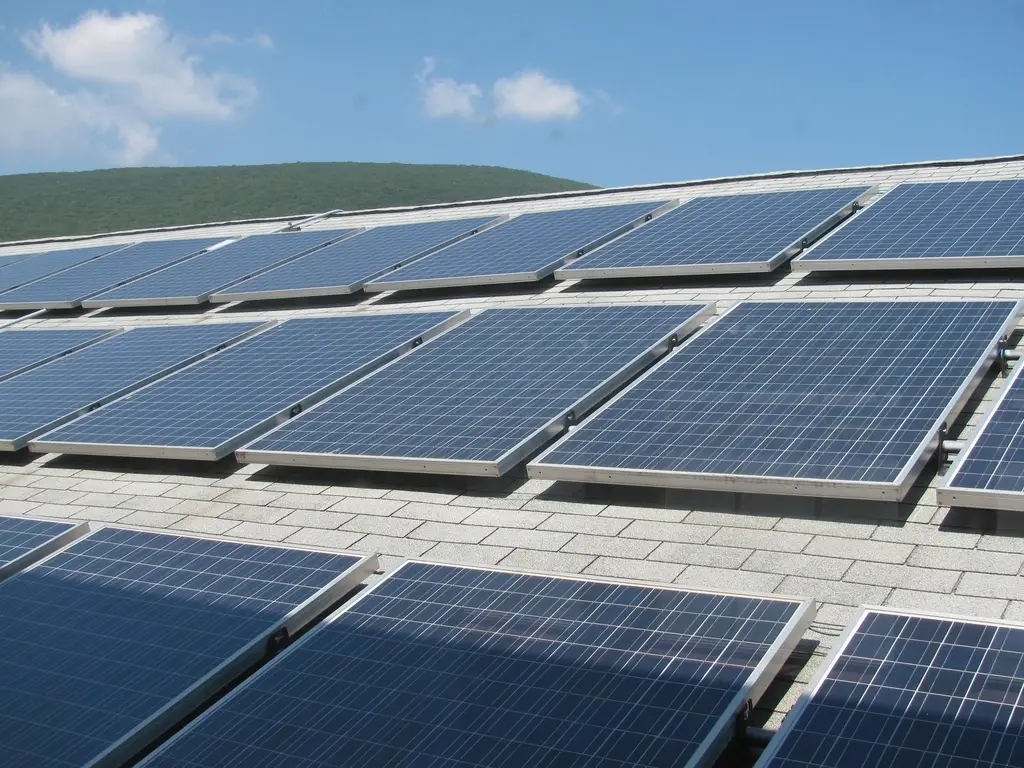 Flat roofsHow membrane type, ballasted or fixed mounting, east-west layouts, parapets, drainage and roof loading decide whether a flat roof suits solar.
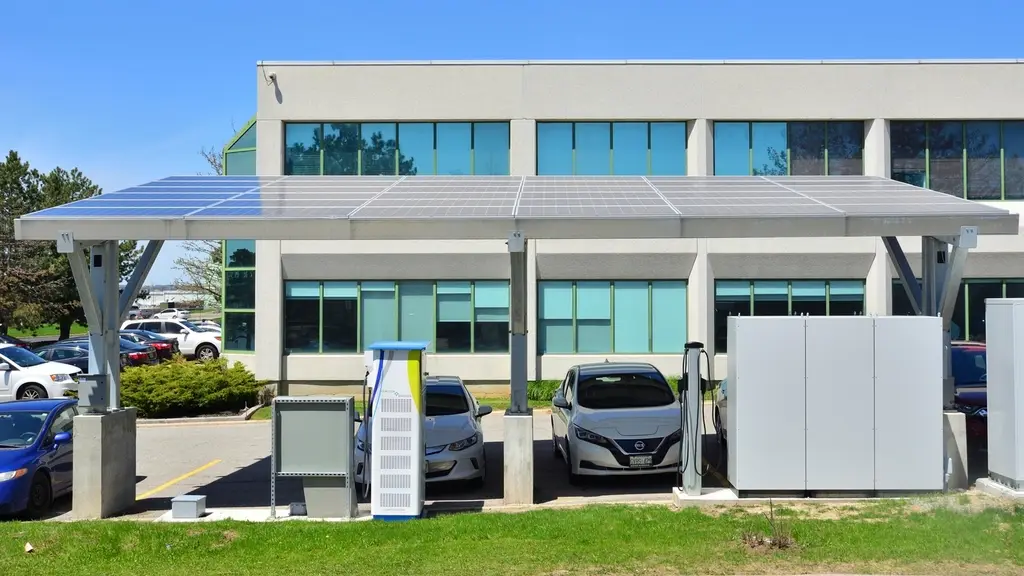 Solar carportsSolar car park canopies: permitted development in England, foundations and drainage, structural design, EV charging and how costs compare with rooftop solar.
- EV chargingHow to plan workplace and fleet EV charging with solar: supply capacity, load management, charger types, matching generation to charging and grant support.
- Commercial landlordsSolar on let property means settling who pays, who benefits and who owns the system. This page covers the main ownership models, lease length, metering and MEES.
 Solar paybackA worked payback example for a 100 kWp system, the factors that move the result most, the effect of tax relief, and a calculator to try your own figures.
- Planning permissionPermitted development for commercial rooftop solar and car park canopies in England, prior approval, heritage limits, ground-mounted schemes and the other UK nations.