
Key facts
| Network operator | Scottish and Southern Electricity Networks (Scottish Hydro Electric Power Distribution licence area, north of Scotland) |
| Planning authority | Aberdeen City Council; Aberdeenshire Council for Westhill and other sites outside the city |
| Clean air zone | Low Emission Zone in the city centre, enforced since June 2024 |
| Indicative yield | About 800 to 880 kWh per kWp a year for a well-oriented array |
| Nation support page | Grants and support in Scotland |
Grid connection with SSEN
Aberdeen is in the north of Scotland licence area run by Scottish and Southern Electricity Networks (SSEN), not SP Energy Networks, which serves Glasgow and Edinburgh. Commercial systems above the G98 limits need G99 approval from SSEN before they connect. Boundaries can vary at the edges of licence areas, so confirm your operator with the Energy Networks Association postcode tool.
The north of Scotland has a great deal of renewable generation already connected, so local export capacity is worth checking early. Sizing the array to your daytime demand, adding a battery or using a G100 export limitation scheme are common ways to keep the connection simple. See our page on G99 and DNO applications.
Planning in Aberdeen and Aberdeenshire
Aberdeen City Council covers the city, including Dyce and Kirkhill near Aberdeen Airport, Bridge of Don, and the Altens and East Tullos industrial estates in the south. Westhill, a centre for subsea engineering, is in Aberdeenshire, as are the towns along the main routes north and south.
The council's Energy Transition Zone masterplan covers about 250 hectares in the south of the city, including Altens and East Tullos and land beside the new South Harbour at Nigg Bay, aimed at offshore wind and other energy transition businesses.
Scotland has its own planning system. Its permitted development rights for rooftop solar were widened in 2024, removing the previous 50 kW limit for non-domestic buildings, with listed buildings and World Heritage Sites excluded and conditions for flat roofs and conservation areas. Union Street and Old Aberdeen are among the city's conservation areas. Check current conditions with the council before relying on them.
The local economy and solar
Aberdeen's economy is built around oil and gas, subsea engineering and a growing energy transition sector, alongside food and drink, seafood processing, the port, universities and health. Engineering workshops, testing facilities, warehouses and cold stores with daytime demand tend to suit solar well. For energy sector businesses, on-site generation can also support carbon reporting; see our carbon reporting guide.
The Low Emission Zone and vehicle charging
Aberdeen's Low Emission Zone covers part of the city centre, with penalties for non-compliant vehicles from June 2024. It applies to most vehicles, including private cars. At the time of writing the initial penalty is £60, doubling for repeat contraventions up to £480 for cars and vans and £960 for buses, coaches and HGVs; check the council's LEZ pages for the boundary and exemptions.
Most industrial estates sit outside the zone, but service fleets heading into the centre may still need compliant vehicles. Electric vans charged from a depot roof can be a practical answer; see EV charging for business.
Roofs and buildings in Aberdeen
- Granite buildings in the city centre and Old Aberdeen, many listed or in conservation areas, with slate roofs and limited space for panels.
- 1970s and 1980s industrial units and offices built during the North Sea boom at Dyce, Altens, Tullos and Bridge of Don. Some have asbestos cement roofs, and older metal roofs from that era may be nearing the end of their coating life, so roof condition is often the first question.
- Newer energy sector buildings at Westhill and in the Energy Transition Zone, with modern profiled roofs.
Exposure to strong coastal winds means fixings, edge zones and ballast need proper design.
Expected generation
Aberdeen is the most northerly city on this site, but the north east coast is relatively dry and summer days are long. A well-oriented array typically produces about 800 to 880 kWh per kWp a year (indicative), with a bigger gap between summer and winter output than further south. The European Commission's PVGIS model gives close to 900 kWh per kWp for an ideally angled south-facing array with standard losses, and nearer 700 for a low-pitch east-west layout.
How the free survey works
Tell us about the site using the short form. We review it and call you to understand the building and your energy use. If it looks suitable we arrange a free survey with one MCS certified installer matched to the site, and your details go to that installer only. For sites further out in Aberdeenshire a virtual first survey can save time. There is no obligation. See our Scotland page for the wider picture.
Frequently asked questions
Is Aberdeen's network operator the same as Glasgow's?
No. Aberdeen is in the north of Scotland licence area run by Scottish and Southern Electricity Networks, while Glasgow and Edinburgh are served by SP Energy Networks. The G99 process is broadly the same, but the operator, contacts and local network conditions differ. Confirm your operator with the Energy Networks Association postcode tool.
Is solar realistic so far north?
Yes, for the right site. A well-oriented array in Aberdeen typically produces about 800 to 880 kWh per kWp a year (indicative), with long summer days making up for short winter ones. The savings depend most on how much you use on site, so workshops, cold stores and offices with daytime demand usually see the best returns.
Our 1980s unit at Altens has an ageing roof. Should we fix it first?
Usually, yes. Panels are expected to last 25 years or more, so a roof that needs replacing within that time should be dealt with first or at the same time. If the roof is asbestos cement, an asbestos survey is needed before any work. The survey and roof inspection will assess condition and remaining life.
Who handles planning for a unit in Westhill?
Aberdeenshire Council, because Westhill lies outside the Aberdeen City Council area. Scottish permitted development rules apply, so many rooftop systems on modern commercial units can proceed without an application, subject to the conditions. If you lease the building, agree the installation with your landlord before booking any work.
Related pages
- ScotlandSP Energy Networks and SSEN connections, NPF4 and Scottish permitted development, the four city low emission zones, the Scottish rates exemption and realistic yields.
- GlasgowSP Energy Networks G99 approvals, Scottish permitted development, the city centre Low Emission Zone and roofs from Hillington Park to Eurocentral.
- EdinburghSP Energy Networks G99 approvals, World Heritage Site and listed building planning, the Low Emission Zone, and roofs at Leith, Newbridge and the business parks.
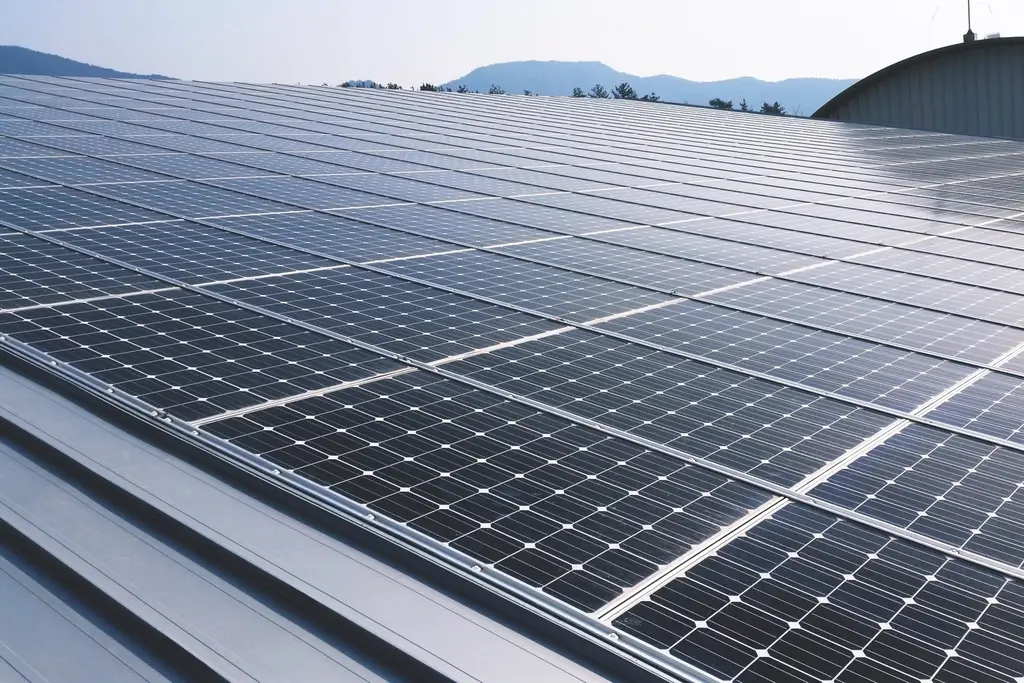 Metal roofsTrapezoidal, standing seam and composite panel roofs: how mounting, rooflights, fixings and sheet age affect a solar installation.
- ScotlandCurrent solar support in Scotland for businesses, community groups, public bodies, schools and farms, with rates, planning and official contacts.