
The short answer
- Tell your insurer before you install, not after. Many will ask about the design, the installer and the roof construction, and some will refer to RC62.
- RC62 is guidance from RISCAuthority and the Fire Protection Association on fire safety with rooftop PV on commercial buildings. It covers risk assessment, design, installation, inspection and maintenance.
- The main design issues are DC isolation, safe cable routing, separation from rooflights, smoke vents and fire breaks, and the combustibility of the roof construction.
- Good workmanship matters most. Poor connections, mismatched connectors and damaged cables are common causes of faults.
- Regular inspection, including thermographic surveys, helps catch problems before they become fires.
Note: This guide is general information to help you prepare for conversations with your insurer and installer. It is not fire engineering or insurance advice. Follow your insurer's requirements and the current edition of the standards referred to.
Why fire safety comes up with commercial solar
Solar PV is an electrical installation spread across a roof, often over a building full of stock, machinery or people. Two features make it different from most electrical systems:
- Panels generate whenever light falls on them. You cannot simply switch the DC side off at a distribution board. Even with the inverter isolated, cables between the panels and the inverter can remain live in daylight.
- Faults happen on the roof, where they may go unnoticed for longer and where firefighting access is difficult.
Neither of these means solar is unusually dangerous. They mean the design has to plan for isolation, fault detection and inspection, and that the fire service and insurer need clear information about the system.
RC62 in general terms
RC62, published by RISCAuthority and the Fire Protection Association, sets out recommendations for fire safety with PV installations on commercial buildings. It is not law, but many insurers use it as their reference point and some make compliance a condition of cover. In broad terms it encourages:
- a fire risk assessment that considers the building, its use, its roof construction and the PV system together,
- design choices that reduce the chance of faults and limit fire spread,
- separation between arrays and rooflights, smoke vents, fire walls and other roof features,
- competent installation to recognised standards, with proper commissioning documentation,
- clear isolation arrangements and signage for the fire service,
- regular inspection and maintenance, including thermographic surveys,
- early engagement with the insurer.
Ask your installer which edition of RC62 they are designing to, and how their proposal meets it. If your insurer has its own requirements, those come first.
Questions your insurer is likely to ask
Insurers vary, but expect questions along these lines. Having the answers ready speeds things up.
| Topic | Typical questions |
|---|---|
| The installer | Are they MCS certified (for systems up to 50 kW) or able to show equivalent competence for larger systems? Do they carry appropriate insurance? |
| The design | Does it follow RC62? Where are DC cables routed? How are arrays separated from rooflights, vents and fire walls? |
| The roof | What is the roof construction? Are there composite panels with a combustible core? What condition is the roof in? |
| Equipment | Which panels, inverters, connectors and isolators are used? Are they certified to relevant standards? |
| Isolation | Where are the DC and AC isolators? Is there any rapid shutdown or module level electronics? |
| Monitoring | Is the system monitored, and who responds to alarms? |
| Maintenance | What is the inspection and maintenance schedule, and does it include thermographic surveys? |
| Documentation | Will you receive commissioning test results, as-built drawings and an operation and maintenance manual? |
If you lease the building, the landlord's insurer may also need to be told, and the lease may require landlord consent. Our commercial landlords page covers that relationship.
DC isolation and arc faults
Isolation
A commercial PV system should have clearly labelled isolators that let the inverter and AC side be safely disconnected, and DC isolation points that allow maintenance and emergency procedures. Because the DC cabling from the array stays live in daylight, the design should keep DC runs inside the building as short as practical and well protected.
Some systems use module level power electronics, such as optimisers or microinverters, which can reduce DC voltage at panel level when the system is shut down. Whether that is appropriate depends on the system size, roof and insurer requirements. Your installer can explain the options.
Arc faults
An arc fault is an unintended electrical discharge across a gap, often caused by a loose or corroded connection, a damaged cable or incompatible connectors. On the DC side of a PV system, an arc can persist and generate significant heat. Prevention is mainly about workmanship:
- use matching connectors from the same manufacturer and type, never mixing brands,
- crimp and terminate cables with the correct tools,
- protect cables from abrasion, sharp edges, rodents and ultraviolet light,
- support cables so they do not lie on the roof surface or in water.
Some inverters include arc fault detection features. Ask your installer whether the proposed equipment has them and how alarms are handled.
Cable routing
Cable routes affect both fire risk and firefighting. Good practice includes:
- keeping DC cable runs inside the building short and, where they pass through, routed in protected containment,
- avoiding routes through escape routes, high value storage areas or close to combustible materials where practical,
- sealing penetrations through fire compartment walls and floors to maintain fire separation,
- labelling DC cables and containment so they are recognisable,
- keeping roof cable runs tidy, supported and off the roof surface.
The structural survey and roof survey record where cables can enter the building and where inverters can be sited safely, often in a plant room, on an external wall or at ground level.
Separation from rooflights and fire breaks
Arrays should not cover or crowd features that matter in a fire:
- Rooflights are fragile and can let fire or heat pass into the building. Keep panels off and clear of them.
- Smoke vents must remain able to open and vent smoke.
- Fire walls and compartment walls that extend through or above the roof should not be bridged by continuous arrays.
- Access routes for maintenance and the fire service should be left clear.
RC62 includes recommendations on separation in these situations. On metal roofs with many rooflights, these clearances can noticeably reduce the usable area, so the layout should be checked early.
Roof construction and combustibility
The roof itself influences risk. Insurers commonly ask about:
- composite insulated panels, especially where the core is a combustible foam rather than mineral wool,
- built-up felt or other combustible coverings on flat roofs,
- timber decks or older roofs with accumulated debris.
Where the roof construction raises concerns, options include changing the layout, adding separation, choosing different mounting or, in some cases, upgrading the roof before installation.
Standards in general terms
Several standards and codes apply to commercial PV in the UK. In general terms:
- BS 7671, the IET Wiring Regulations, covers electrical installations in the UK and includes a section on solar PV power supply systems.
- MCS sets installation standards for solar PV systems up to 50 kW, and MCS certification is needed for Smart Export Guarantee eligibility at that size. Systems over 50 kW are outside MCS, but competent installers apply equivalent design and installation standards.
- The IET Code of Practice for Grid-connected Solar Photovoltaic Systems gives detailed guidance on design and installation.
- Commissioning and documentation standards for PV systems set out the tests, records and handover information you should receive.
You do not need to read these yourself, but you should ask your installer which standards they work to and expect documentation showing compliance. Our guide to choosing an installer covers what evidence to ask for.
Maintenance and thermographic inspection
A well designed system can still develop faults over time. A maintenance regime typically includes:
- visual inspection of panels, mounting, cables and connectors for damage, corrosion, loose fixings and debris,
- electrical testing of strings, isolation and earthing in line with BS 7671 periodic inspection,
- thermographic surveys, often by drone or handheld infrared camera in good sunlight, to spot hotspots in panels, connectors and isolators that point to faults,
- monitoring review, comparing actual output against expected output to spot underperforming strings,
- housekeeping, including clearing leaves, bird nesting material and vegetation from under and around panels.
Your insurer may set the frequency. Our maintenance guide covers this in more detail.
Telling your insurer before installing
Contact your insurer or broker when you start getting quotes, not after the panels are on. Share:
- the proposed system size, layout and equipment,
- the installer's details and certifications,
- the roof construction and condition from the survey,
- how the design addresses RC62 and any specific insurer requirements,
- the planned maintenance and monitoring arrangements.
Ask whether premiums, excesses or conditions will change, and whether the system itself, business interruption and loss of generation are covered. If you are adding battery storage, mention it separately, because batteries have their own fire risk assessment and siting requirements.
Also update your fire risk assessment and emergency plan, and make sure site plans for the fire service show the array, isolators and inverter locations.
A quick checklist
- Insurer informed and requirements obtained
- Design references RC62 and insurer requirements
- Roof construction and condition recorded
- Separation from rooflights, vents and fire walls shown on drawings
- DC cable routes short, protected and labelled
- Isolators labelled and shown on fire service plans
- Commissioning tests and documentation handed over
- Maintenance and thermographic inspection scheduled
The free survey we arrange records the roof construction and access details your insurer will ask about. You can request a free survey to get started.
Frequently asked questions
Is RC62 a legal requirement?
No. RC62 is guidance from RISCAuthority and the Fire Protection Association, not legislation. But many insurers use it as their reference point for commercial rooftop PV, and some make following it a condition of cover. In practice, designing to RC62 and documenting how the design meets it makes insurer conversations much smoother. Always check your own insurer's requirements first.
Will solar panels increase my insurance premium?
It depends on your insurer, the building and the design. Some insurers make little change for a well designed, documented system; others may adjust premiums, excesses or conditions, particularly where the roof has combustible elements. The only way to know is to ask your insurer or broker before you commit to a design, and provide the details they request.
Can firefighters isolate a solar system in an emergency?
They can isolate the AC side and the inverter, but panels keep generating in daylight, so DC cabling between panels and inverter can remain live. That is why designs keep DC runs inside buildings short and protected, label isolators clearly and provide site plans showing the array. Some systems use module level electronics that reduce DC voltage when shut down.
What is a thermographic inspection of solar panels?
It uses an infrared camera, often mounted on a drone, to measure surface temperatures across panels, connectors and isolators in good sunlight. Faulty cells, failing connections or damaged components show as hotspots. It is a quick way to find problems that a visual inspection would miss, and many maintenance regimes and insurers include it periodically.
Does a system over 50 kW need MCS certification?
No. MCS covers solar PV systems up to 50 kW. Larger systems are outside MCS and register for Smart Export Guarantee payments through Ofgem's ROO-FIT process instead. Installers of larger systems should still design and install to BS 7671 and recognised codes of practice, and provide full commissioning documentation. Ask for evidence of competence and previous similar projects.
Related pages
- Solar maintenanceMonitoring, inspections, cleaning, thermography, electrical testing, bird proofing, roof access safety, O&M contracts and what insurers expect from rooftop PV owners.
- Choosing an installerCertification by system size, insurance, warranties, design documents, yield assumptions, questions to ask and red flags, with a table for comparing quotes like for like.
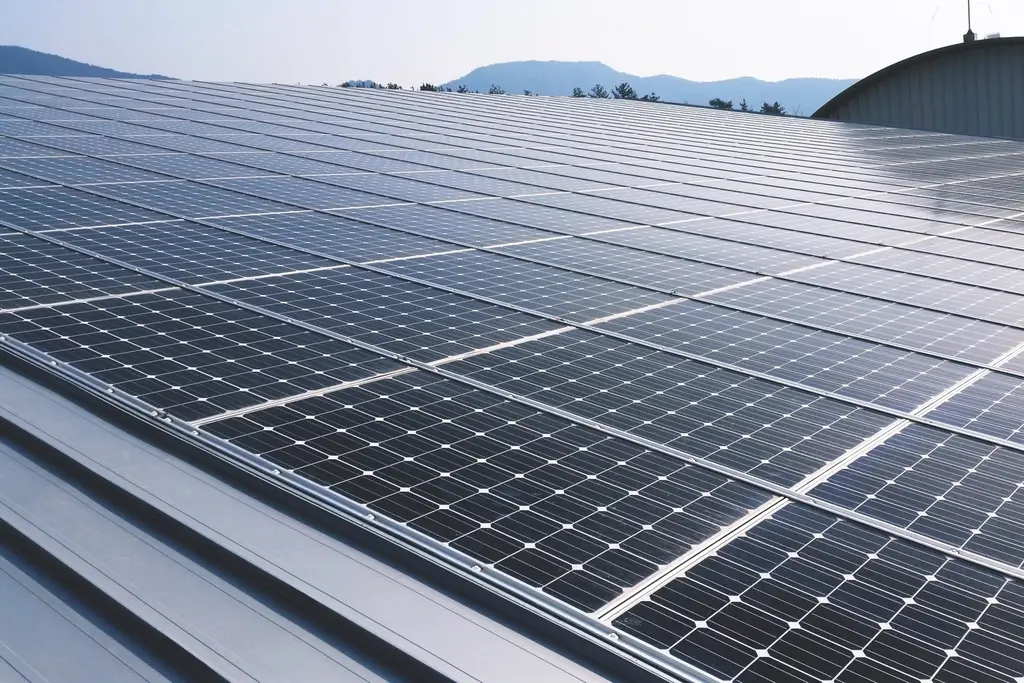 Metal roofsTrapezoidal, standing seam and composite panel roofs: how mounting, rooflights, fixings and sheet age affect a solar installation.
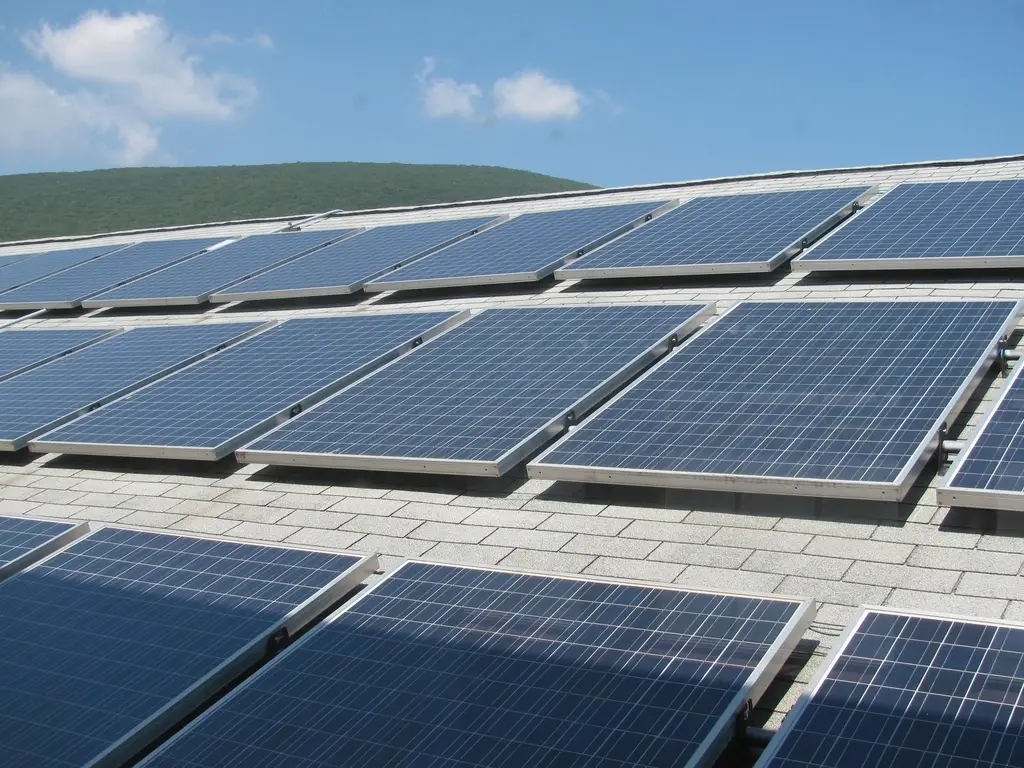 Flat roofsHow membrane type, ballasted or fixed mounting, east-west layouts, parapets, drainage and roof loading decide whether a flat roof suits solar.
- Roof surveyHow a solar roof survey assesses covering type, condition and remaining life, fragility and safe access, shading, orientation, drainage and existing warranties.
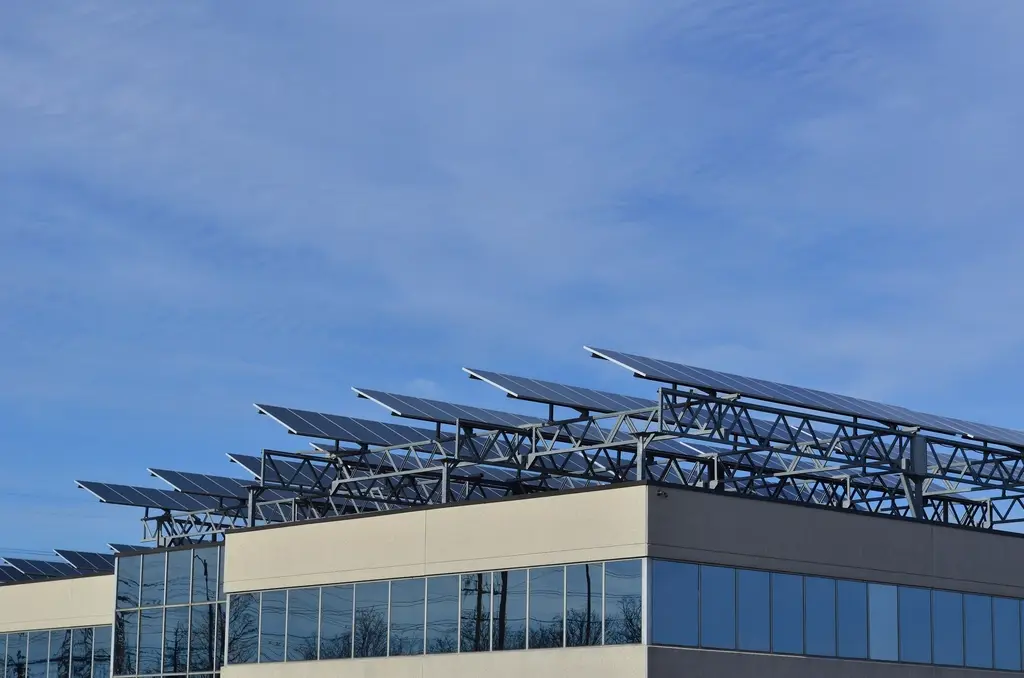 Battery storageWhen a commercial battery pays: storing surplus solar, time of use tariffs, peak shaving, sizing from half-hourly data, illustrative costs, safety and siting.