
The short answer
- Rooftop solar on non-domestic buildings in England is usually permitted development, with no capacity cap since December 2023. Conditions apply on how far panels stand off the roof and how close they sit to the edge.
- Systems above 50 kW need a prior approval application to the local planning authority before work starts. The council has up to 56 days to decide whether it needs to approve design, appearance and glare.
- Listed buildings and scheduled monuments are excluded. You will normally need planning permission and, for listed buildings, listed building consent.
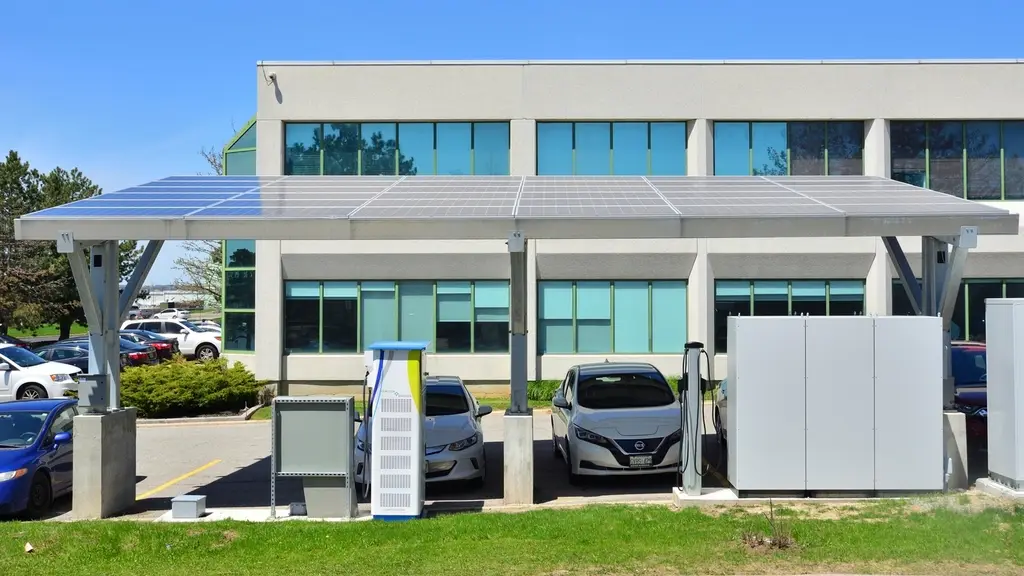
- Solar canopies in business car parks have their own permitted development right in England, with a 4 metre height limit, a 10 metre distance from homes and a prior approval step.
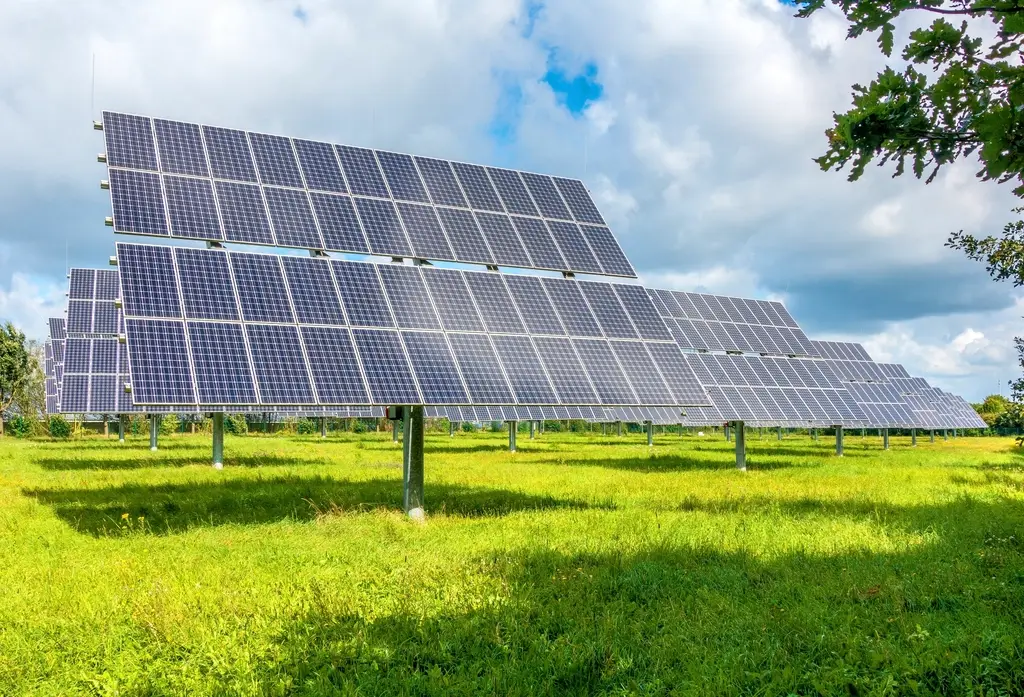
- Ground-mounted arrays of any real size need full planning permission.
- Scotland, Wales and Northern Ireland each have their own systems.
Important: Planning law changes. This guide reflects the position as we understand it in late 2026. Always check the current rules with your local planning authority, and treat this page as a starting point rather than legal advice.
Permitted development for rooftop solar in England
Permitted development rights are a national grant of planning permission for certain types of work, set out in the Town and Country Planning (General Permitted Development) (England) Order 2015. Solar on non-domestic buildings sits in Part 14 of Schedule 2, under Class J. It covers solar PV and solar thermal equipment on buildings other than houses and blocks of flats, which includes warehouses, factories, offices, shops, schools, farm buildings and most other commercial property.
What changed in December 2023
An amendment that came into force on 21 December 2023 widened these rights in two important ways:
- The 1 MW cap was removed. Previously, rooftop systems above 1 MW needed a planning application. There is now no capacity limit for rooftop solar under Class J.
- Roof slopes fronting a highway on protected land are no longer excluded. Before the change, non-domestic rooftop solar in conservation areas, National Parks, National Landscapes (formerly Areas of Outstanding Natural Beauty), the Broads and World Heritage Sites could not go on a roof slope facing a road. That restriction was removed.
The same amendment created a new permitted development right for solar canopies in non-domestic car parks, covered below.
The main conditions for rooftop solar
| Condition | What it means |
|---|---|
| Pitched roofs | Equipment must not protrude more than 0.2 metres beyond the plane of the roof slope |
| Flat roofs | The highest part of the equipment must not be more than 1 metre above the highest part of the roof, ignoring any chimney |
| Roof edges | Equipment on a roof must not be within 1 metre of the external edge |
| Listed buildings | Not permitted on a listed building or within its curtilage |
| Scheduled monuments | Not permitted on the site of a scheduled monument |
| Siting | Equipment should be sited, so far as practicable, to minimise the effect on the building's appearance and the amenity of the area |
| Removal | Equipment must be removed as soon as reasonably practicable when no longer needed |
For wall-mounted equipment there are separate limits: it must not protrude more than 0.2 metres from the wall, must sit at least 1 metre from a junction with another wall or the roof, and in conservation areas and other protected land it cannot go on a wall fronting a highway.
These conditions shape the design. For example, a ballasted east-west system on a flat roof is usually well within the 1 metre height limit, but a steeply tilted south-facing frame might not be. The 1 metre edge setback also lines up with good practice on wind loads and safe maintenance access.
Prior approval for systems above 50 kW
Class J distinguishes between microgeneration equipment (up to 50 kW electrical capacity) and larger systems. For systems above 50 kW, the developer must apply to the local planning authority for a determination of whether prior approval is required before starting work.
In general terms, the application includes:
- a written description of the proposed development,
- a plan showing the site and the proposed equipment,
- the developer's contact address, and an email address if you are happy to communicate electronically,
- the relevant fee.
The authority considers the design and external appearance of the equipment, and in particular the impact of glare on occupiers of neighbouring land. It notifies neighbours, either by site notice or by writing to adjoining owners and occupiers. Work can begin when the authority confirms prior approval is not needed, grants prior approval, or 56 days pass from receipt of the application without a decision. If approval is granted with conditions, you must build in line with them.
Prior approval is not a full planning application. The council cannot refuse on general grounds unrelated to design, appearance and glare, but it can refuse if the proposal does not meet the Class J limits or you do not provide enough information. Your installer will often prepare the submission as part of the project.
Solar canopies in car parks
Since 21 December 2023, England has a permitted development right (Class OA of Part 14) for solar canopies in areas lawfully used for off-street parking, other than parking for houses or blocks of flats. The main limits are:
- no part of the canopy may exceed 4 metres above ground level,
- no part may be within 10 metres of the curtilage of a house or block of flats,
- it does not apply within the curtilage of a listed building or on a scheduled monument,
- it cannot be used to display advertisements.
Conditions include a prior approval application covering siting, design and external appearance (particularly glare), and the effect on the appearance of conservation areas and other protected land where relevant. Run-off over permeable car park surfaces must be directed to a permeable area, the canopy must be completed within three years of the decision, and it must be removed when no longer needed. Our solar carports page covers the structural and EV charging side.
Ground-mounted solar
England has a permitted development right for stand-alone solar within the curtilage of a non-domestic building, but it is narrow: one installation only, with a panel area of no more than 9 square metres, no dimension over 3 metres, a 4 metre height limit and a 5 metre distance from the boundary. Lower limits apply in some protected areas. That is enough for a small array, not a business-scale scheme.
Ground-mounted arrays on farm or business land therefore need a full planning application. Expect to address landscape and visual impact, glint and glare, ecology and biodiversity net gain, flood risk, heritage, agricultural land quality, access and decommissioning. Very large schemes follow different consenting routes, which are outside the scope of this guide.
Where permitted development does not apply
Even on an ordinary commercial building in England, permitted development may not be available if:
- an Article 4 direction removes the rights in your area, which is most common in conservation areas,
- a condition on an earlier planning permission restricts further development on the site,
- the building is a house or block of flats, which fall under separate domestic rules, or is in mixed use where the position needs checking,
- the proposal breaks one of the limits, for example panels standing more than 1 metre above a flat roof.
The council's planning register and planning history for the site will show most of these.
Listed buildings and conservation areas
Listed buildings
Permitted development for non-domestic solar does not apply to listed buildings or land within their curtilage. You will normally need planning permission and listed building consent, even for panels on a modern extension or outbuilding within the curtilage. Conservation officers will look at visibility, fixings, reversibility and the effect on historic fabric. Discreet layouts on hidden roof slopes or in-roof systems on pitched roofs tend to be better received.
Conservation areas and other protected land
Since December 2023, rooftop solar on non-domestic buildings in conservation areas and other protected land can benefit from permitted development, subject to the general conditions above. Walls fronting a highway remain excluded, and Article 4 directions are more common in these areas. For larger systems, the prior approval process gives the council a chance to consider appearance.
Scotland, Wales and Northern Ireland
Planning is devolved, and each nation sets its own permitted development rules.
Scotland
Scotland has its own General Permitted Development Order. Changes in 2024 removed the previous 50 kW limit for most rooftop solar on non-domestic buildings, so many rooftop schemes no longer need a planning application. Listed buildings and World Heritage Sites remain key exclusions, and conservation areas have their own conditions. There are also rights for small free-standing arrays within the grounds of non-domestic buildings and for car park canopies.
TODO for the site owner: Verify the current Scottish non-domestic solar permitted development classes, flat roof height limit, conservation area conditions and car park canopy limits against the Scottish GPDO and Planning Circular 2/2024 before adding specific figures.
Wales
Wales runs its own General Permitted Development Order. Welsh Government guidance indicates that solar on non-domestic buildings is often permitted development, with conditions including a 200 mm projection limit, a 1 metre height limit on flat roofs and a 1 metre setback from roof edges. Planning permission is needed for listed buildings and scheduled monuments, and in conservation areas and World Heritage Sites for panels on principal or side elevation walls visible from a highway.
TODO for the site owner: Confirm whether a capacity limit (historically 50 kW) still applies to non-domestic rooftop solar under the Welsh GPDO, and whether Wales has any car park canopy right, before publishing specific detail.
Northern Ireland
Northern Ireland has its own permitted development order, and planning decisions are made by its 11 district councils. Rights for non-domestic solar exist but differ from those in Great Britain.
TODO for the site owner: Confirm the current Northern Ireland permitted development rights for solar on non-domestic buildings and land, including any capacity or size limits, before adding specific detail.
If your site is outside England, speak to the local planning authority early and ask your installer for their experience of the rules in that nation.
How to check with your local planning authority
A short checklist before you commit:
- Search the planning register for your site's history, previous conditions and any Article 4 directions.
- Check heritage status using the National Heritage List for England (or the equivalent in Scotland, Wales or Northern Ireland) and the council's conservation area maps.
- Confirm the system size and design, because the 50 kW threshold and the flat roof height limit both depend on it.
- Ask for pre-application advice if anything is uncertain. Many councils offer this for a fee.
- Submit a prior approval application for systems above 50 kW, or for car park canopies.
- Consider a lawful development certificate if you want formal confirmation.
Lawful development certificates
A lawful development certificate for a proposed use or development is a formal decision from the council that a proposal is lawful, for example because it falls within permitted development. It is not compulsory, but it can be useful when:
- the building's status or planning history is unclear,
- a lender, landlord, buyer or insurer wants written certainty,
- you want to avoid any later dispute about whether the work needed permission.
You apply to the local planning authority with plans and evidence, and a fee is payable. The council decides on the facts and the law, not on planning merits. Your installer or a planning consultant can help prepare it.
Planning is not the only consent
Permitted development covers planning only. A commercial solar project will usually also need:
- a structural check that the roof can take the load, through a structural survey,
- G99 approval from the distribution network operator for most business-scale systems,
- landlord consent if you lease the building, and roof guarantee holder approval where relevant,
- a conversation with your insurer, covered in our fire safety and insurance guide,
- compliance with building regulations and electrical standards.
The free survey we arrange includes an early view on planning, grid and structure, so you can see the likely route before spending money on design. You can request a free survey at any time.
Frequently asked questions
Do I need planning permission for solar panels on my business roof?
In England, usually not. Rooftop solar on non-domestic buildings is normally permitted development, provided panels stay within set limits on projection, height above a flat roof and distance from the roof edge. Listed buildings and scheduled monuments are excluded, and Article 4 directions can remove the rights locally. Systems above 50 kW need a prior approval application before work starts.
Is there still a 1 MW limit on commercial rooftop solar in England?
No. The amendment that came into force on 21 December 2023 removed the previous 1 MW cap on rooftop solar under permitted development for non-domestic buildings. Larger rooftop systems can now proceed under permitted development, subject to the usual conditions and a prior approval application for anything above 50 kW. Check the current rules with your council before relying on this.
What is prior approval and how long does it take?
Prior approval is a lighter process than a planning application. For rooftop systems above 50 kW and for car park canopies in England, you apply to the council, which decides whether it needs to approve design, appearance and glare. Work can start once the council confirms approval is not needed, grants it, or 56 days pass without a decision.
Can I put solar panels on a building in a conservation area?
In England, rooftop solar on non-domestic buildings in conservation areas can now be permitted development, after the December 2023 changes removed the restriction on roof slopes fronting a highway. Walls fronting a highway remain excluded, and Article 4 directions are more common in conservation areas. Listed buildings within a conservation area need planning permission and listed building consent.
Should I get a lawful development certificate?
It is optional, but worth considering if your building's planning history is unclear, if a lender, landlord or buyer wants formal confirmation, or if you want certainty before a large investment. The council decides whether the proposal is lawful on the facts and the law. There is a fee, and the application needs plans and supporting evidence.
Are the rules the same in Scotland, Wales and Northern Ireland?
No. Planning is devolved, so each nation has its own permitted development order and conditions. Scotland removed its 50 kW rooftop limit for most non-domestic buildings in 2024. Wales and Northern Ireland have their own rules, which differ in detail from England. Check with the local planning authority for your site before relying on any summary.
Related pages
 Solar carportsSolar car park canopies: permitted development in England, foundations and drainage, structural design, EV charging and how costs compare with rooftop solar.
 Ground-mounted solarGround-mounted solar on business or farm land: planning, land choice, cable runs, grid connection, security and biodiversity.
- Pitched roofsTile and slate roofs on older commercial and agricultural buildings: in-roof or on-roof mounting, rafters, orientation and heritage limits.
- What the survey includesThe full list of what is checked: energy use, roof, structure, grid, costs and finance.
- Survey checklistA practical checklist of the energy data, drawings, consents and decisions to gather before a commercial solar survey, plus what to expect on the day and after.
- G99 and DNO applicationsG98 versus G99, what goes into a DNO application, connection offers, export limitation under G100, reinforcement costs and how the survey checks your supply.