
Key facts
| Network operator | National Grid Electricity Distribution (South West licence area) |
| Planning authority | Bristol City Council; South Gloucestershire Council for Filton, Severnside and the northern fringe; North Somerset Council for Royal Portbury Dock |
| Clean air zone | Class D Clean Air Zone in central Bristol since November 2022 |
| Indicative yield | About 900 to 1,000 kWh per kWp a year for a well-oriented array |
| Nation support page | Grants and support in England |
Grid connection with National Grid Electricity Distribution
Bristol is in the South West licence area of National Grid Electricity Distribution (NGED). Commercial systems above the G98 limits need G99 approval before connecting. Boundaries can vary at the edges of licence areas, so confirm the operator for your postcode with the Energy Networks Association postcode tool.
The big distribution centres at Avonmouth and Severnside have very large roofs, and a full-roof array can produce far more than the building uses, especially at weekends. That makes export capacity the central question in the G99 application. If the network cannot take full export, an export limitation scheme under G100, a battery or a smaller first phase can keep the project moving. See our page on G99 and DNO applications.
Planning across the Bristol area
Bristol City Council decides applications in the city, including Avonmouth Docks and much of the industrial land beside them. Several major sites are in neighbouring authorities:
- Filton, Aztec West, Cribbs Causeway and Emersons Green are in South Gloucestershire.
- The Avonmouth Severnside Enterprise Area, a large belt of distribution and industrial land, spans Bristol and South Gloucestershire.
- Royal Portbury Dock, on the south bank of the Avon, is in North Somerset. Both docks are run by The Bristol Port Company.
England's permitted development rights for non-domestic rooftop solar were widened in December 2023 and the 1 MW limit removed. Conditions still apply, including flat roof height limits and tighter rules for listed buildings and conservation areas. Bristol has a large number of conservation areas and listed buildings, from Georgian terraces to the brick warehouses around the Floating Harbour. Our planning permission guide explains the conditions.
The local economy and solar
The Bristol area combines aerospace and advanced engineering at Filton, port-related logistics at Avonmouth and Severnside, creative and digital businesses, financial and professional services, two universities and large hospitals. Logistics and cold storage sites with long operating hours, manufacturers and campuses are usually the strongest candidates. Office tenants in the centre often have limited roof space, so landlord-led schemes can make more sense there; see commercial landlords.
The Clean Air Zone and vehicle charging
Bristol's Clean Air Zone has charged since November 2022 and covers a small area of central Bristol. It is a Class D zone, so non-compliant private cars are charged as well as vans, taxis, buses, coaches and HGVs. At the time of writing the published daily charges are £9 for cars, vans and taxis and £100 for HGVs, buses and coaches; check the council's Clean Air for Bristol site for the current map, rates and exemptions.
Businesses with vans or staff vehicles entering the zone can avoid the charge with compliant or electric vehicles, and solar can supply much of the daytime charging at a depot or workplace. Our page on EV charging for business explains how chargers, solar and batteries are planned together.
Roofs and buildings in Bristol
- Georgian and Victorian buildings in the centre and Clifton, many listed or in conservation areas, where visible roof slopes are often ruled out.
- Victorian brick warehouses and bonded stores around the harbour, often with heavy roof structures that need a structural survey.
- 1960s to 1980s industrial units in areas such as St Philips and Avonmouth, some with asbestos cement roofs that must be surveyed first.
- Modern distribution sheds at Avonmouth and Severnside with large profiled metal roofs, usually ideal.
Expected generation
Bristol's southern position gives it some of the better yields among major UK cities. A well-oriented array typically produces about 900 to 1,000 kWh per kWp a year (indicative). The European Commission's PVGIS model gives close to 1,020 kWh per kWp for an ideally angled south-facing array with standard losses, and nearer 825 for a low-pitch east-west flat roof layout.
How the free survey works
Use the short form to tell us about the site. We review your enquiry and call you to understand the building and how you use power. If the site looks suitable we arrange a free survey with one MCS certified installer matched to it, and your details go to that installer only. Large sheds with drawings can often start with a virtual survey, while listed buildings usually need a visit. There is no obligation. See our South West page for the wider region.
Frequently asked questions
Who is the network operator for Bristol and Avonmouth?
National Grid Electricity Distribution covers Bristol through its South West licence area. It decides G99 applications and how much export the network can take, which is often the key issue for large Avonmouth sheds. Boundaries can vary at the edges of licence areas, so confirm the operator for your postcode with the Energy Networks Association postcode tool.
Our site is at Filton. Is Bristol City Council the planning authority?
No. Filton, along with Aztec West, Cribbs Causeway and Emersons Green, is in South Gloucestershire, so South Gloucestershire Council handles planning. Most rooftop systems on commercial and industrial units can proceed under permitted development, subject to national conditions. Aerospace and defence sites may also have their own landlord, security or operational consents to agree.
Does the Clean Air Zone affect staff parking and charging?
It can. Bristol's zone is Class D, so non-compliant private cars are charged as well as commercial vehicles. Employers inside or near the zone sometimes add workplace charging so staff can switch to electric cars, and a rooftop or carport array can supply part of that demand during the day. The survey can include the charging load.
A full-roof array would export most of its power. Is that a problem?
It can be. Large Avonmouth and Severnside roofs can produce far more than the building uses, and the network may not accept full export. Options include an export limit, a battery, a smaller first phase, or a power purchase arrangement with a neighbouring user. The survey sizes the array against your demand and the likely export capacity.
Related pages
- South WestThe strongest yields in mainland Britain, a network with limited export capacity in places, Bristol and Bath clean air zones, dairy farming and Severnside logistics.
- CardiffNGED South Wales grid approvals, Welsh permitted development for non-domestic solar, the proposed workplace parking levy, and roofs from Wentloog to Cardiff Bay.
- SouthamptonSSEN grid approvals, planning across Southampton, Eastleigh, Test Valley and the New Forest, port and logistics roofs and some of the best yields in the UK.
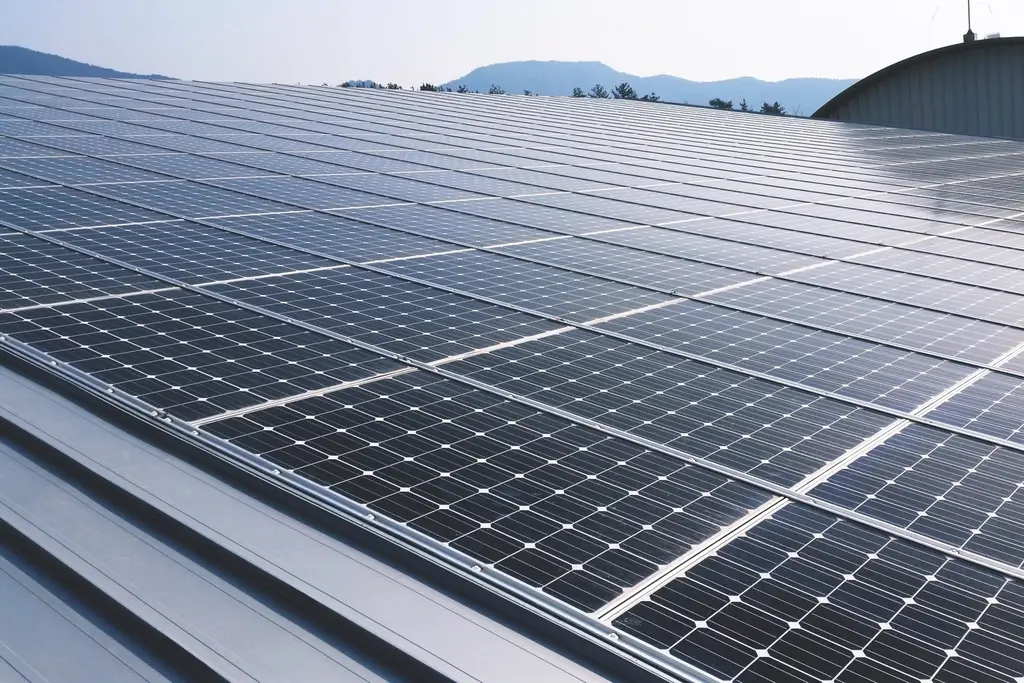 Metal roofsTrapezoidal, standing seam and composite panel roofs: how mounting, rooflights, fixings and sheet age affect a solar installation.
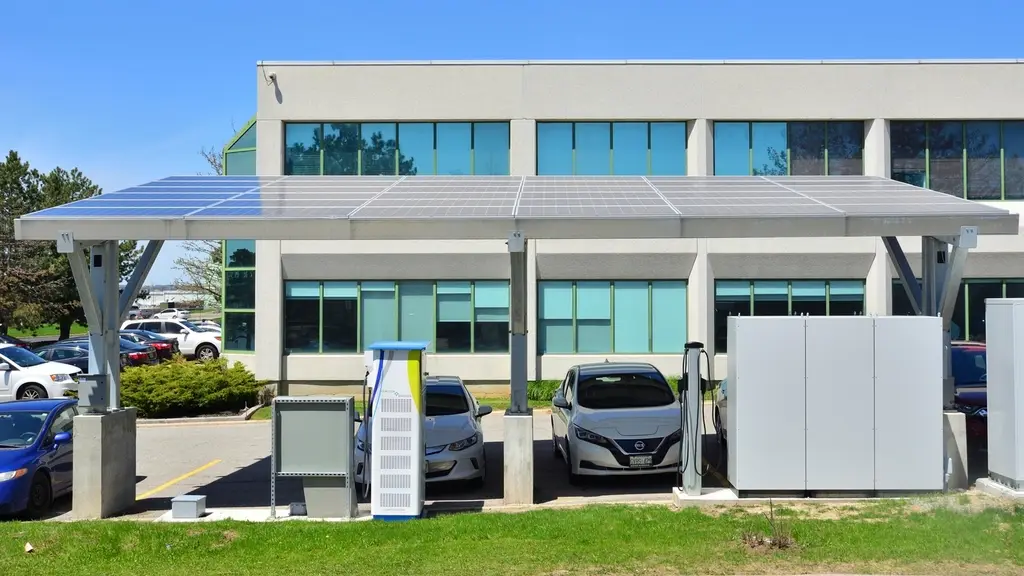 EV chargingHow to plan workplace and fleet EV charging with solar: supply capacity, load management, charger types, matching generation to charging and grant support.