
Key facts
| Network operator | Northern Powergrid (Yorkshire licence area) |
| Planning authority | Leeds City Council; Wakefield, Kirklees and Bradford councils for sites over the boundary |
| Clean air zone | No charging clean air zone: the planned scheme was not introduced |
| Indicative yield | About 830 to 930 kWh per kWp a year for a well-oriented array |
| Nation support page | Grants and support in England |
Grid connection with Northern Powergrid
Leeds is served by Northern Powergrid, through its Yorkshire licence. Commercial systems above the G98 limits need G99 approval before they connect, and the operator assesses whether the local network can accept your export. Licence boundaries can vary at the edges, so confirm the operator for your postcode with the Energy Networks Association postcode tool.
The Aire Valley and the M62 corridor have seen a lot of new warehousing, and big sheds can generate far more than they use at weekends. If export headroom is limited, an export limitation scheme under G100 or a battery can let you install a larger array without waiting for reinforcement. Our page on G99 and DNO applications explains what is submitted and how long it can take.
Planning in Leeds and West Yorkshire
Leeds City Council is the planning authority for the city, which covers a large area including Leeds Bradford Airport, Thorpe Park Leeds and the Aire Valley Leeds enterprise zone. Some of the biggest logistics parks serving Leeds sit in neighbouring districts, such as Wakefield Europort near junction 31 of the M62, which falls to Wakefield Council.
In England, permitted development rights for non-domestic rooftop solar were widened in December 2023 and the previous 1 MW limit was removed. Conditions still apply to panels on flat roofs, listed buildings and conservation areas. That matters in Holbeck and the city centre: Temple Works, the former flax mill with its Egyptian-style frontage, is Grade I listed, and the surrounding area has other listed mill buildings.
Where solar fits the Leeds economy
Leeds has a large financial and professional services sector, alongside health, universities, digital, manufacturing and logistics. For commercial solar the strongest candidates are usually:
- Logistics and manufacturing in the Aire Valley, Cross Green and Stourton, where large roofs meet long operating hours. See our page on warehouses.
- Hospitals and university campuses with high, steady daytime demand.
- Offices and business parks such as Thorpe Park, where demand peaks in the working day and flat roofs are common.
Clean air and fleet charging
Leeds prepared a charging clean air zone and installed cameras, but after a joint review with government in 2020 the scheme was judged no longer necessary because vehicle fleets had become cleaner faster than expected, and it was not introduced. There is no daily charge for vehicles entering the city. Fleet electrification still matters for many Leeds businesses, and solar can supply much of the daytime charging at a depot; our EV charging for business page explains how to size the two together.
Roofs and buildings in Leeds
- Victorian mills and warehouses in Holbeck, Hunslet and along the River Aire, many converted to offices. Older timber and cast-iron structures need a structural survey before panels go on, and listed buildings need consent.
- 1960s to 1980s industrial estates such as Cross Green and Stourton, where asbestos cement roofs are common and must be surveyed first.
- Modern distribution sheds in the Aire Valley and along the M62 and M1 with profiled metal roofs, usually straightforward.
- Flat-roofed offices in the city centre, where ballasted or low-tilt systems are used. See flat roofs.
Expected generation
A well-oriented commercial array in Leeds typically produces about 830 to 930 kWh per kWp a year (indicative). The European Commission's PVGIS model gives close to 950 kWh per kWp for an ideally angled south-facing array with standard losses, and nearer 755 for a low-pitch east-west flat roof layout. Your own figure depends on orientation, pitch and shading from nearby buildings, which the survey models.
How the free survey works
Fill in the short form with the address and a rough idea of your electricity use. We review it and call you to understand the site. If it looks suitable we arrange a free survey with one MCS certified installer matched to the building, and your details go to that installer only. The survey can be in person or virtual; a virtual first look often works well for modern sheds with good drawings. There is no obligation to proceed. See our Yorkshire and the Humber page for the wider region.
Frequently asked questions
Does Leeds have a clean air zone charge?
No. Leeds City Council prepared a charging clean air zone, but after a joint review with government in 2020 it was decided the zone was no longer needed, because vehicle emissions had fallen faster than expected. No daily charge applies to vehicles in Leeds. Fleet operators may still choose electric vans for cost and carbon reasons.
Who is the network operator for a site in Leeds?
Northern Powergrid, through its Yorkshire licence area. It reviews G99 applications for commercial solar and decides whether the local network can take your export, sometimes with conditions or an export limit. Boundaries can vary at the edges of licence areas, so confirm your postcode with the Energy Networks Association postcode tool.
Our offices are in a converted mill in Holbeck. Is solar realistic?
It can be, but check the listing status first. Several Holbeck mill buildings are listed and the area has conservation designations, so consent may be needed and visible roof slopes may be ruled out. Older roof structures also need a structural check. Flat roof sections and hidden valleys are usually the best options for these buildings.
Is Wakefield Europort covered by Leeds City Council?
No. Wakefield Europort lies in the Wakefield district, so Wakefield Council is the planning authority, even though many occupiers serve Leeds. Rooftop systems on modern logistics units usually fall within permitted development, subject to national conditions. Your landlord's consent and any estate rules are often the bigger practical hurdle on a multi-let park.
Related pages
- Yorkshire and the HumberNorthern Powergrid connections, Sheffield and Bradford clean air zones, Humber ports and industry, M62 and M1 logistics, and East Riding arable farming.
- SheffieldNorthern Powergrid G99 approvals, Sheffield and Rotherham planning, the Class C Clean Air Zone for vans and HGVs, and steel and engineering roofs.
- ManchesterG99 with SP Electricity North West, planning across Manchester, Trafford and Salford, the non-charging clean air plan and the city's mill, warehouse and shed roofs.
- WarehousesLarge unshaded roofs and daytime shift work make many warehouses a strong fit for rooftop solar, provided the roof structure, rooflights and lease terms stack up.
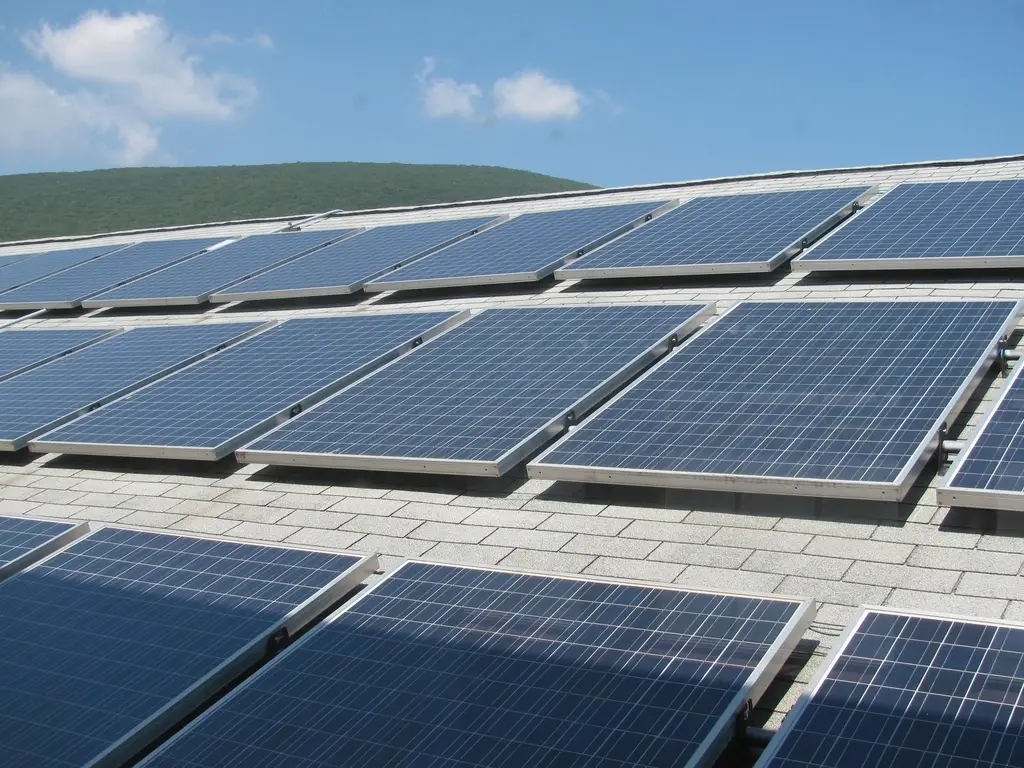 Flat roofsHow membrane type, ballasted or fixed mounting, east-west layouts, parapets, drainage and roof loading decide whether a flat roof suits solar.