
Can a listed business building have solar panels?
Yes, in many cases, but the law treats it as works to the listed building. In England, no one may carry out works that alter a listed building "in any manner which would affect its character as a building of special architectural or historic interest" unless they are authorised by listed building consent (section 7), and doing so without consent is an offence (section 9).
Listed building consent for solar in each nation, checked 3 November 2026
| Nation | The law | Permitted development for solar |
|---|---|---|
| England | Listed Buildings Act 1990: consent for works affecting character | Not on a listed building or a building in its curtilage (Class J) |
| Wales | Historic Environment (Wales) Act 2023, in force since 4 November 2024 (Cadw) | Not on a listed building or scheduled monument (GOV.WALES) |
| Scotland | Listed Buildings (Scotland) Act 1997, section 6 | Not on listed buildings or their curtilage (circular 2/2024) |
| Northern Ireland | Listed building consent required | Listed buildings only with listed building consent (Part 37) |
The council's conservation officer is the person to talk to early. Planning permission is usually needed as well as listed building consent. More on the general rules: planning permission for business solar.
Listed building consent: what to expect
Cadw's guide to micro-generation on historic buildings sets out what councils look for (Cadw):
- Inside and out: Controls apply to internal and external works, whether or not the feature affected is mentioned in the list description, so cable routes and inverter positions count too.
- The curtilage: Protection usually extends to structures fixed to the building or within its curtilage, which may include ancillary buildings, garden structures and boundary walls.
- A design and access statement: The application explains why this system and this position were chosen over the other options, based on their impact on the historic building.
- Setting: The effect on the setting of the historic property is a material consideration, so a ground array in view of the building is judged too.
- Scheduled monuments: Any works to a scheduled monument need scheduled monument consent as well.
A grant offer doesn't replace consent: Cadw says not to assume you won't need further permissions just because a grant has been offered.
Conservation areas
A conservation area doesn't remove the permitted development right for solar on a business roof, but each nation adds limits:
Solar on non-domestic buildings in conservation areas
| Nation | What permitted development rules out |
|---|---|
| England (Class J) | Panels on a wall that fronts a highway |
| Wales (GOV.WALES) | Panels on a wall or roof slope fronting a highway |
| Scotland (Class 6J) | Panels on the front elevation, or a side elevation fronting a road; free-standing panels in the front curtilage |
| Northern Ireland (Part 37) | Panels on a wall or roof slope facing and visible from a road |
Councils can also remove permitted development rights with an Article 4 direction, most often in conservation areas (GOV.WALES), so check before you start.
Placing panels out of sight: outbuildings, ground and carports
Cadw's guide gives the order to try things in (Cadw):
- Away from the building: Install solar panels as free-standing units if possible, with a dark frame and some planting to soften them.
- Less prominent parts: If not, use hidden roof valleys, rear extensions, or a flat roof behind a parapet wall.
- Not the front: Unless the panels can be screened, avoid principal elevations and prominent roof slopes.
- Reversible: Choose cable routes that cause the least damage even if they are less direct, use existing conduits where possible, and keep alterations easily reversible.
For many listed sites the answer is a newer outbuilding (still within the curtilage, so still asked about), a ground array or a canopy over the car park. A ground array of business size needs a planning application anyway. See ground-mounted solar and solar carports.
Old roofs, structure and fire
Older roofs need more care. The MCS solar standard requires (MIS 3002):
- A structural check: The roof structure is checked by a competent person, and a qualified structural engineer is consulted where the roof is unusual, shows signs of distress or has been altered, or there is any doubt.
- Weather tightness: The system must not affect the building's weather tightness or structural integrity for its whole life.
- Roof warranties: Where the roof covering is under warranty, the warranty provider is consulted first.
Historic roofs with lead, slate or old timbers may also need a specialist. Fire is the other question insurers ask about; see fire risk and insurance. Churches have their own permission system: see solar for churches.
What the survey checks on a listed or historic site
- Status: Whether the building is listed, and at what grade; whether it is in a conservation area or under an Article 4 direction; what else is in the curtilage.
- Where panels could go: Every roof slope, outbuilding, flat roof, car park and patch of ground, ranked by how visible it is and how much it would produce.
- Structure and fabric: Roof timbers, coverings and any lead, and how fixings and cables would be routed with the least damage.
- Your daytime use: How much of the output you would use, which decides whether a smaller, hidden array still pays.
- Paperwork: What the consent application needs, so you can talk to the conservation officer with real drawings.
Sources
legislation.gov.uk, Cadw, GOV.WALES, the Scottish Government circular and MCS read on 3 November 2026. This is general information, not legal advice: ask your council's conservation officer before applying.
- legislation.gov.uk: Planning (Listed Buildings and Conservation Areas) Act 1990, section 7 (works need consent)
- legislation.gov.uk: Planning (Listed Buildings and Conservation Areas) Act 1990, section 9 (offences)
- legislation.gov.uk: Historic Environment (Wales) Act 2023, section 89 (listed building consent)
- Cadw: Historic Environment (Wales) Act 2023 takes full effect (4 November 2024)
- legislation.gov.uk: Planning (Listed Buildings and Conservation Areas) (Scotland) Act 1997, section 6
- legislation.gov.uk: GPDO 2015 (England), Schedule 2, Part 14, Class J (solar on non-domestic buildings)
- GOV.WALES: Solar panels mounted on a non-domestic building
- GOV.WALES: Planning permission, solar panels (non-domestic), Article 4 directions
- Scottish Government: Planning circular 2/2024, Annex C, Classes 6J and 6N
- legislation.gov.uk: Planning (General Permitted Development) Order (Northern Ireland) 2015, Part 37
- Cadw: Renewable energy and your historic building, installing micro-generation systems
- MCS: MIS 3002, the solar PV installation standard (2025)
Frequently asked questions
Can you put solar panels on a listed business building?
Often, yes, but never without consent. Permitted development rights for solar don't apply to listed buildings or buildings in their curtilage, so you need listed building consent and usually planning permission. Councils are far more likely to agree to panels on a hidden roof slope, a flat roof behind a parapet, an outbuilding or the ground than on a principal elevation or prominent roof slope.
Is it an offence to fit solar panels to a listed building without consent?
In England, section 9 of the Planning (Listed Buildings and Conservation Areas) Act 1990 makes it an offence to carry out works that affect a listed building's character without listed building consent, or to break a condition of a consent. Wales and Scotland have their own Acts with the same requirement for consent. Ask the council before you sign a contract.
Do I need consent for panels on an outbuilding of a listed building?
Very likely. In England the solar permitted development right excludes a building within the curtilage of a listed building, and Cadw says protection usually extends to structures within the curtilage, which may include ancillary buildings, garden structures and boundary walls. Check with the council's conservation officer.
Can I have solar panels in a conservation area?
Usually on a roof, with limits. In England, panels on a non-domestic building in a conservation area must not go on a wall that fronts a highway. Wales adds roof slopes fronting a highway, Scotland bars the front elevation and side elevations fronting a road, and Northern Ireland bars walls and roof slopes facing and visible from a road. A council can also remove the rights with an Article 4 direction.
What is the best place for solar at a historic business site?
Cadw's advice is to install panels as free-standing units if possible, and otherwise to use less prominent parts of the building, such as hidden roof valleys, rear extensions or behind parapet walls, and to avoid principal elevations and prominent roof slopes unless the panels are screened. A ground array or a car park canopy can keep panels away from the building altogether.
Related pages
- Planning permissionPermitted development for commercial rooftop solar and car park canopies in England, prior approval, heritage limits, ground-mounted schemes and the other UK nations.
- ChurchesMany churches can have panels; the permission route depends on listing and conservation areas, and the case on daytime use across the church, hall and neighbouring buildings.
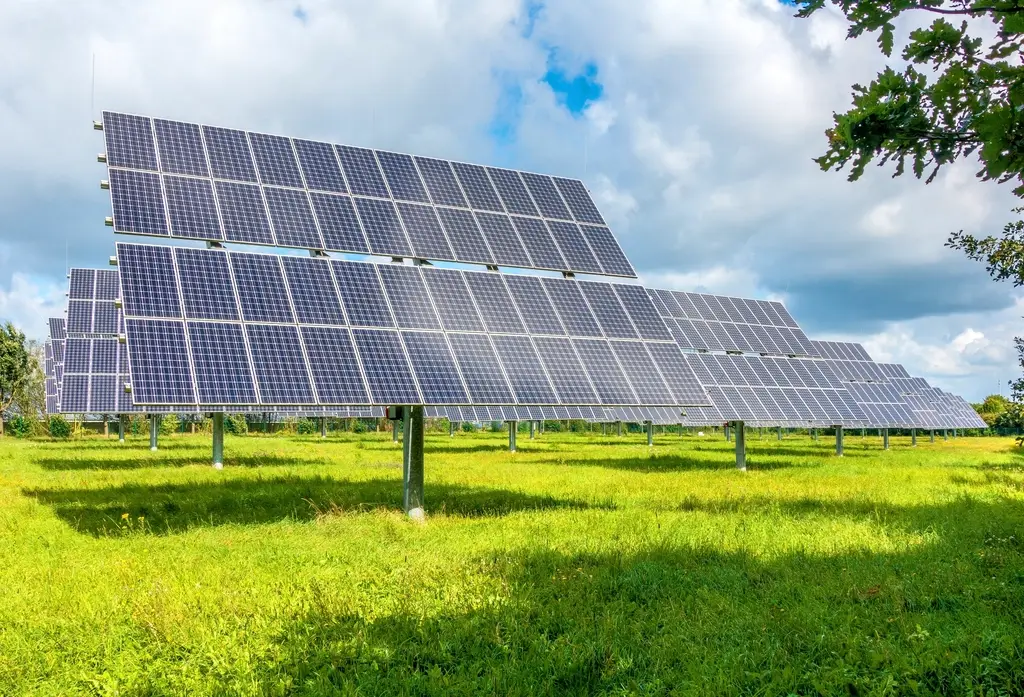 Ground-mounted solarGround-mounted solar on business or farm land: planning, land choice, cable runs, grid connection, security and biodiversity.
- HospitalityHotels and holiday parks with summer peaks match solar well, while evening-led pubs and restaurants need careful sizing. The survey looks at hot water, kitchens, seasons and historic buildings.