
Can a church have solar panels?
The Church of England's guidance is encouraging. It says the reversibility of solar installations and the urgency of the climate crisis mean "solar panels could be appropriate in many situations", and that "there is no reason that a well-presented application which follows the guidance set out in this note should not be granted a faculty" (Solar panels and faculty guidance).
It also asks parishes to check four things first:
- Have the basics been dealt with? Solar should be part of a package, after draught proofing, LED lighting and a watertight roof
- Is the roof sound? Panels need a secure base; if the roof needs major repairs, do them first or in the same scaffold
- Is the roof suitable? An unshaded stretch, ideally south facing, though east or west can work; a flat roof is well suited
- Is enough energy used? Panels generate in daylight, so match the output to when the church and its halls use power
The Church's net zero guide sets out the other steps to take alongside solar (practical path to net zero).
Faculty permission and the diocese
Church of England permissions for solar PV, from Lists A and B (2024)
| Building | Permission |
|---|---|
| Church that is not listed and not in a conservation area | List B: no faculty, but the archdeacon's written notice, which may add conditions (B1, item 20) |
| Church hall or similar building, not listed and not in a conservation area | List B: the archdeacon's written notice (B5, item 4) |
| Listed church, or a church in a conservation area | A faculty |
Source: Lists A and B. When applying, the rules ask parishes to explain how they have had regard to the Church's net zero guidance. Talk to your diocesan church buildings team or the Diocesan Advisory Committee early. Other denominations have their own permission systems, so ask your denomination's property or buildings team.
Planning is separate. The guidance says that because panels are an external change, "it is likely that planning permission will be required in addition to a faculty" (guidance). Our guide to planning permission covers the national rules.
Listed churches and roofs
For historic and listed churches, the Church strongly advises using a conservation accredited architect or surveyor to prepare the application. Its guidance says visibility "is not intrinsically harmful to significance", but visibility on a listed building means a stronger case is needed, and "where the roof itself contributes greatly to the significance of the building, there is a presumption against solar installations" (guidance).
- Hidden roof slopes and valleys: Panels not visible from the ground are likely to be acceptable if the application follows the guidance
- The hall, vestry or other buildings: A later or unlisted building on the site may be a simpler roof
- The ground: A small array elsewhere on the site, where planning allows; see ground-mounted solar
- Shading from the tower or trees: Can be handled with module-level electronics, at some extra cost
Fire safety matters on heritage buildings: the insurers' code says a historic building may need extra fire protection measures, identified in advance. See fire risk and insurance and ground-mounted solar.
Daytime use and the buildings next door
A church used mostly on Sunday mornings and some evenings uses little of what panels make on a weekday. The Church's guidance says to understand the usage pattern and match the generation to it, and that spare electricity can be exported, used by the local community, or stored in batteries (guidance). A hall used by nurseries, clubs and groups through the week, a school next door or a parish office often makes the case. A survey looks at the meters and how each building is used before anyone designs a system. Our page on charities and community buildings covers shared use and community ownership.
Funding, VAT and grants for churches
- VAT: HMRC's zero rate covers buildings used solely for a relevant charitable purpose (use by a charity otherwise than in the course of a business, or as a village hall or similar) until 31 March 2027, then 5%; a building also used for business is standard-rated
- Community energy funding: Great British Energy's Community Fund offers grants for eligible community energy projects in England, Wales and Northern Ireland; in Scotland, Local Energy Scotland's CARES programmes
- Your diocese or denomination: Some run their own schemes or buying arrangements; ask the buildings team
- EPC: GOV.UK lists places of worship among buildings that do not need an EPC
Sources: HMRC Notice 708/6, Great British Energy, GOV.UK EPCs. See also VAT on solar panels and solar grants.
Note: General information. Your diocese, denomination and local planning authority decide what permission you need.
Sources
Church of England Lists A and B (2024), its solar panels and faculty guidance and net zero guide, HMRC Notice 708/6, GOV.UK and Great British Energy were read on 2 November 2026.
- Church of England: Lists A and B, matters which may be undertaken without a faculty (2024)
- Church of England: Solar panels and faculty guidance
- Church of England: A practical guide to help your church reach net zero carbon
- HMRC VAT Notice 708/6: energy-saving materials (relevant charitable purposes, 2.22)
- GOV.UK: Energy Performance Certificates for business premises (exemptions)
- Great British Energy: community energy and the GBE Community Fund
Frequently asked questions
Can a church have solar panels?
Often, yes. The Church of England's guidance says solar panels could be appropriate in many situations and that a well-presented application which follows it should be granted a faculty. Visibility on a listed church is not automatically harmful, but needs a stronger case, and where the roof itself contributes greatly to the building's significance there is a presumption against solar.
Does a Church of England church need a faculty for solar panels?
A listed church, or one in a conservation area, does. Under List B of the Church of England's rules, installing photovoltaic panels on a church that is not a listed building or in a conservation area can be done without a faculty, but only with the archdeacon's written notice, which may add conditions. The same applies to church halls and similar buildings that are not listed or in a conservation area.
Do churches need planning permission for solar panels too?
Often. The Church of England's guidance says that because solar panels are an external change, planning permission is likely to be needed in addition to a faculty, and each local planning authority has its own policy within the National Planning Policy Framework.
Do churches pay VAT on solar panels?
HMRC's zero rate for energy-saving materials has covered buildings used solely for a relevant charitable purpose since 1 February 2024, until 31 March 2027. That means use by a charity otherwise than in the course or furtherance of a business, or as a village hall or similar. Whether your building qualifies depends on how it is used, so confirm with your accountant and the installer.
Are there grants for solar panels on churches?
There is no national grant just for church solar that we could confirm on 2 November 2026. Great British Energy runs a Community Fund for eligible community energy projects in England, Wales and Northern Ireland, and Local Energy Scotland's CARES programmes in Scotland. Dioceses and denominations sometimes have their own schemes, so ask your buildings team.
Does a church need an EPC to install solar?
No. GOV.UK lists buildings used as a place of worship or for other religious activities among those that do not need an Energy Performance Certificate.
Related pages
- Charities and communityCharity buildings range from daily offices to occasional-use halls and historic churches. The survey tests whether demand matches generation and highlights VAT, heritage and governance points.
- Listed buildingsListed buildings always need consent and conservation areas restrict panels facing a road; outbuildings, ground arrays and car parks are often easier.
- VAT on solarA business installation is charged at 20%, which a VAT registered business normally recovers; charity buildings can qualify for the zero rate.
- Planning permissionPermitted development for commercial rooftop solar and car park canopies in England, prior approval, heritage limits, ground-mounted schemes and the other UK nations.
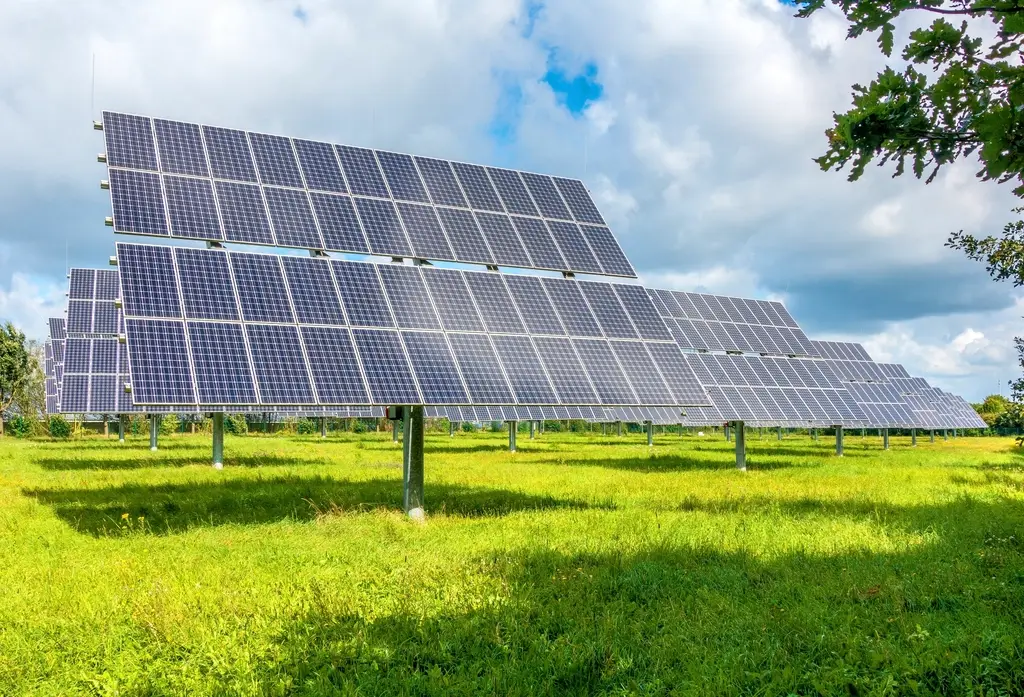 Ground-mounted solarGround-mounted solar on business or farm land: planning, land choice, cable runs, grid connection, security and biodiversity.