
Solar for arable farms
Arable farm loads and how they line up with solar
| Load | When it runs | Fit with solar |
|---|---|---|
| Near-ambient drying fans | Days at a time after harvest | Good in late summer and early autumn |
| High-temperature dryers | Harvest, often burner-heated | Fans and elevators only; the heat is usually oil or gas |
| Grain cooling fans | When outside air is cooler than the grain | Weak: often at night |
| Conveyors, elevators, cleaners | Harvest and loading out | Good when in daylight |
| Workshop, offices, farm shop | Year round, working day | Good |
| Irrigation pumps | Sunny, dry spells | Good |
Grain drying and storage loads
AHDB describes two approaches. High-temperature drying uses air heated to at least 40°C. Near-ambient drying blows air up to 5°C warmer than the grain through the bulk, slowly: "typically, 10 days with recommended airflows of 180 m3/hr/tonne" (AHDB). Near-ambient fans are electric and run through the day, which is where solar helps.
Cooling is different. AHDB says cooling should start as soon as grain comes into store, and that differential thermostats, which switch the fan on when the outside air is 4 to 6°C cooler than the grain, give the most rapid, cost-effective and carbon-efficient cooling (AHDB). Cooler air is more common at night, so most cooling hours don't coincide with solar output. AHDB's GrowSave programme has published a grain drying review for growers looking at energy use (AHDB).
Seasonal peaks and export
Solar produces most from April to September: across UK cities, PVGIS puts about two thirds of the year's output in those months (PVGIS). Harvest drying falls in the second half of that window. Outside harvest, an arable farm may use little in the day, so a large array can export much of its output.
- Size for the whole year: Not just harvest week
- Export: Paid under the Smart Export Guarantee in Great Britain, usually at less than you pay to buy
- Other buildings: A farmhouse, let cottages or a farm shop on the same supply may use the surplus
- Battery: Moves midday output to the evening, but not across seasons
See solar output by month and the Smart Export Guarantee.
Large barn roofs and ground space
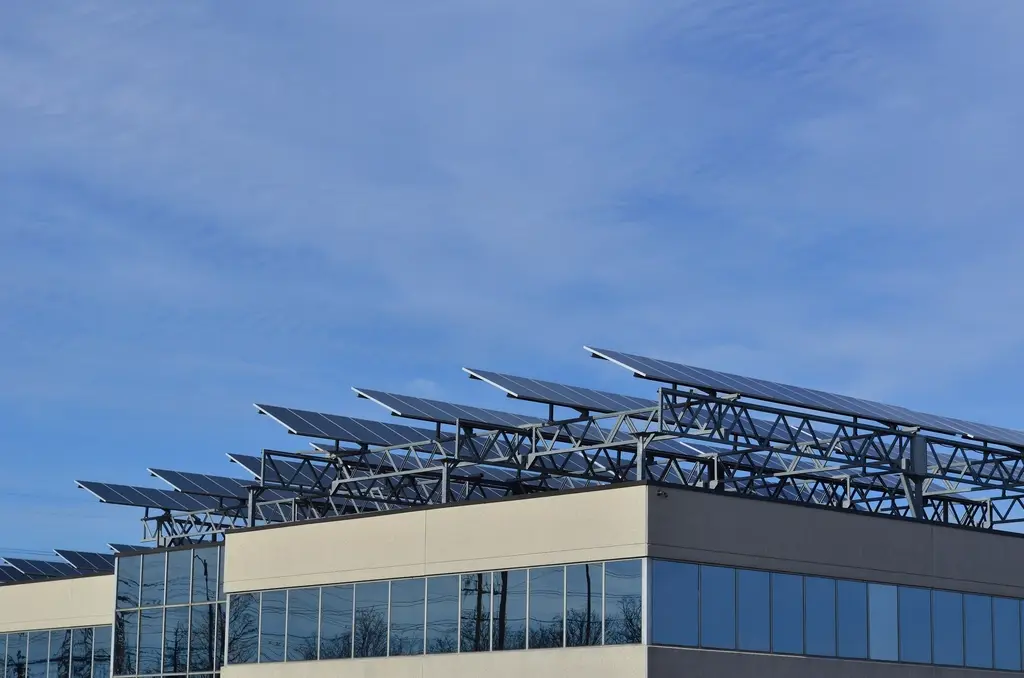
Grain stores and barns are often the biggest roofs on the farm, and arable land may offer space for a ground array. Older roofs may be fibre cement and need checking (asbestos cement roofs); a ground array needs planning and cable runs. Rural networks can be weak, so large systems may need an export limit: see grid connection.
Grants and tax relief
Farm grant schemes open and close; see farm solar grants. A farm business that buys the system can usually claim capital allowances. For the wider picture, see solar for farms.
Sources
AHDB's grain drying, grain cooling and GrowSave pages were read, and PVGIS 5.3 queried, on 2 November 2026.
Frequently asked questions
Can solar panels power grain drying?
Partly. Near-ambient drying blows air, at most 5°C warmer than the grain, through the bulk for days at a time (AHDB says typically 10 days), using electric fans that run through the day in late summer and early autumn, when panels still produce well. High-temperature drying uses heated air of at least 40°C, often from oil or gas burners, which solar does not replace directly.
Does solar help with grain cooling?
Less than you might think. AHDB recommends differential thermostats that switch cooling fans on only when the outside air is 4 to 6°C cooler than the grain, which tends to be at night and in cooler weather. Those hours don't line up with solar output, so cooling is a weak case for solar on its own.
Is solar worth it on an arable farm with no livestock?
It depends on the rest of the farm's use. An arable farm with a grain store, workshop, offices, irrigation or a farm shop may use enough in daylight. One where most power goes on drying and cooling for a few months can export a lot outside harvest. The survey looks at the whole year's use.
Can solar run irrigation pumps?
Irrigation is needed most in sunny, dry spells, when panels produce most, so it matches well. Remote boreholes and pumps far from the main supply can be harder to connect; the survey looks at where the pumps are and how they are supplied.
Related pages
- FarmsDairy, poultry and grain enterprises can make good use of solar on sheds or land. A farm survey looks closely at seasonal demand, building condition and rural grid capacity.
- FarmsWhat is open and closed for farm solar in England, Scotland, Wales and Northern Ireland, and the tax and rates rules that apply anyway.
 Battery storageWhen a commercial battery pays: storing surplus solar, time of use tariffs, peak shaving, sizing from half-hourly data, illustrative costs, safety and siting.
- Asbestos roofsAsbestos cement roof sheets: the legal duties, survey types, fragility, and the overcladding or replacement routes to a safe solar installation.
- G99 and DNO applicationsG98 versus G99, what goes into a DNO application, connection offers, export limitation under G100, reinforcement costs and how the survey checks your supply.