
What uses power at a yard, and when
The Valuation Office lists the facilities that come with equestrian properties: horse walkers, outdoor and indoor arenas, jump paddocks, wash-down facilities, solariums, storage, offices and tack rooms (VOA). Here is how they line up with solar:
Typical equestrian loads and how they suit solar
| Load | When it runs | Fit with solar |
|---|---|---|
| Horse walker | Through the working day | Good |
| Solarium (heat lamps) | After exercise and washing, mostly in daylight | Good |
| Water heating for wash-downs | Through the day; electric heaters can be timed | Good, if electric |
| Yard, barn and tack room lighting | Early mornings and evenings in winter | Partial |
| Arena floodlights | Winter evenings, after school and work | Poor without a battery |
| Office, clippers, fridges, electric fencing | All day | Good, but small |
Lighting, water heating and arenas
Solar output follows the seasons. PVGIS gives a south-facing panel in Birmingham about 33 kWh per kW in December against about 117 in June (PVGIS), and none at all after dark. A yard whose biggest bill is floodlights on winter evenings will use little of its solar directly.
- Move what you can into the day: Run the horse walker, wash-down heaters and charging while the panels are producing.
- Cut the lighting load first: LED floodlights and timers reduce what the panels or a battery need to cover.
- Consider a battery: It stores midday output for the evening. Whether it pays depends on how much summer and spring output you would otherwise export.
See commercial battery storage and how much electricity solar produces.
Stable roofs and outbuildings
Stable blocks, barns and indoor arenas often have long, simple roofs. What decides whether they can take panels:
- Structure: The MCS standard requires the roof structure to be checked for the loads, and a structural engineer where it is unusual, altered or in doubt (MIS 3002).
- Roof material and fire: The British Horse Society notes that brick and tile stables behave better in a fire, while wood and felt or corrugated roofing burns and deforms quickly. Panels over horses need careful design and an insurer's view.
- Asbestos: Older fibre cement sheeting may contain asbestos and can't simply be drilled. See our guide to asbestos cement roofs.
- The ground: A ground array beside the yard keeps panels off older roofs and away from the horses, but needs planning permission at business size.
Sources: MCS, British Horse Society. More: asbestos roofs, fire risk and insurance and ground-mounted solar.
Horses, fire safety and installation work
- Plan the work around the yard: Agree which boxes, paddocks and walkways are out of use while scaffolding goes up and panels are lifted, and keep vehicles away from turnout.
- Noise and movement: Scaffolding and roof work are noisy; move nervous horses to quieter boxes or turn them out away from the work.
- Cables and kit: Inverters, isolators and cable runs well out of reach of horses and rodents, and away from hay and bedding.
- Fire risk assessment: The British Horse Society says the Regulatory Reform (Fire Safety) Order 2005 applies to stables where people work, livery yards and equestrian centres, so a business must carry out a fire risk assessment. Update it for the new installation.
- Electrics checked: The BHS recommends electrics are tested at least once a year by a qualified electrician, and flags circuits that have been added to as a fire risk. Ask for the solar to be included.
Source: British Horse Society, Stable fire safety.
Business rates and planning
Rates. The Valuation Office says almost all non-domestic properties are liable for business rates, private stables usually included, and that reliefs mean most private stables don't pay any (VOA). Either way, in England plant used to generate power mainly from renewable sources is left out of the rating valuation until 31 March 2035 (SI 2022/405), with matching rules in Wales and Scotland. See solar panels and business rates.
Planning. In England, panels on a non-domestic building such as a stable block or arena are permitted development within height and edge limits, with prior approval over 50 kW (Class J). Stand-alone panels are limited to 9 square metres (Class K), so a paddock array needs an application. See planning permission.
Paying for it
An equestrian business that buys a system can usually claim capital allowances against its profits; see capital allowances. A yard that is part of a farm business should also check farm solar grants, and every business local grants by area. Loans and leasing: paying for commercial solar.
Sources
Valuation Office, British Horse Society, MCS and PVGIS read on 3 November 2026; the rating and planning orders on 2 November 2026.
- Valuation Office Agency blog: How we value stables (facilities, livery and riding schools, reliefs)
- British Horse Society: Stable fire safety (2022)
- SI 2022/405: Valuation for Rating (Plant and Machinery) (England) (Amendment) Regulations 2022
- legislation.gov.uk: GPDO 2015 (England), Part 14, Class J (solar on non-domestic buildings)
- legislation.gov.uk: GPDO 2015 (England), Part 14, Class K (stand-alone solar on non-domestic premises)
- MCS: MIS 3002, the solar PV installation standard (2025)
- European Commission JRC: PVGIS 5.3 (Birmingham, south at 35 degrees, monthly output)
Frequently asked questions
Are solar panels worth it for stables or a livery yard?
For a yard that uses power in the day, often. The Valuation Office lists the facilities equestrian properties have, including horse walkers, indoor and outdoor arenas, wash-down areas, solariums, tack rooms and offices. Horse walkers, solariums, water heating and the yard's daytime lighting suit solar. Arena floodlights used on winter evenings don't, unless you add a battery.
Can solar panels go on a stable block roof?
Often, if the roof structure can take the load and the roofing is sound. The MCS standard requires the roof structure to be checked, with a structural engineer where there is any doubt. Many older stable roofs are timber, felt or corrugated sheeting, which the British Horse Society notes burn and deform quickly in a fire, so roof material and fire safety are part of the survey.
Will installing solar upset the horses?
It needs planning, not avoiding. Agree which boxes and paddocks are used while scaffolding goes up and panels are lifted, keep machinery and deliveries away from turnout and walkways, and make sure cables are protected and out of reach. A good installer will work to your yard routine.
Do solar panels on stables increase business rates?
Not at present in England, Wales or Scotland: renewable generating plant is left out of the rating valuation until 31 March 2035. The Valuation Office says almost all non-domestic properties, stables included, are liable for business rates, though reliefs mean most private stables don't pay business rates at all.
Do I need planning permission for solar at an equestrian centre?
Panels on the roof of a stable block or arena building are usually permitted development in England under Class J, within height and edge limits, with prior approval for systems over 50 kW. A ground array in a paddock larger than 9 square metres needs a planning application. Stables next to a house can have different rules, so check at the survey.
Related pages
- FarmsDairy, poultry and grain enterprises can make good use of solar on sheds or land. A farm survey looks closely at seasonal demand, building condition and rural grid capacity.
- FarmsWhat is open and closed for farm solar in England, Scotland, Wales and Northern Ireland, and the tax and rates rules that apply anyway.
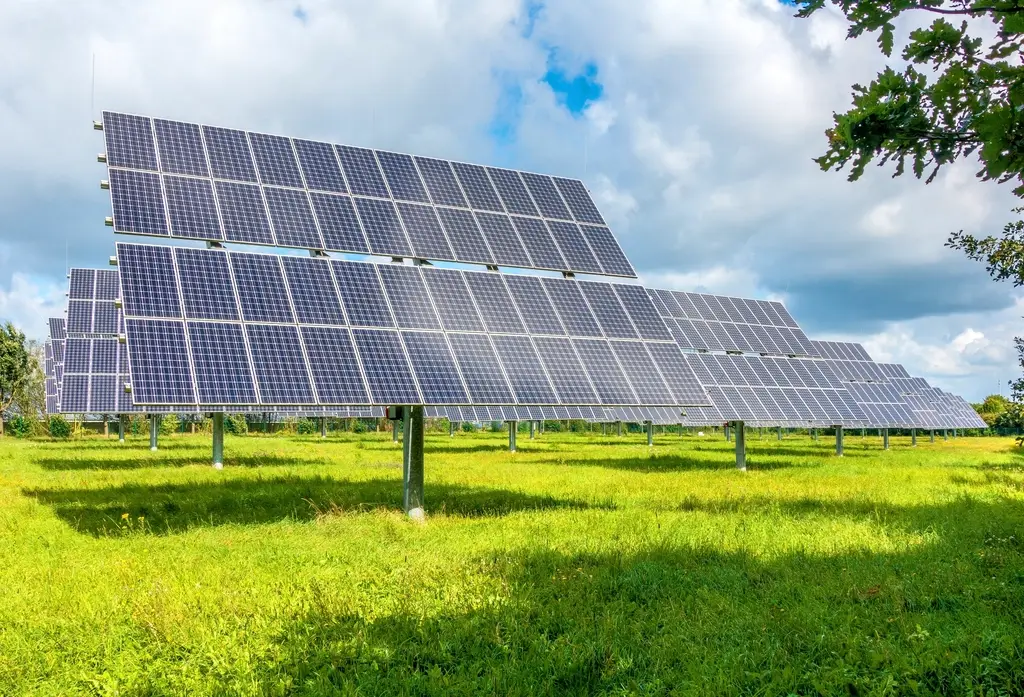 Ground-mounted solarGround-mounted solar on business or farm land: planning, land choice, cable runs, grid connection, security and biodiversity.
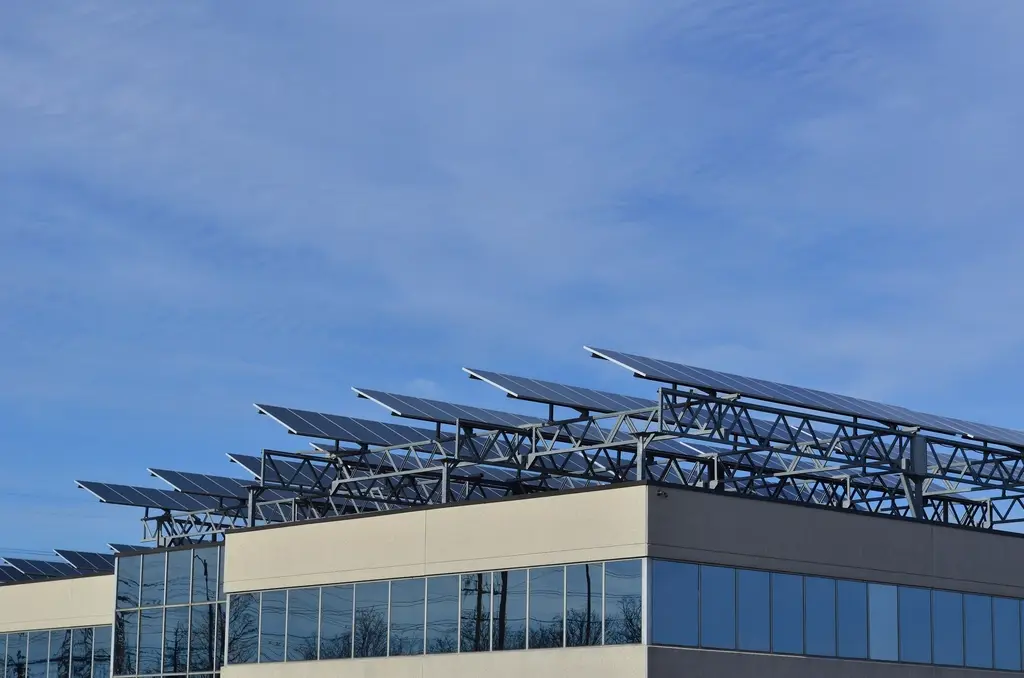 Battery storageWhen a commercial battery pays: storing surplus solar, time of use tariffs, peak shaving, sizing from half-hourly data, illustrative costs, safety and siting.
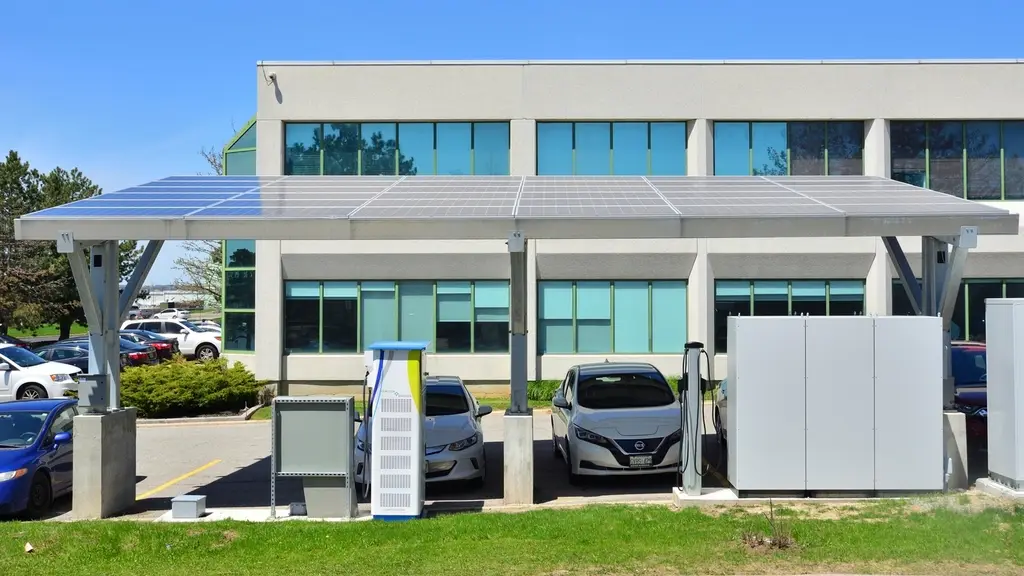 EV chargingHow to plan workplace and fleet EV charging with solar: supply capacity, load management, charger types, matching generation to charging and grant support.