
The short answer
- All UK bat species are protected. It is an offence to deliberately kill, injure or disturb them, and to damage or destroy a roost, even when no bats are in it at the time.
- Roof work can affect roosts, especially on older buildings with gaps under tiles, slates, ridges, soffits and timber, such as barns, churches, mills and Victorian commercial buildings.
- Check first. A preliminary roost assessment can be done at any time of year. If it finds potential, further surveys are needed, and those are seasonal.
- Nesting birds are protected too. Plan roof work outside the main nesting season where you can, and fit bird proofing around arrays to stop pigeons and gulls nesting underneath.
- Ground-mounted arrays in England usually need biodiversity net gain of at least 10%, which a well-managed array can often deliver on site.
Note: This guide is general information, not ecological or legal advice. Use a qualified ecologist where bats or other protected species may be present.
Bats and roofs
Bats roost in roof spaces, under tiles and slates, behind fascias and soffits, in cracks in stonework and around ridges and lead flashings. Rooftop solar rarely needs to touch those places directly, but fixing brackets through tiles, replacing slipped slates, re-roofing an asbestos roof or running cables into the loft can.
Natural England's guidance explains the protection and when surveys are needed (bats: protection, surveys and licences; advice for planning decisions). In outline:
- Preliminary roost assessment: an ecologist inspects the building inside and out for signs of bats and features they could use. This can be done at any time of year.
- Presence or absence surveys: if the building has potential, dusk emergence and dawn re-entry surveys show whether bats are using it. These are done in the active season, broadly from May to August, with some survey types extending into September.
- Mitigation and licensing: if a roost would be affected, the work usually needs a licence (in England, from Natural England) and a plan, such as timing work outside sensitive periods, keeping access points open or providing bat boxes.
Because the emergence surveys are seasonal, a building found to need them in October may have to wait until the following May. Asking the question early is what keeps the project on time. The Bat Conservation Trust has more background.
Nesting birds
All wild birds, their nests while in use and their eggs are protected. Some species, such as barn owls, have extra protection from disturbance at the nest. For solar projects that means:
- timing: avoid starting roof work in the main nesting season (broadly March to August) where birds may be nesting, or have the roof checked first,
- barns and farm buildings: check for swallows, house martins, swifts and barn owls,
- bird proofing: pigeons and gulls like the sheltered space under rooftop panels. Mesh or guards around the array, fitted at installation, prevent mess, blocked drainage and fire risk from nesting material. See solar maintenance.
Biodiversity net gain for ground-mounted arrays
In England, most new planning permissions must deliver at least 10% biodiversity net gain, measured with the statutory metric (understanding biodiversity net gain). Rooftop solar installed under permitted development is not a planning permission, so it does not trigger it.
A ground-mounted array on arable land can often deliver substantial gain on site by turning cropped land into managed grassland, with wildflower margins and new hedgerows. You will need:
- a baseline habitat survey,
- a biodiversity gain plan,
- a commitment to manage the habitat, usually for 30 years.
Other ecology points for ground arrays
- Great crested newts, badgers, reptiles and ground-nesting birds may need surveys depending on the site.
- Hedgerows and trees should be kept and protected during construction.
- Watercourses need buffers, and flood zones need a flood risk assessment.
- Fencing can include mammal gaps so badgers, hedgehogs and other wildlife can move through.
See solar on agricultural land and ground-mounted solar for the wider planning picture.
Scotland, Wales and Northern Ireland
Bats and wild birds are protected across the UK. Licences are issued by NatureScot in Scotland, Natural Resources Wales in Wales and the Northern Ireland Environment Agency in Northern Ireland. Biodiversity net gain as described above is an English requirement; Scotland and Wales have their own policies on enhancing biodiversity through development.
Frequently asked questions
Do I need a bat survey before installing solar panels?
Not always. If the roof work could affect places bats use, such as under slates or tiles, around ridges or in a timber roof space on an older building, a preliminary roost assessment is sensible first. If it finds potential, further surveys are needed, and those can only be done in the active season, broadly May to August.
Does rooftop solar need biodiversity net gain?
Not if it is installed under permitted development, because that is not a planning permission. Ground-mounted arrays that need planning permission in England usually do need at least 10% biodiversity net gain.
Related pages
- ChurchesMany churches can have panels; the permission route depends on listing and conservation areas, and the case on daytime use across the church, hall and neighbouring buildings.
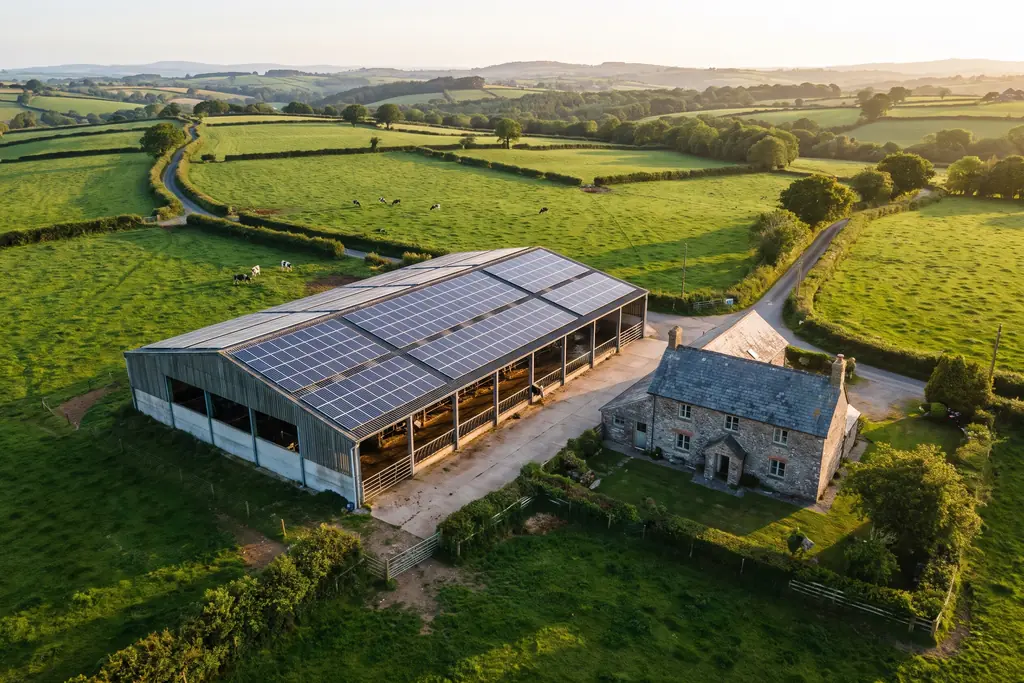 FarmsDairy, poultry and grain enterprises can make good use of solar on sheds or land. A farm survey looks closely at seasonal demand, building condition and rural grid capacity.
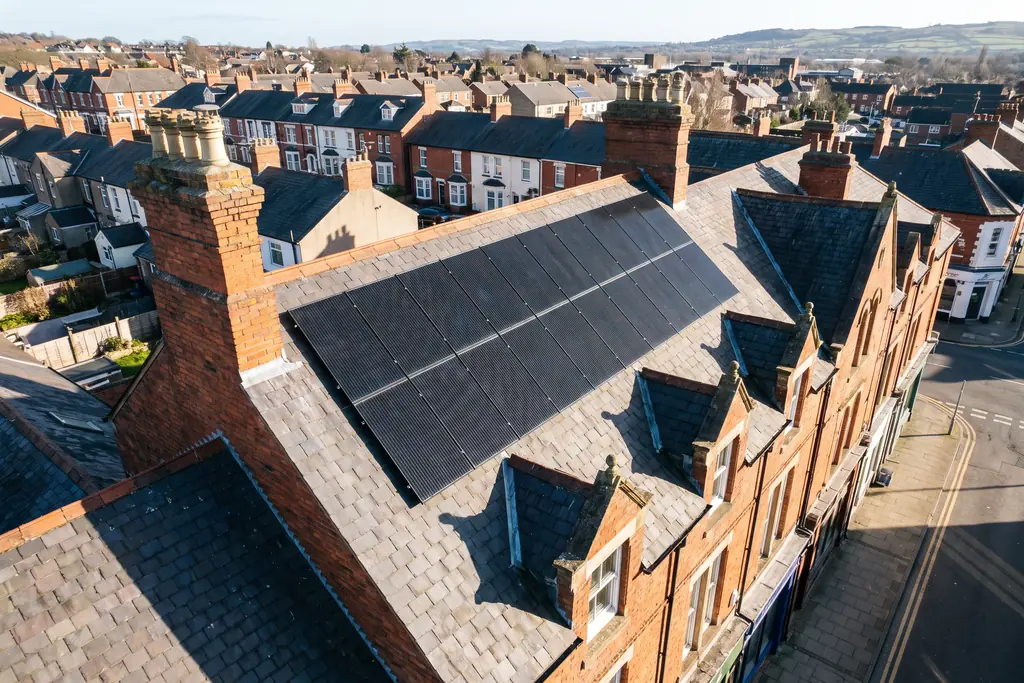 Pitched roofsTile and slate roofs on older commercial and agricultural buildings: in-roof or on-roof mounting, rafters, orientation and heritage limits.
- Solar maintenanceMonitoring, inspections, cleaning, thermography, electrical testing, bird proofing, roof access safety, O&M contracts and what insurers expect from rooftop PV owners.
- Solar on agricultural landBest and most versatile land, agricultural land classification surveys, grazing between rows, biodiversity and how to make the planning case for a farm array.