
The short answer
- Roofs first. Shed, barn and dairy roofs avoid the land question altogether and are usually cheaper to connect. See solar for farms.
- If you need a ground array, land quality matters. In England, national policy says decision makers should take into account the quality of agricultural land, including best and most versatile land, and use poorer quality land where significant development of farmland is necessary.
- Best and most versatile (BMV) land means grades 1, 2 and 3a of the Agricultural Land Classification.
- A site-specific land survey is the evidence that settles the grade. National maps are too coarse for a field-level decision.
- Keep farming the land: sheep grazing between rows, hedgerows and wildflower margins all help the case.
Note: This guide covers England unless it says otherwise. It is general information, not planning, land or tax advice.
How land quality is graded
The Agricultural Land Classification (ALC) grades farmland from 1 (excellent) to 5 (very poor), with grade 3 split into 3a (good) and 3b (moderate). Grades 1, 2 and 3a are best and most versatile. Natural England's guide to assessing development proposals on agricultural land explains how grades are assessed and when Natural England should be consulted.
The provisional national ALC maps date from the 1960s and 1970s and do not separate 3a from 3b, so a field mapped as grade 3 may or may not be BMV. A detailed ALC survey, with soil pits or auger borings across the site, is the normal way to establish the grade for a planning application.
What national policy says
The NPPF's natural environment chapter asks decision makers to take into account the quality of agricultural land, including BMV land and its grade, and, if significant development of agricultural land is necessary, to use poorer quality land where possible. At the same time, policy W3 gives substantial weight to the benefits of renewable energy and says applicants do not have to prove the need for it (chapter 10).
In practice that means:
- an array on grade 3b, 4 or 5 land faces far less resistance on land quality,
- an array on BMV land needs a reason, such as no suitable poorer land on the holding, and benefits that justify it,
- a smaller array sized to the farm's own use is easier to justify than a large one built mainly to export.
Keeping the land in agricultural use
Arrays are usually raised on frames, leaving the ground beneath them as grass. That allows:
- sheep grazing between and under the rows, which is common and keeps vegetation down,
- wildflower and grassland management that can deliver biodiversity net gain,
- soil rest and recovery on land that has been intensively cropped.
Raised or widely spaced "agrivoltaic" layouts, which let crops grow between rows, are possible but cost more and are less common in the UK. Whichever layout you choose, a soil management plan for construction and decommissioning protects the land's grade for the future.
The planning application
For a farm array, expect to provide:
- an agricultural land classification survey,
- a landscape and visual impact assessment,
- an ecology survey and biodiversity net gain plan (see bats, birds and ecology),
- flood risk information if the land is in a flood zone,
- a glint and glare study where there are roads, railways or homes nearby,
- a construction, soil management and decommissioning plan,
- evidence of the farm's energy use, to show the array is sized to it.
Green belt, national park and National Landscape land add further tests: see green belt and national parks and National Landscapes.
Tax and tenancy points to check
- Tenancies: a tenant farmer usually needs the landlord's consent, and the tenancy agreement may need varying. See solar on leased property.
- Inheritance tax: land taken out of agricultural use for solar may not qualify for agricultural property relief in the same way. Take advice from your accountant before committing land.
- Capital allowances: a farm business buying its own array can usually claim them. See capital allowances.
Scotland, Wales and Northern Ireland
Each nation has its own planning policy and land classification system. Scotland uses the Macaulay Land Capability for Agriculture classes and National Planning Framework 4, which supports renewable energy while protecting prime agricultural land. Wales has its own ALC system and Planning Policy Wales, which also protects BMV land. Speak to the planning authority early wherever the farm is.
Frequently asked questions
What is best and most versatile agricultural land?
Grades 1, 2 and 3a of the Agricultural Land Classification. National policy in England asks decision makers to take land quality into account and to use poorer quality land where significant development of farmland is necessary.
Can sheep graze under solar panels?
Yes. Ground-mounted arrays are usually raised on frames with grass beneath, and sheep grazing between and under the rows is common in the UK. It keeps vegetation down and keeps the land in agricultural use.
Related pages
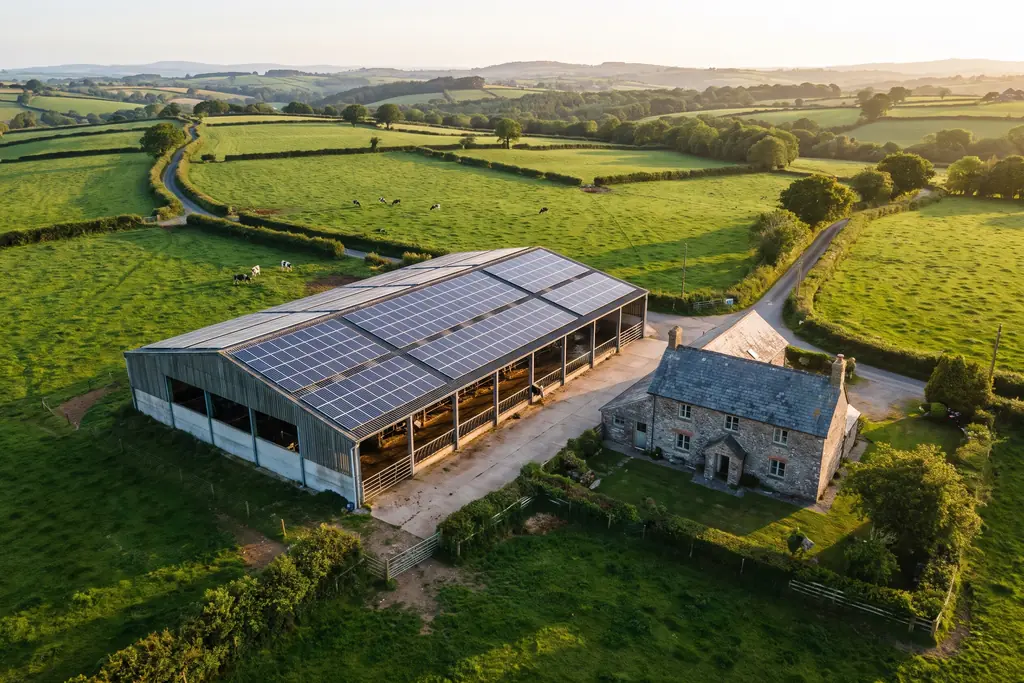 FarmsDairy, poultry and grain enterprises can make good use of solar on sheds or land. A farm survey looks closely at seasonal demand, building condition and rural grid capacity.
- Arable farmsBig barn and grain store roofs meet seasonal demand from drying and ventilation, so sizing to use, not roof area, decides the case.
- Dairy farmsMilking, milk cooling and water heating run every day of the year, which gives a dairy farm steady demand for what panels make.
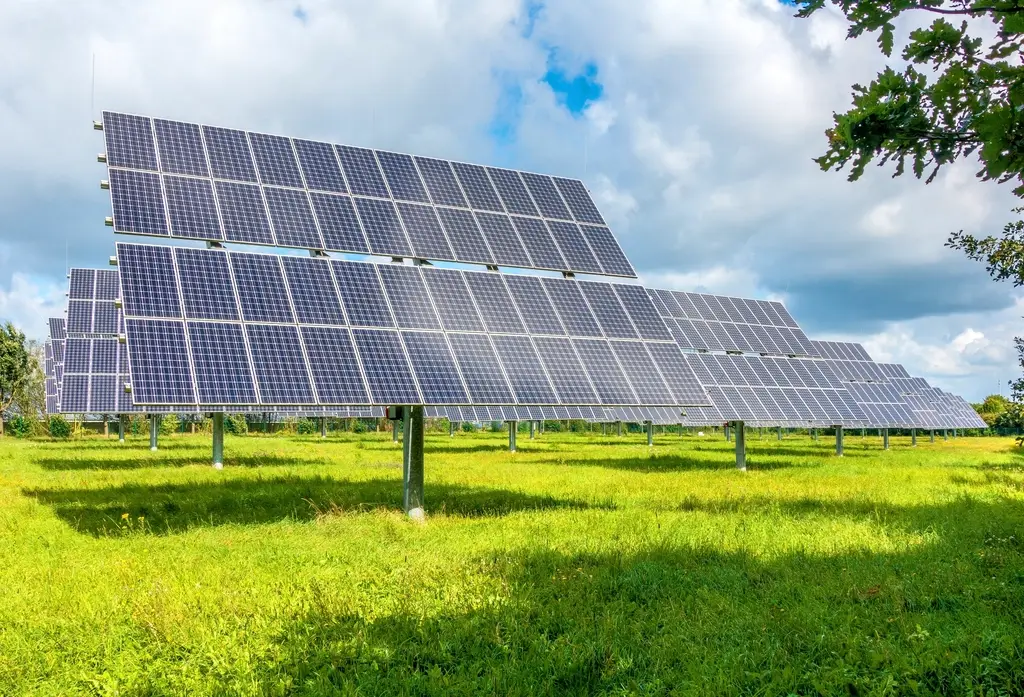 Ground-mounted solarGround-mounted solar on business or farm land: planning, land choice, cable runs, grid connection, security and biodiversity.
- Green beltHow green belt policy treats ground-mounted business solar: inappropriate development, very special circumstances, grey belt, and how to build the case.