
BICS at a glance
| Question | Answer, from the government's guidance |
|---|---|
| What it does | Exempts eligible electricity from the indirect costs of the Renewables Obligation (RO), Feed-in Tariffs (FiT) and Capacity Market (CM) |
| How much | Up to £40 per MWh, according to the scheme page (GOV.UK) |
| Who | Manufacturers in the Industrial Strategy's frontier and foundational industries that pass an electricity intensity test |
| Where | Great Britain only, not Northern Ireland |
| Applications | 1 October to 11:59pm on 30 November 2026, online |
| Decisions | January 2027, by email |
| RO and FiT exemption | From April 2027 |
| CM exemption | From October 2027 |
| How long it lasts | 5 years, with a declaration every year and a full review in year 2 |
| Run by | The Department for Business, Innovation, Science and Trade (BIST) |
These dates are for the first year of the scheme (BICS guidance for applicants, section 1.3). Your electricity supplier applies the exemption to your bills; BIST shares the details with it. The guidance says there will be no chance to change an application once it has been submitted.
Who qualifies: the four tests
A business must meet all four (BICS guidance, section 2):
- Registered on Companies House. Not registered means you cannot apply. Companies registered, or whose SIC code changed, in the last 6 months may get extra scrutiny.
- An eligible sector. At least one of your SIC codes on Companies House must be on the eligible list: frontier manufacturing industries with electricity intensity over 0.9%, or foundational manufacturing industries over 2.7%. The guidance says this is the final list for 2027.
- An eligible product made in Great Britain. The product must match a 6-digit HS (commodity) code on the eligible list. You do not need to export; the government's Trade Tariff service finds the code.
- At least 33 MWh of grid electricity a year at the site. You show it with the most recent 6 consecutive months of bills from the last 12 months, which must show more than 16.5 MWh. Only grid electricity counts.
Both code lists are in the government's eligibility document (GOV.UK), and the online eligibility checker gives an initial indication from a small amount of information (check eligibility for BICS). The checker is only an indication: BIST decides after a full application.
How much of your electricity is exempt
Relief is worked out site by site. A site that makes only eligible products normally gets a 100% exemption. A site that makes eligible and ineligible products works out the share of its grid electricity used for eligible manufacturing, including support activities such as lighting, heating and ventilation, compressed air, process cooling and on-site offices, and gets a band (BICS guidance, sections 4.4 to 4.6):
| Share of grid electricity used for eligible manufacturing | Exemption |
|---|---|
| 25% or less | 0% |
| More than 25% but less than 50% | 50% |
| 50% or more | 100% |
Where you have sub-meters, the guidance says you must use their data; without them, you can estimate from machine ratings or production data and explain the method. Sites, meters shared with a landlord or another business, and private wire supplies have their own rules in sections 4.2, 4.7 and 9 of the guidance.
If you already get the British Industry Supercharger for energy-intensive industries, you can also apply for BICS, but the same activity cannot get relief from both. The guidance puts the Supercharger's support at about £65 to £87 per MWh.
BICS and your own solar panels
The guidance is clear that only grid electricity is in scope: "Local and distributed electricity generation sources (such as behind-the-meter solar generation, combined heat and power (CHP) generation or on-site wind generation) are not subject to the policy costs covered by BICS and are therefore outside the scope of the scheme" (BICS guidance, section 4.3). Its own example is a site using 1,000 MWh a year, 300 MWh of it from rooftop solar behind the meter: only the 700 MWh from the grid is counted.
What that means in practice:
- Leave solar out of your application figures. Use grid electricity only, as your bills show it.
- Solar never costs you BICS on electricity you still buy. It only means you buy less electricity to exempt.
- Each solar kWh is worth a little less. BICS lowers the price of grid electricity by up to 4p per kWh, so a kWh of solar you use instead saves up to 4p less. It still saves the energy, network and other costs on that kWh.
- Small sites: check the 33 MWh test. A site close to the threshold should check its grid use after solar is still above 33 MWh a year.
Worked example: BICS, solar, or both
Take the illustrative manufacturer used across this site: 300,000 kWh of grid electricity a year at an illustrative 24p per kWh, assumed to pass all four tests with a 100% exemption and to receive the full £40 per MWh. It looks at a 100 kWp rooftop system at an illustrative £900 per kWp, generating about 90,000 kWh a year, 80% used on site and 20% exported at an illustrative 5p.
| Grid electricity bought | Price per kWh | Yearly cost, less export income | |
|---|---|---|---|
| Today | 300,000 kWh | 24p | £72,000 |
| BICS only | 300,000 kWh | 20p | £60,000 |
| Solar only | 228,000 kWh | 24p | £53,820 |
| BICS and solar | 228,000 kWh | 20p | £44,700 |
How the figures are worked out:
- BICS: £40 per MWh is 4p per kWh, so 300 MWh × £40 = £12,000 a year off at most. With solar, the exempt grid electricity is 228 MWh, so BICS is worth up to £9,120.
- Solar: 72,000 kWh used on site is electricity you no longer buy. At 24p that saves £17,280, plus 18,000 kWh exported × 5p = £900. With BICS, each of those kWh would have cost 20p, so the saving is £14,400 plus the same £900: £15,300 a year, a simple payback on £90,000 of about 5.9 years before tax relief, against about 5 years without BICS.
- Together: the bill falls from £72,000 to £44,700, about 38% lower, more than either on its own.
The £40 is a maximum, the CM part starts six months after the RO and FiT parts, and your real price per kWh may differ, so treat these as illustrative. A free site survey works out the solar side from your own half-hourly data; see also solar payback and capital allowances.
How to apply before 30 November 2026
The guidance's checklist (BICS guidance, section 1.4):
- Run the eligibility checker to confirm you are likely to qualify.
- GOV.UK One Login for Business, with a passport or driving licence if you do not already have an account.
- A Companies House officer, or someone they authorise by email, and your company authentication code (the 6-digit code used to file accounts) and company number.
- Each manufacturing site's details, including its MPANs.
- Electricity bills covering the most recent 6 consecutive months within the last 12, for each site.
- The products made at each site, with evidence (Annex A of the guidance lists what is accepted).
A consultant can submit for you, but the business remains responsible for what is submitted. Start at apply for BICS. If the online service fails you, a paper form must reach BIST by the same deadline.
After you are approved
- Check your bills from April 2027. The guidance says suppliers show the exemption in different ways: a reduced or zero levy line, a stated rate such as "50% exempt", or split volumes. Ask your supplier first if it is missing.
- Small businesses (under 50 employees, under £6.5 million turnover or £5 million balance sheet, and under 200 MWh a year) can also take a pass-through dispute to the Energy Ombudsman.
- Send the annual declaration. Missing it, or giving information you know is wrong, means the exemption is revoked.
- Tell BIST about material changes to the site or what it makes.
BICS does not touch the Climate Change Levy. For that, an energy intensive site needs a Climate Change Agreement, which takes 92% off the levy on electricity; the next application window opens on 1 January 2027.
Note: General information, not advice. BICS depends on legislation the government expected to make by autumn 2026, and the guidance is kept under review. Check the current guidance and your own eligibility before you rely on any figure here.
Sources
Read on 26 November 2026.
Frequently asked questions
What is the British Industrial Competitiveness Scheme?
BICS is a government scheme that cuts electricity costs for eligible manufacturers in Great Britain by up to £40 per MWh from 2027. It exempts their grid electricity from the indirect costs of the Renewables Obligation and Feed-in Tariffs from April 2027, and the Capacity Market from October 2027. It is run by the Department for Business, Innovation, Science and Trade.
When is the BICS application deadline?
The first application window opened on 1 October 2026 and closes at 11:59pm on 30 November 2026. Decisions are due in January 2027 and exemptions start on bills from April 2027. A paper application must also be received by 30 November. The guidance says an application cannot be changed after it is submitted.
Who is eligible for BICS?
A business must be registered on Companies House, have an eligible SIC code, make an eligible product (by 6-digit HS code) at a site in Great Britain, and use at least 33 MWh of grid electricity a year at that site. The government's eligibility checker gives an initial answer; final eligibility is decided after a full application.
Does solar on my factory affect BICS?
Electricity from behind-the-meter solar is outside BICS, so you leave it out of your application and claim only on the electricity you still buy from the grid. You still get the exemption on every grid kWh. Because BICS lowers the grid price by up to 4p per kWh, each solar kWh you use saves up to 4p less than it would without BICS.
How much will BICS save my business?
Up to £40 per MWh of eligible grid electricity, which is about 4p per kWh. A site using 300 MWh a year with a 100% exemption would save up to £12,000 a year once all three exemptions apply. A site with between 25% and 50% of its electricity used for eligible manufacturing gets a 50% exemption; 25% or less gets none.
Related pages
- Climate Change LevyElectricity you generate and use on site carries no Climate Change Levy, so the levy is part of what each solar kWh saves.
- Business electricity pricesPublished DESNZ figures show what businesses pay per kWh by size of user; your own unit rate is what solar replaces.
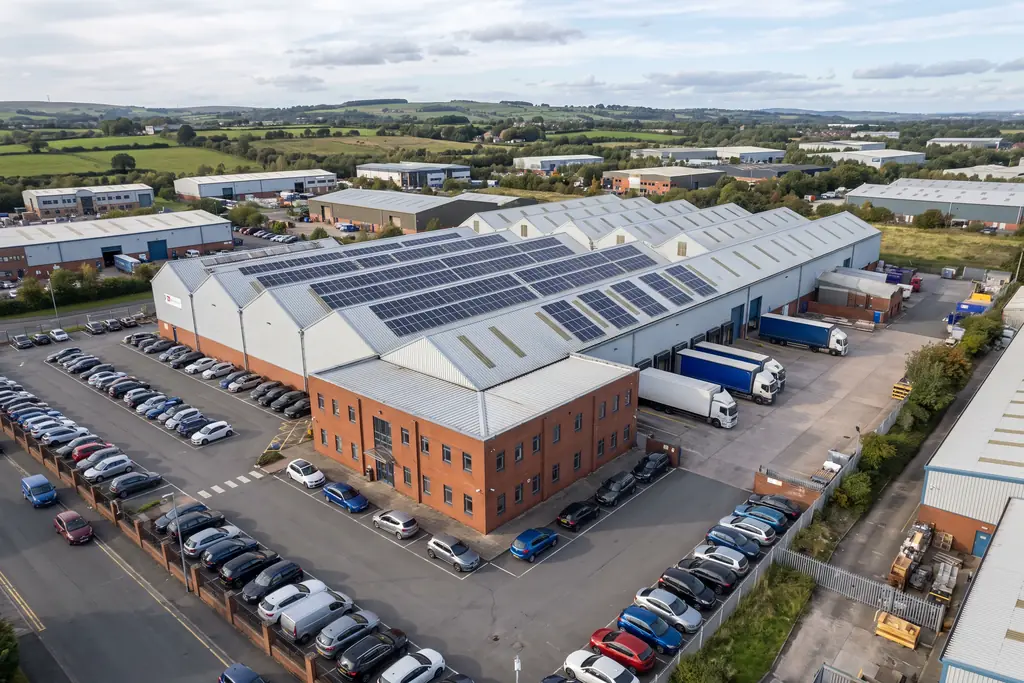 FactoriesFactories with heavy daytime process loads can use nearly all the solar they generate. The survey focuses on the electrical system, roof condition and how to install without stopping production.
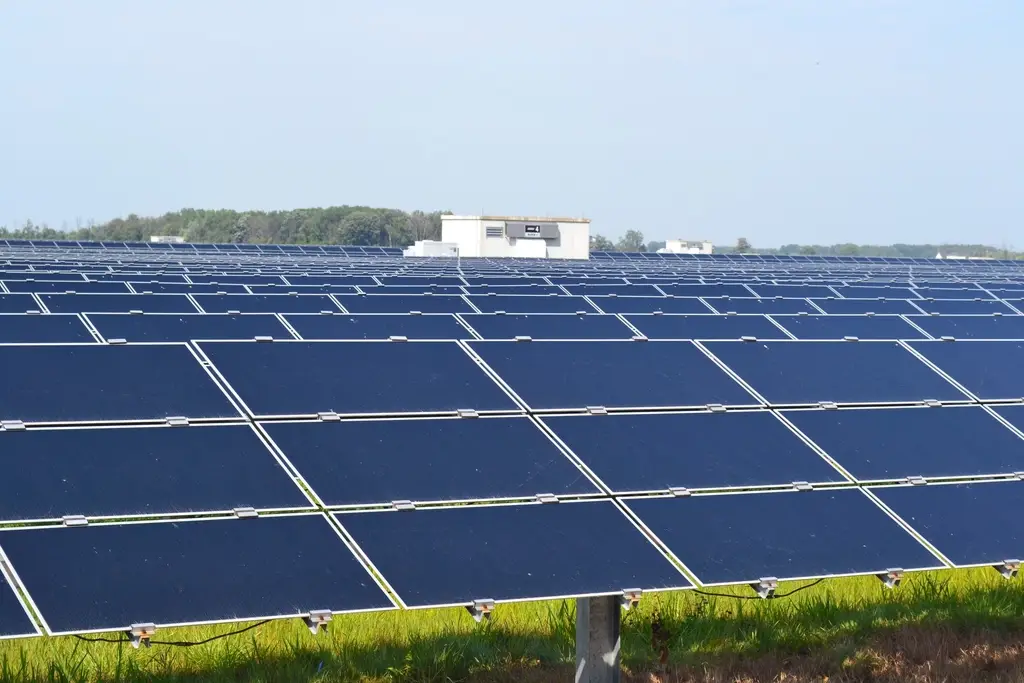 Solar paybackA worked payback example for a 100 kWp system, the factors that move the result most, the effect of tax relief, and a calculator to try your own figures.
- Cutting energy costsStart with what you pay and when, cut waste and inefficiency, then generate your own: the order that gives the best return.
- Energy data analysisHow half-hourly consumption data shapes solar sizing and payback: getting the data, profile classes, baseload, weekend and seasonal use, self-consumption and batteries.