
What a Climate Change Agreement is
The Climate Change Levy is a tax on the energy a business buys, charged by your supplier. A CCA is the way energy intensive industry pays far less of it. GOV.UK describes CCAs as "voluntary agreements made between UK industry and the Environment Agency" to reduce energy use and CO2 emissions, in return for "a discount on the Climate Change Levy" (GOV.UK). The Environment Agency administers the scheme for the whole of the UK.
There are two layers:
- An umbrella agreement between a sector association and the Environment Agency, which sets the sector's targets and the processes that are eligible.
- An underlying agreement held by the operator for a site or a group of sites, with targets taken from the umbrella agreement.
You do not apply to the government directly. GOV.UK says an operator that wants a CCA "must apply first to its sector association" (GOV.UK).
What it saves on the levy
Climate Change Levy main rates and the CCA discount, from HMRC
| From 1 April 2026 | From 1 April 2027 | CCA discount | |
|---|---|---|---|
| Electricity (£ per kWh) | 0.00801 | 0.00827 | 92% |
| Gas (£ per kWh) | 0.00801 | 0.00827 | 89% |
Source: HMRC, Climate Change Levy rates. A CCA site pays 8% of the main electricity rate and 11% of the main gas rate. The government estimated in October 2024 that the new scheme is worth about £1.9 billion of reduced levy over its six years (government response).
Example: The levy on the site's shared 300,000 kWh user (illustrative)
At the main rate from April 2026: 300,000 kWh × £0.00801 = £2,403 a year
With a CCA, 8% of that: about £192 a year
The same sums for gas: a site burning 400,000 kWh of gas would pay about £3,204 at the main rate, and about £352 with the 89% discount.
Illustrative only. Your supplier applies the reduced rate once your facility is on the reduced rate certificate.
The 2026 scheme: the dates that matter
| Dates | |
|---|---|
| Target Period 7 | 1 January 2026 to 31 December 2026 |
| Target Period 8 | 1 January 2027 to 31 December 2028 |
| Target Period 9 | 1 January 2029 to 31 December 2030 |
| Reduced levy rates | Until 31 March 2033 for sites meeting their obligations |
| New entrants in eligible sectors | Apply between 1 January and 31 August, each year from 2026 to 2029 |
| Last date a facility can be added | Before 1 January 2030 |
| Performance reports | By 1 May in the year after each target period ends |
Sources: CCA statutory guidance 2026 and the October 2024 government response. The response calls these the first three target periods of the new scheme; the 2026 statutory guidance numbers them 7, 8 and 9, carrying on from the old scheme. The 31 August deadline gives the Environment Agency time to issue agreements before the next calendar year, and new entrants get the discount from the point they enter, with no minimum period of performance data first.
Who can join
Three tests, from the sector down to the meter:
| Test | What it means |
|---|---|
| Your sector or process is eligible | It is covered by an umbrella agreement. For a new sector to get in, its energy costs must be at least 10% of its production value, or 3% to 10% with an import penetration ratio of at least 50% |
| Your site is an eligible facility | The facility falls within paragraph 50 of Schedule 6 to the Finance Act 2000, and its activities fall within the umbrella agreement |
| The 70% rule | At least 70% of the reckonable energy supplied to the facility is intended to be used in the eligible installation. Other activities can be included if they use no more than 3/7 of the installation's energy |
Sources: CCA statutory guidance 2026 and the government response. GOV.UK says the sectors range from energy intensive chemicals and paper to supermarkets and intensive pig and poultry farming (GOV.UK); your sector association confirms whether your processes qualify.
Three new processes from 2027. The government published amending regulations on 20 April 2026 adding the mechanical recycling of plastic, the packaging of spirits and the production of automotive grade battery cells, anticipated to come into force on 1 January 2027, subject to approval by the House of Commons (GOV.UK). If you run a distillery that bottles its own spirits, ask your trade association whether you will be covered.
Targets, surplus and buy-out
- One target type. The new scheme uses a single unified target type adapted from the Novem method, with targets for 2026 to 2030 built on a 2022 base year and each sector's commitment (government response, statutory guidance).
- Facility level reporting, with a light annual report at the end of year one of each two-year target period.
- Surplus from beating a target can be carried to the next target period within the new scheme, facility by facility. Surplus from the old scheme's Target Period 6 does not carry over.
- Buy-out. A site that misses its target can pay a buy-out fee per tonne of CO2e of shortfall to keep its certification. The government sets the price before each target period from a weighted average of the electricity and gas levy rates.
- Penalties. The Environment Agency's penalty for inaccurate baseline or reporting information is the greater of £500 or £25 per tonne of CO2e, in line with the buy-out price, and the government has said it will carry out significantly more audits.
- UK ETS energy is counted in the 70% test and must be reported, but it is not included in CCA targets.
Where solar fits in a CCA
For a CCA site, solar is worth far more for the bill and the target than for the levy.
The levy saving is small. Electricity you generate and use yourself is not bought from a supplier, so it carries no levy at all (our CCL guide). But a CCA site already pays only 8% of the rate, so there is little left to save.
The target saving is real. The government confirmed that in the new scheme self-generated electricity from PV, wind or hydro has a primary electricity factor of 1.0 and a carbon emissions factor of 0 tCO2e per kWh (government response). Every kWh your panels supply in place of grid power counts as zero carbon in your performance, which helps you meet the target and avoid buy-out. The grid electricity factors are fixed for the whole six years.
Example: What 100 kWp of solar does for the same CCA site (illustrative)
A 100 kWp rooftop system at an illustrative £900 per kWp costs £90,000 and generates about 90,000 kWh a year. 80% (72,000 kWh) is used on site.
Levy avoided without a CCA: 72,000 × £0.00801 = £577 a year
Levy avoided with a CCA: 8% of that, about £46 a year
Electricity no longer bought at an illustrative 24p: 72,000 × £0.24 = £17,280 a year, plus about £900 for the 18,000 kWh exported at 5p
In a carbon-based performance report, the 72,000 kWh count at zero instead of the grid factor
That is the site's shared example: about £18,180 a year and a simple payback of roughly 5 years before tax relief, with or without a CCA. See solar payback and capital allowances. Ask your sector association how on-site generation is reported in your umbrella agreement before you size the system.
A green tariff is different. It does not remove the levy, and it is the self-generated electricity rule that gives solar its zero carbon factor. See REGO certificates and solar PPAs.
CCAs, BICS and ESOS
Three schemes that energy intensive businesses often confuse: the Climate Change Agreement, the British Industrial Competitiveness Scheme (BICS) and the Energy Savings Opportunity Scheme (ESOS).
| Scheme | What it cuts or asks | Who |
|---|---|---|
| Climate Change Agreement | 92% off the levy on electricity, 89% on gas, for meeting targets | Eligible facilities in eligible sectors, through their sector association |
| BICS | From April 2027, eligible grid electricity exempt from Renewables Obligation, Feed-in Tariff and Capacity Market costs; it does not cover the levy | Eligible manufacturers |
| ESOS | An energy audit duty, not a discount | Large undertakings |
A CCA does not replace ESOS: the government response notes that an energy management system such as ISO 50001 is not required for the new scheme, but recommends one as good practice. Many of the sites that qualify are factories, food and drink processors and pig and poultry units, the same sites whose daytime load makes rooftop solar pay. A free site survey works out the system size from your half-hourly data.
Note: General information from GOV.UK, HMRC and the Department for Energy Security and Net Zero, not tax advice. Eligibility is decided through your sector association and the Environment Agency.
Sources
Read on 27 November 2026.
- GOV.UK: Climate Change Agreements statutory guidance 2026 (updated 24 February 2026)
- DESNZ: Government response to Climate Change Agreements: consultation on a new scheme (October 2024)
- GOV.UK: Climate change agreements scheme, extension to new sectors and processes (published 20 April 2026)
- GOV.UK: Climate change agreements overview and sector associations
- HMRC: Climate Change Levy rates (updated 17 November 2026)
Frequently asked questions
What is a Climate Change Agreement?
A voluntary agreement between an energy intensive business and the Environment Agency, made through the business's sector association. The site agrees energy or carbon targets and in return pays a reduced rate of Climate Change Levy: 92% off the main rate on electricity and 89% off on gas, according to HMRC's rates table.
Can new businesses still join a Climate Change Agreement?
Yes. In the new scheme, new entrants in eligible sectors can apply between 1 January and 31 August each year from 2026 to 2029, and a facility must be added before 1 January 2030. You apply first to your sector association. The next window opens on 1 January 2027.
How long does the new CCA scheme run?
Targets run from 1 January 2026 to 31 December 2030 in three target periods: 2026, 2027 to 2028 and 2029 to 2030. Sites that meet their targets and other obligations keep the reduced Climate Change Levy rates until 31 March 2033.
What happens if we miss our CCA target?
You can pay a buy-out fee for each tonne of CO2e of shortfall to keep your certification and the reduced levy rate. The government sets the buy-out price before each target period from a weighted average of the electricity and gas levy rates. Surplus from beating a target can be carried to the next period.
Does solar count towards a Climate Change Agreement target?
Yes. The government confirmed that in the new scheme self-generated electricity from PV, wind or hydro has a primary electricity factor of 1.0 and a carbon emissions factor of zero. Solar you use on site in place of grid power therefore counts as zero carbon in your performance. Check with your sector association how it is reported.
Which new sectors can join a CCA from 2027?
Amending regulations published on 20 April 2026 add the mechanical recycling of plastic, the packaging of spirits and the production of automotive grade battery cells. They are anticipated to come into force on 1 January 2027, subject to approval by the House of Commons.
Related pages
- Climate Change LevyElectricity you generate and use on site carries no Climate Change Levy, so the levy is part of what each solar kWh saves.
- BICS for manufacturersThe four eligibility tests, the 0%, 50% and 100% exemption bands, the dates, and a worked example of BICS and rooftop solar together on a 300,000 kWh manufacturer.
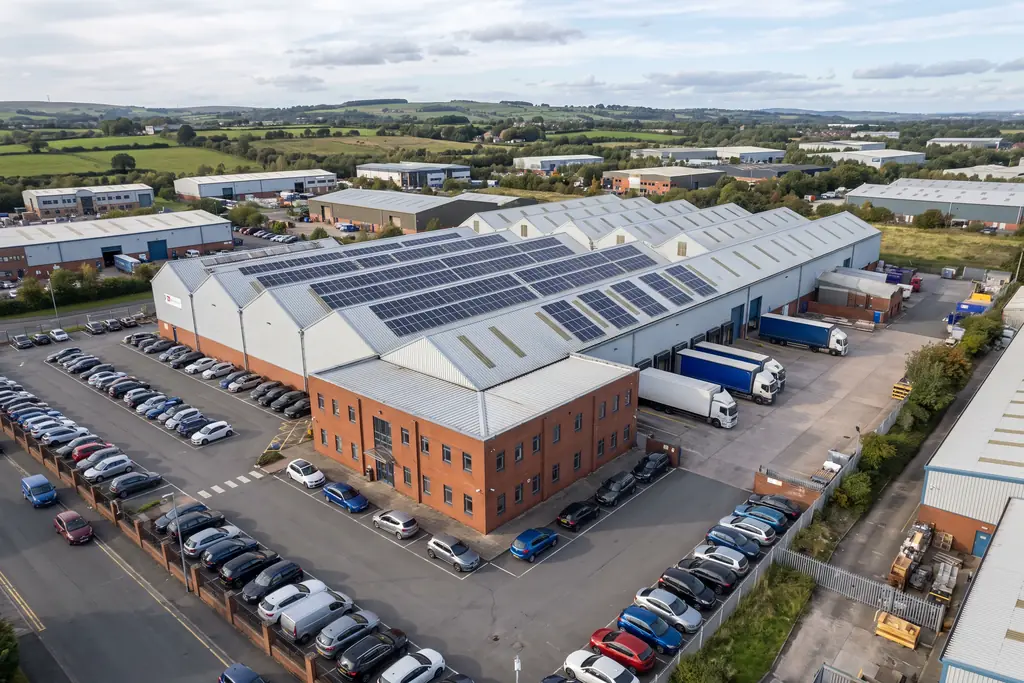 FactoriesFactories with heavy daytime process loads can use nearly all the solar they generate. The survey focuses on the electrical system, roof condition and how to install without stopping production.
- ESOSESOS is a mandatory energy assessment for large UK undertakings every four years; solar is one of the measures an audit can lead to.
- Solar and carbon reportingHow on-site solar affects Scope 2 emissions, location-based and market-based reporting, SECR, carbon reduction plans, supplier questionnaires and REGOs, in plain terms.
- Food and drinkRefrigeration and process cooling give food and drink sites a strong match with solar. The survey pays close attention to hygiene zones, insulated panel roofs and fire risk.