
How voltage optimisation works
The Electricity Safety, Quality and Continuity Regulations 2002 set the declared voltage for a low voltage supply at 230 volts between phase and neutral, with a permitted variation of "10 per cent above or 6 per cent below the declared voltage", unless agreed otherwise in writing (regulation 27, legislation.gov.uk). That allows anything from 216.2 to 253 volts at your supply terminals. Business Energy Scotland says supplies "can often be higher, sometimes up to 250 volts" (Business Energy Scotland).
A voltage optimisation (VO) unit is installed in series with the incoming supply, usually next to the main switchboard, and brings the voltage down to a steadier, lower level for the whole site. Some units also balance the three phases and filter out harmonics, according to the electrical manufacturers' association BEAMA (BEAMA guide to voltage optimisation).
Which equipment saves, and which does not
BEAMA's rule of thumb is that for a simple resistive load, a 1% rise in voltage causes about a 2% rise in power demand, so lowering the voltage saves energy. Much modern equipment draws the same power whatever the voltage, so the saving depends on what your site runs (BEAMA):
| Equipment | Saves with lower voltage? |
|---|---|
| Halogen and filament lamps | Yes, though light output falls slightly |
| Fluorescent lamps with older magnetic (switch start) ballasts | Yes |
| Metal halide and SON lamps with magnetic ballasts | Usually; check the ballast type |
| Fluorescent lamps with electronic (high frequency) ballasts | No |
| LED lamps with modern drivers | No |
| Motors without drives, especially small or part loaded ones | Often, by between nothing and about 2% for each 1% of voltage |
| Motors on variable speed drives | No |
| Electric heating on thermostats | Probably not: it heats up faster but uses about the same energy |
| Computers, office equipment and other electronics | Small to negligible |
Business Energy Scotland says VO tends to suit sites where equipment runs continuously or is sensitive to voltage, giving farms, hospitality and manufacturing as examples. It says it suits IT-focused businesses, low-demand shops with LED lighting, and sites with on-site generation or batteries less well.
What it costs and how to check the saving
Business Energy Scotland puts typical installations at £2,000 to £5,000. A large site with a big supply needs a larger unit, so get more than one survey and quote. In Scotland, voltage optimisation is one of the measures the SME Loan Scheme funds, with cashback on eligible energy efficiency costs.
BEAMA's guidance is that a suitably qualified electrical engineer should measure before anything is bought: the voltage at your supply, the voltage drop across the site, and how much of your load is voltage dependent. To prove the saving afterwards, it describes two methods: comparing consumption over about three months with the unit and without it under similar conditions, or switching the unit between saving mode and bypass and measuring the difference. Agree the method with the supplier before you sign.
Three things change the answer:
- Your incoming voltage. If it already sits close to 230 volts, there is little to take off.
- Your load. A site that has moved to LED lighting and drives has already taken most of the saving VO would have given.
- Hours. Saving a little power on equipment that runs around the clock adds up; on equipment that runs a few hours a day it does not.
Worked example: voltage optimisation and solar on the same site
Take the illustrative manufacturer used across this site, using 300,000 kWh a year at an illustrative 24p per kWh, about £72,000 a year. Assume, for illustration, that logging finds an average supply of 240 volts, that a VO unit would bring it down by 5% to 228 volts, and that 40% of the site's consumption is voltage dependent (older lighting and uncontrolled motors).
| Voltage optimisation (illustrative) | 100 kWp rooftop solar (illustrative) | |
|---|---|---|
| Electricity saved or generated for use | 6,000 to 12,000 kWh a year | 72,000 kWh used on site |
| Yearly value at 24p | £1,440 to £2,880 | £17,280, plus about £900 of export at 5p |
| Cost | £2,000 to £5,000 (Business Energy Scotland's typical range) | About £90,000 at £900 per kWp, excluding VAT |
| Simple payback | Roughly 0.7 to 3.5 years | Roughly 5 years before tax relief |
How the VO range is worked out: 40% of 300,000 kWh is 120,000 kWh of voltage dependent use. At BEAMA's upper rule of thumb of 2% less power for each 1% less voltage, a 5% cut saves 10% of that, 12,000 kWh (£2,880). If the load saves only half that, because motors save less than simple resistive loads, it is 6,000 kWh (£1,440). The payback range runs from £2,000 against £2,880 to £5,000 against £1,440.
The solar column is the site's standard example: 100 kWp generating about 90,000 kWh a year, 80% used on site. See how payback is worked out.
What the comparison shows: VO, where it suits the site, is a small, quick saving; solar is a much larger one that takes longer to pay back. They are not either/or, but two cautions apply if you do both:
- The savings overlap. Once solar covers part of your daytime use, some of what VO saves turns into extra export at around 5p instead of electricity you would have bought at 24p.
- Check the connection. Exporting solar raises the voltage at your supply point, and Business Energy Scotland notes VO suits sites with on-site generation less well. The VO supplier and the solar installer should agree where the inverters connect and check the design against the grid connection; see G99 and DNO applications.
These figures are illustrative. Your own voltage logging and half-hourly data decide the real ones; our page on energy data analysis explains how that data is used for solar.
Where voltage optimisation fits in cutting your energy costs
Work through the cheap measures first: controls, switching off, LED lighting and fixing compressed air leaks. Our guide to cutting business energy costs sets out the order. VO is worth testing where older lighting or uncontrolled motors still make up a large share of your load. On a half-hourly supply, check the reactive power line on your bill too: power factor correction is a different measure with a different saving. Solar then cuts the cost of the electricity you still need, and a battery can move it into the evening peak. A free site survey models solar for your own site.
Note: General information, not advice. Voltage optimisation must be designed and installed by a qualified electrician, and equipment must still receive a voltage within its rating. Ask your accountant how the cost is treated for tax.
Sources
Read on 25 November 2026.
Frequently asked questions
What is voltage optimisation?
Voltage optimisation is equipment fitted in series with your incoming electricity supply that lowers and steadies the voltage reaching your site. UK low voltage supplies are declared at 230 volts but can legally be up to 10% higher. Equipment whose power demand rises with voltage, such as older lighting and many motors, then uses less energy. Some units also balance phases and filter harmonics.
How much does voltage optimisation save?
It depends on your incoming voltage and on how much of your load is voltage dependent. BEAMA's rule of thumb is about 2% less power for each 1% less voltage on simple resistive loads, less on motors and nothing on LEDs, drives and most electronics. A site already on LED lighting may save very little. Get the voltage and load measured before you buy.
How much does voltage optimisation cost?
Business Energy Scotland puts typical installations at £2,000 to £5,000. A large site with a big supply needs a larger unit and costs more, so get more than one survey and quote. In Scotland, the SME Loan Scheme funds voltage optimisation as an energy efficiency measure, with cashback on eligible costs.
Does voltage optimisation work with LED lighting?
Usually not. BEAMA's guide says LED lamps with modern drivers draw the same power regardless of supply voltage, and fluorescent lamps with electronic ballasts behave the same way. Business Energy Scotland lists low-demand shops with LED lighting among the businesses voltage optimisation suits less well. The saving comes mainly from older lighting and uncontrolled motors.
Can I have voltage optimisation and solar panels?
Yes, but the savings overlap and the design needs checking. Once solar covers part of your daytime use, some of what voltage optimisation saves becomes extra export at a low rate. Solar export also raises the voltage at your supply point, so the voltage optimisation supplier and the solar installer should agree where the inverters connect.
Related pages
- Cutting energy costsStart with what you pay and when, cut waste and inefficiency, then generate your own: the order that gives the best return.
- Power factor correctionWhat power factor is, when reactive power and capacity charges apply, real 2026 network rates, a worked example on a manufacturer, how to check your bill, and how rooftop solar changes power factor.
- Energy data analysisHow half-hourly consumption data shapes solar sizing and payback: getting the data, profile classes, baseload, weekend and seasonal use, self-consumption and batteries.
- Business electricity pricesPublished DESNZ figures show what businesses pay per kWh by size of user; your own unit rate is what solar replaces.
- Demand side responseDemand side response for business owners: the Demand Flexibility Service, DUoS time bands, TNUoS Triads and fixed residual charges, and what solar and batteries can and cannot do.
 Battery storageWhen a commercial battery pays: storing surplus solar, time of use tariffs, peak shaving, sizing from half-hourly data, illustrative costs, safety and siting.
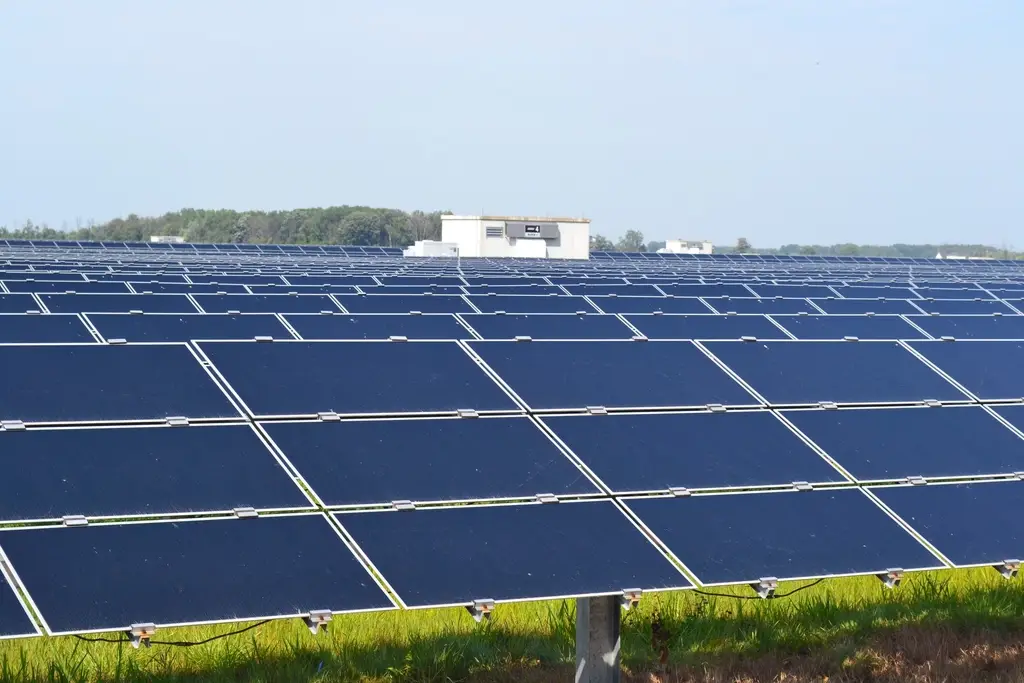 Solar paybackA worked payback example for a 100 kWp system, the factors that move the result most, the effect of tax relief, and a calculator to try your own figures.